Dog aggression management techniques for dog owners
Updated: Sep 25
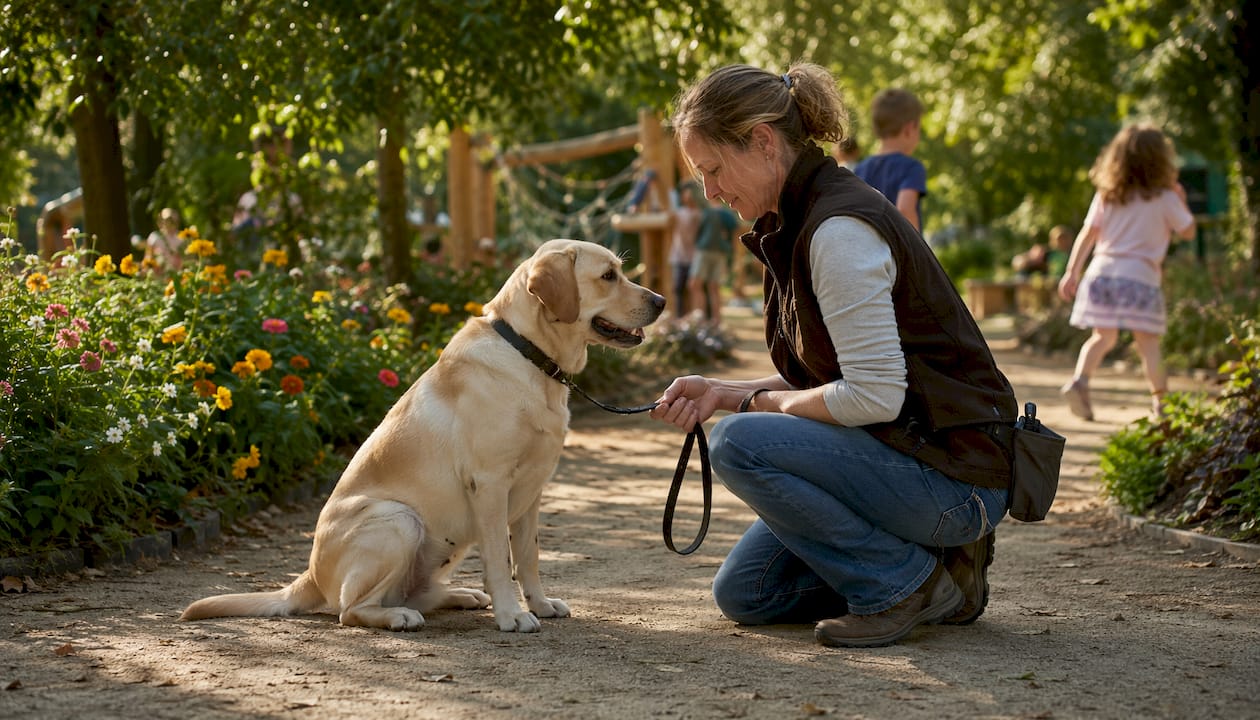
Your first priority right now is safety, not training. If your dog has shown aggression, the most important immediate steps are to prevent them from practising that behaviour again, protect everyone in the household, and book a veterinary appointment to rule out medical causes. These dog aggression management techniques are grounded in evidence-based, force-free methods recommended by the RSPCA, Dogs Trust, and the Royal College of Veterinary Surgeons (RCVS). Punishment is never the answer. It increases fear and the risk of escalation, and it removes the warning signals you need to keep people safe.
Your immediate safety checklist:
Remove or avoid the trigger right now. If it is another dog, a visitor, or a specific room, create physical separation.
Use baby gates, a crate, or a separate room to prevent access to flashpoints.
Begin muzzle familiarisation using positive association (treats and calm praise only — never force it).
Record every incident: date, location, trigger, distance, body language, and outcome.
Book a veterinary appointment this week. Pain and medical conditions are common, overlooked causes.
Contact the RSPCA, Dogs Trust, or an RCVS-registered veterinary surgeon for referral to a qualified behaviourist.
Pro Tip: When creating distance from a trigger, move calmly and quietly. Pulling sharply on the lead or raising your voice increases arousal and can tip a tense dog into a reaction faster.
Table of Contents
What does aggression actually look like in your dog?
Recognising aggression early gives you time to act before a situation escalates. Most dogs do not bite without warning. They communicate discomfort through a sequence of signals, and the earlier you spot them, the safer everyone stays.
Early warning signs to watch for:
Freeze: the dog goes suddenly still, weight shifting forward or back.
Whale eye: the whites of the eyes become visible as the dog turns its head away but keeps watching.
Lip licking or yawning: out of context, these are stress signals, not contentment.
Hard stare: a fixed, unblinking gaze directed at a person or animal.
Stiffening: muscles tighten across the shoulders, neck, and hindquarters.
Growling or snarling: a clear warning that must never be punished. It is communication, not defiance.
Suppressing a growl through punishment removes a warning signal without addressing the underlying cause. Dogs Trust explicitly warns against punishment for this reason.
Common aggression types and what drives them:
Type | What it looks like | Likely driver | Your immediate action |
Fear-based | Lunging, snapping when cornered or approached | Anxiety, past trauma | Increase distance, avoid approach |
Resource guarding | Growling over food, toys, resting spots | Competition for valued items | Separate feeding areas, remove contested items |
Territorial | Barking, lunging at fence lines or doorways | Perceived threat to space | Manage access, reduce visual exposure |
Redirected | Biting the lead or handler during arousal | Frustration, over-threshold state | Stop the walk, create calm space |
Inter-dog/agonistic | Tension, posturing, fighting with other dogs | Social conflict, resource competition | Separate dogs, review inter-dog aggression causes |
Pain-related | Snapping when touched, sudden onset | Medical cause | Vet appointment immediately |
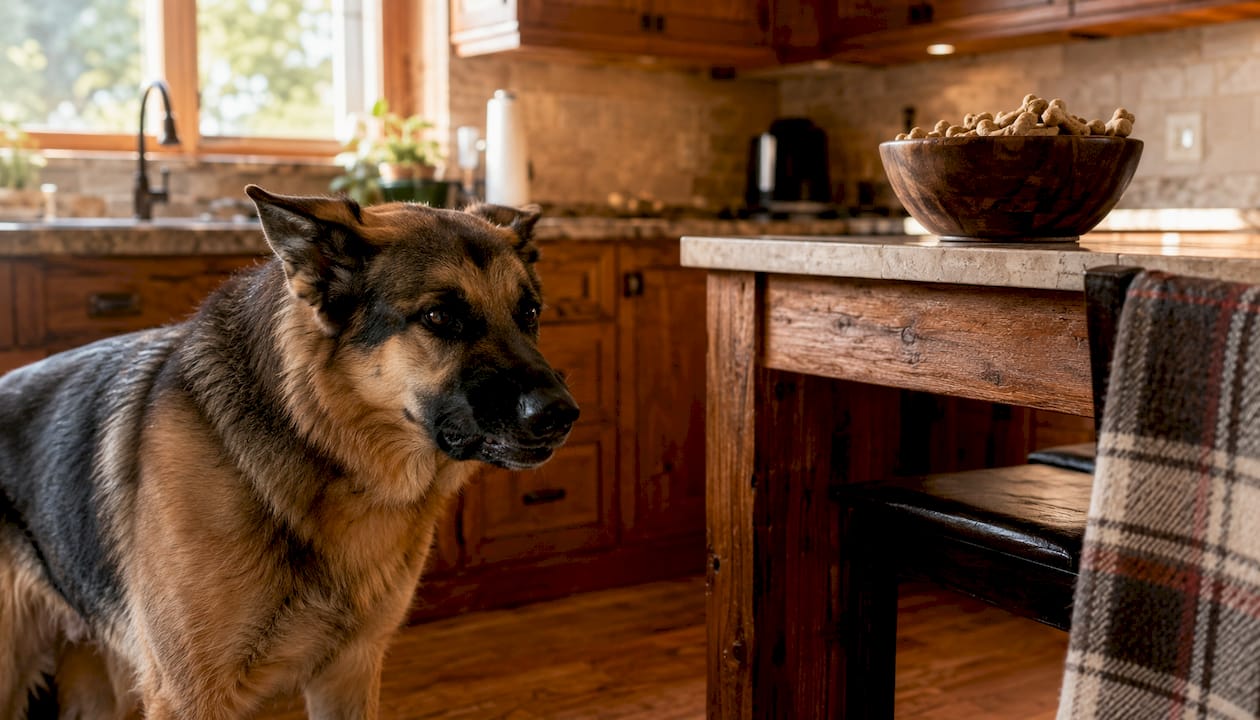
Understanding which type you are dealing with shapes every decision that follows. A dog guarding food needs a different plan from a dog reacting out of fear on walks. If you are unsure, a qualified behaviourist can help you identify the pattern accurately.
Why do dogs become aggressive? Medical and emotional causes
Aggression is almost always a symptom, not a character flaw. It is a response to fear, pain, conflict, or overstimulation, and treating it as an obedience failure leads owners down the wrong path entirely. Before any behaviour work begins, a veterinary check is non-negotiable.
Medical causes that must be ruled out first
Pain is one of the most common and most missed triggers for sudden-onset aggression. Conditions including arthritis, ear infections, dental disease, neurological disorders, thyroid abnormalities, and adrenal dysfunction can all alter a dog’s irritability and threshold. Geriatric dogs may show aggression linked to cognitive decline or sensory loss. A dog that has never shown aggression before and suddenly snaps when touched almost certainly has a physical cause driving that response.
Pro Tip: Tell your vet exactly where and when the aggression occurs. “Snaps when touched on the left flank” is far more useful than “has become aggressive.” The more specific your incident log, the faster a medical cause can be identified or excluded.
Emotional and environmental drivers
Once medical causes are cleared, the focus shifts to emotional and environmental factors:
Fear and anxiety: the most common emotional driver. A dog that feels trapped, threatened, or unable to escape will use aggression to create distance.
Frustration: a dog that cannot reach something it wants (another dog, a person, a toy) may redirect that frustration as aggression.
Social thresholds: every dog has a point beyond which it cannot process stimulation calmly. Repeated exposure above that threshold erodes resilience over time.
Prior reinforcement: if aggression has worked before (the scary person left, the other dog moved away), the dog has learned it is an effective strategy.
Environmental contributors: unpredictable routines, resource competition between pets, high-arousal contexts like busy parks, and poor management all raise the baseline stress level.
Agonistic behaviour in dogs is complex, and addressing it requires understanding what the dog is communicating, not simply stopping the behaviour.
Practical day-to-day management techniques to prevent rehearsal
Management is the essential first phase of any aggression programme. The goal is simple: set up the environment so your dog cannot practise aggression. Every time aggression is rehearsed, it becomes more ingrained. If an incident happens while you are supervising, the management system has already failed and needs redesigning.
Home management strategies
Use baby gates to create safe zones and prevent access to flashpoints (front door, feeding area, other pets’ spaces).
Feed dogs separately, always. Remove food bowls immediately after meals.
Give your dog a designated safe space (a crate, pen, or quiet room) where they are never disturbed.
Establish a visitor protocol: dog is secured before the door opens, every time.
Use a lead inside the house if needed to maintain gentle control without confrontation.
Outdoor and walking management
Safe walks require planning, not just equipment. Choose routes that avoid known triggers. Walk at quieter times of day. Cross the road early, before your dog notices another dog, not after.
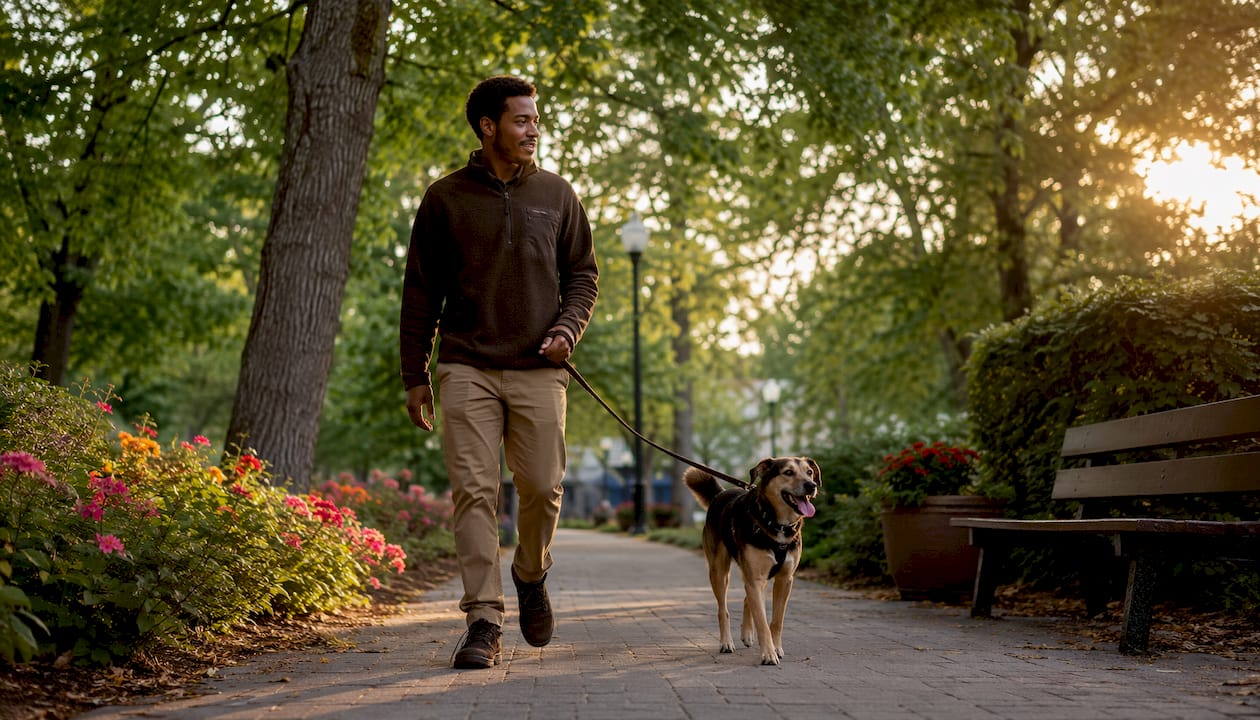
For equipment, use a well-fitted harness with a double-clip lead (one clip to the harness, one to a flat collar) for added security. A basket muzzle, introduced humanely, is a responsible safety tool that allows your dog to pant, drink, and take treats while preventing a bite.
Muzzle familiarisation: step-by-step
Place the muzzle on the floor and let your dog sniff it freely. Reward with a high-value treat.
Hold the muzzle and feed treats through the front opening. Repeat until your dog pushes their nose in willingly.
Fasten the muzzle for two seconds, treat, remove. Gradually extend the duration over several sessions.
Build up to wearing the muzzle during short, positive activities (a walk around the garden, a scatter feed).
Never use the muzzle as a punishment or put it on during a stressful event before your dog is comfortable with it.
Incident log template
Keeping a detailed record helps you and any professional identify patterns. The MSD Veterinary Manual recommends systematic incident records for exactly this reason.
Field | What to record |
Date and time | When did it happen? |
Location | Where were you? |
Trigger | What set it off? |
Distance to trigger | How far away was the trigger? |
Body language | What did your dog do first? |
Your response | What did you do? |
Outcome | Did the trigger move away? Did the dog calm? |
How to use force-free behaviour modification: a step-by-step plan
The core of any effective aggression programme is reward-based desensitisation and counter-conditioning, always working below your dog’s threshold. The aim is to change the emotional response to the trigger, not just suppress the behaviour on the surface.
Threshold work is the foundation. Your dog’s threshold is the distance or intensity at which they notice the trigger but remain calm enough to take treats and respond to you. Work below that point, always.
Step-by-step protocol:
Identify the threshold. Find the distance at which your dog notices the trigger (another dog, a stranger, a bicycle) but does not react. This is your starting point.
Set up a controlled exposure. Use a helper, a friend, or a controlled environment. The trigger appears at or below threshold distance.
Pair the trigger with high-value rewards. The moment your dog notices the trigger, begin a “treat party”: rapid, continuous high-value treats. Stop when the trigger disappears. The trigger predicts good things.
Mark and reward calm alternatives. When your dog looks at the trigger and then looks back at you, mark that choice (with a clicker or a calm “yes”) and reward generously.
Teach a specific alternative behaviour. “Look at me,” “go to your mat,” or “move away” give your dog something to do instead of reacting. Practise these in low-arousal settings first.
Increase challenge gradually. Only reduce distance or increase intensity when your dog is consistently relaxed at the current level. Never rush this.
End every session on a success. Keep sessions brief and always finish before your dog becomes tense.
A dog in a high-arousal state cannot learn effectively. If your dog is already reacting, the session is over. Create distance, let them settle, and reassess the setup for next time.
Medication note: When anxiety is a significant driver, a veterinary behaviourist may recommend medication such as fluoxetine (an SSRI) as an adjunct to behaviour work. SSRIs typically take several weeks to reach full effect. Medication is not a substitute for behaviour modification; it creates a calmer baseline from which learning becomes possible.
Progress tracking table:
Milestone | Metric to measure | Target |
Threshold distance | Metres from trigger before reaction | Gradually decreasing over weeks |
Latency to calm | Seconds to settle after trigger appears | Decreasing over sessions |
Treat acceptance | Does your dog take treats near the trigger? | Yes, consistently |
Alternative behaviour | Does your dog offer “look at me” near the trigger? | Yes, reliably |
Duration of calm | How long can your dog stay relaxed near the trigger? | Increasing over weeks |
For evidence-based methods tailored to reactive dogs, the practical guide for reactive dogs at Happy-dogtraining covers these protocols in detail.
Which tools help and which ones make things worse?
Some equipment genuinely supports safety and learning. Others increase fear, pain, and the risk of a serious bite. Knowing the difference protects your dog and everyone around them.
Safe and recommended equipment:
Basket muzzle: allows panting, drinking, and treat-taking; the gold standard for bite prevention when introduced humanely.
Well-fitted harness: distributes pressure across the chest rather than the throat; reduces the risk of injury and pain-related reactivity.
Double-clip lead: clips to both harness and flat collar for added security if one attachment fails.
Baby gates and exercise pens: essential for home management and preventing rehearsal.
Long line (on a harness): useful for recall work and controlled outdoor exposure in open spaces.
What to avoid, and why:
Choke chains and prong collars: cause pain and can trigger or worsen fear-based aggression.
Electronic (shock) collars: aversive methods increase stress and the risk of escalation; the AVSAB position statement recommends against their use for behaviour problems.
Alpha rolls and scruff shakes: physically dangerous and counterproductive; they increase fear without addressing the cause.
Shouting or physical punishment: Dogs Trust guidance is clear that punishment escalates aggression and removes the warning signals that keep people safe.
“If the professional’s suggestions consist of techniques for instilling fear and respect in your dog, such as alpha rolls, scruff shakes and hanging, there’s a very good chance that your dog will get worse rather than better — and you might get bitten in the process.” — ASPCA
The types of humane training methods page at Happy-dogtraining explains the science behind reward-based approaches in plain language.
When should you get professional help in the UK?
Seek professional help immediately if any of the following apply:
Your dog has bitten a person or animal, breaking the skin.
Aggression is increasing in frequency or intensity.
Reactions are unpredictable or occur without obvious warning.
There are children, elderly people, or vulnerable adults in the household.
You feel unsafe managing your dog on walks or at home.
Who to contact in the UK
Your veterinary surgeon (RCVS-registered) is the first call. They can screen for medical causes, refer to a veterinary behaviourist, and prescribe medication if appropriate. Find an RCVS-registered vet at rcvs.org.uk.
A certified clinical behaviourist should hold accreditation from the Animal Behaviour and Training Council (ABTC) or the Association for Pet Behaviour Counsellors (APBC). These bodies maintain registers of qualified professionals who use evidence-based, force-free methods.
Dogs Trust and the RSPCA both offer guidance and can help you find reputable local support. Neither organisation endorses aversive methods.
Questions to ask before booking a behaviourist
Are you registered with the ABTC or APBC?
Do you work alongside veterinary surgeons for complex cases?
What methods do you use? (Expect: reward-based, force-free, no aversive tools.)
Have you worked with aggression cases similar to mine?
What safety protocols do you have in place during sessions?
What to bring to your first appointment
Your completed incident log (dates, triggers, distances, outcomes).
Any veterinary records, including recent bloodwork or imaging.
A short video of the behaviour if you have one (filmed safely, from a distance).
A list of any medications your dog is currently taking.
A multi-modal approach combining management, behaviour modification, and medication where indicated gives the best outcomes for fear- and anxiety-driven aggression.
What to do during an aggressive episode
Remain calm. Your dog reads your emotional state. A sharp voice or sudden movement can escalate a tense situation quickly.
Step-by-step emergency checklist:
Do not reach towards the dog or attempt to physically restrain them unless there is immediate danger.
Remove the trigger if possible: ask a person to move away, block the dog’s line of sight, or guide them to a separate room.
Use a calm, low voice and create distance between the dog and the trigger.
Secure the dog behind a closed door, gate, or in a crate before attending to anyone who has been bitten.
Check for injuries. For a bite wound: wash thoroughly with soap and water, apply a clean dressing, and seek medical attention. Dog bites carry infection risk and should always be assessed by a healthcare professional.
Contact your veterinary surgeon to report the incident and discuss next steps for the dog.
Log the incident in full as soon as possible while details are fresh.
If dogs are fighting:
Never put your hands between two fighting dogs.
Use a barrier (a board, a bag, a jacket) to separate them.
Make a loud noise (clap, bang a surface) to interrupt the fight, then create separation immediately.
Check both dogs for wounds and contact your vet.
After the incident:
Give yourself time to recover emotionally. Witnessing or being involved in an aggressive episode is distressing.
Review your management plan. If an episode occurred, something in the system needs adjusting.
Contact the RSPCA or Dogs Trust for additional guidance if you feel out of your depth.
How long does it take to see real improvement?
Behaviour change takes time, and realistic expectations matter enormously. There is no quick fix for aggression. The AVSAB position statement is clear that the realistic goal is consistent management and measurable reductions in frequency and intensity over time, not elimination.
Medication timeline: SSRIs such as fluoxetine typically take several weeks to produce meaningful reductions in anxiety or impulsivity. Starting medication does not mean you will see results within days.
Typical timeline for improvement:
Phase | What to expect |
Initial management | Incidents reduce because triggers are avoided; dog is calmer at home |
Early behaviour modification | Dog begins to associate trigger with rewards; threshold distance starts to decrease |
Consolidation | Reliable calm responses at shorter distances; alternative behaviours become automatic |
Maintenance | Continued management, occasional setbacks, gradual generalisation to new contexts |
Medication effect (if used) | Reduced baseline anxiety; behaviour modification becomes more effective |
Progress is rarely linear. Setbacks happen, particularly when routines change, the dog is unwell, or a new trigger appears. The measure of success is the overall trend over weeks and months, not individual sessions. Mental stimulation and enrichment also play a role in reducing baseline arousal; an indoor mental stimulation guide can help you build a calmer daily routine alongside formal behaviour work.
Key takeaways
Managing dog aggression safely requires an immediate safety-first approach, force-free behaviour modification, a veterinary check for medical causes, and qualified professional support from ABTC- or APBC-registered behaviourists.
Point | Details |
Safety and management come first | Prevent rehearsal of aggression immediately using barriers, routes, and protocols before any training begins. |
Always get a vet check | Medical causes including pain, thyroid issues, and neurological conditions can drive aggression and must be ruled out first. |
Use force-free methods only | Desensitisation and counter-conditioning below threshold are the evidence-based standard; punishment increases risk and removes warning signals. |
Seek ABTC/APBC/RCVS-aligned help | Choose behaviourists registered with the ABTC or APBC, and work with an RCVS-registered vet for medical screening and referrals. |
Happy-dogtraining offers structured support | Happy-dogtraining provides evidence-based aggressive behaviour consultations and personalised programmes with free lifetime support after training. |
A trainer’s honest perspective on managing dog aggression
The most common mistake I see is owners waiting too long. They hope the behaviour will settle on its own, or they try to manage it with corrections, and by the time they seek help the dog has had months of practice. Aggression that is rehearsed becomes more reliable, not less.
The goal is rarely elimination. For most dogs, the realistic aim is a meaningful reduction in frequency and intensity, and a life where both dog and owner feel safe. That is genuinely achievable with the right approach, but it requires consistency from every person in the household. One family member using punishment while another uses rewards will stall progress completely.
Caregiver training matters as much as dog training. When everyone in the home uses the same calm, reward-based approach, the dog gets a consistent signal and learns faster. At Happy-dogtraining, free lifetime support is included after every programme precisely because consistency over time is what produces lasting change. You should not have to navigate setbacks alone.
How Happy-dogtraining can help with your dog’s aggression
Owners dealing with an aggressive dog need more than general advice. They need a structured, personalised plan built around their dog’s specific triggers, history, and household.
Happy-dogtraining offers dedicated aggressive behaviour consultations that begin with a thorough review of your dog’s medical history and incident log, followed by a preliminary management plan you can use straight away. Sessions are one-to-one, force-free, and designed to work alongside your veterinary team when medication or specialist referral is needed. For dogs whose aggression is rooted in fear, the fearful dog programme addresses the emotional drivers directly. Private training classes are also available for owners who want structured, ongoing support. Every programme includes free lifetime support after training, so you have expert guidance whenever you need it. Book your consultation at happy-dogtraining.com and take the first step towards a calmer, safer life for your dog and your family.
Useful UK resources and further reading
RSPCA: Advice on dog behaviour, welfare, and finding local support. The RSPCA can also advise on rehoming or referral in complex cases.
Dogs Trust: Practical guidance on aggressive behaviour, what to avoid, and how to find qualified help. Dogs Trust does not endorse aversive methods.
Animal Behaviour and Training Council (ABTC): The UK’s regulatory body for animal training and behaviour professionals. Use their register to find accredited practitioners.
Association for Pet Behaviour Counsellors (APBC): A professional body for clinical animal behaviourists. Members work to evidence-based, force-free standards and often work alongside veterinary surgeons.
Royal College of Veterinary Surgeons (RCVS): The regulatory body for veterinary surgeons in the UK. Use their Find a Vet tool to locate an RCVS-registered vet, and ask specifically about referral to a veterinary behaviourist for complex aggression cases.
A veterinary check should always be the first step. Medical causes are more common than most owners expect, and no behaviour programme will reach its potential if an underlying physical condition is left unaddressed.
Recommended
Comments