Stop Guessing: Criteria Based Dog Recall Training for Singapore Owners

Reliable recall means your dog turns and comes back the moment you call, even with squirrels, other dogs, or a busy park in the way. You build it by teaching attention first, charging your recall cue with something genuinely exciting, then proving the behaviour through careful stages, from your living room to the long line to full off-leash freedom. Expect months of consistent work, not days, before you trust an open, unfenced space.
TL;DR:
Consistent, criteria-based progression from indoor to outdoor spaces typically takes at least six months to develop trustworthy off-leash recall.
Using high-value, variable rewards and avoiding negative associations with cues are crucial for maintaining dog motivation over time.
Safety precautions include using a harness, keeping a loose long line, and teaching emergency stop cues if high-risk situations are involved.
Owners should focus on measurable success rates and prompt progression, avoiding rushed advances that can cause recall failures in real-world settings.
Table of Contents
How to start dog recall training: your first sessions
Recall training begins long before you ever say the word “come”. It starts with teaching your dog that looking at you is worth their while.
Here’s the sequence that works, in order:
Teach name response first. Say your dog’s name once, and the moment they glance at you, mark the behaviour with a clicker or a cheerful “yes!” and deliver a reward. Repeat this in short bursts around the house until the response is near-automatic.
Charge your recall word before you ever rely on it. Choose one word (many trainers use “come” or “here”) and only ever say it when a brilliant reward follows within a second or two. Never use the cue to call your dog for something unpleasant, like a bath or nail trim, or you’ll poison it before it’s even useful.
Practise short indoor reps. With your dog a few steps away, say the cue once, mark the instant they move towards you, and reward generously when they arrive. Four to six repetitions per session is plenty.
Add movement with the “catch me” game. Crouch, clap, or jog backwards a few paces while calling your dog. Movement triggers a chase instinct that makes coming to you feel like a game rather than an interruption.
Introduce a “gotcha” collar hold. Gently take hold of your dog’s harness or collar every time they arrive, pair it with a reward, and release. This teaches them that being physically caught is safe and worth repeating, which matters enormously once you’re working off-leash.
Keep sessions short. Three to five minutes, four to six reps, and always finish on a success. A dog that ends on a win is a dog that wants to play the game again tomorrow.
Consistency across these early sessions matters more than intensity. Dogs Trust recommends rewarding every single successful recall at this stage, since inconsistent payment is one of the fastest ways to weaken a cue you’ve only just built.
Pro Tip: Keep your very first reward completely unpredictable in timing and size. A dog that never knows whether “come” means one bit of kibble or a handful of roast chicken stays far more attentive than one on a fixed schedule.
If your dog’s attention keeps drifting back to household noise, toys, or other family members, it’s worth reading how home distractions affect dog training before you move outdoors.
When should you increase distance and distraction?
Moving too fast is the single biggest reason recall training stalls. Progression should follow a ladder, not a leap.
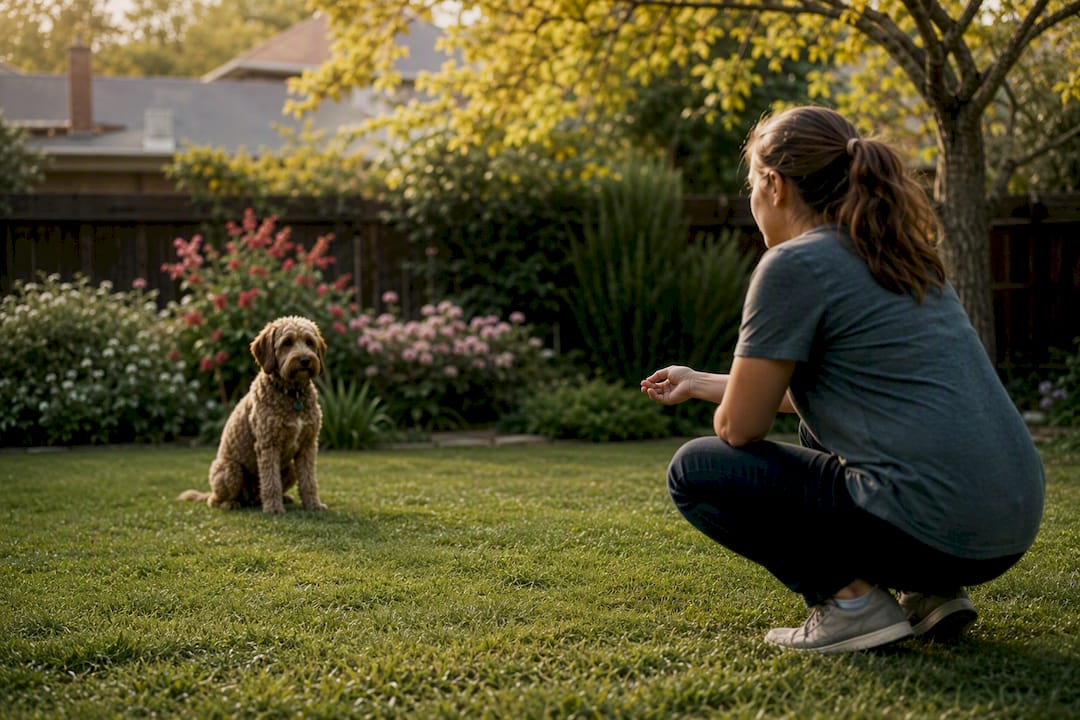
The stages run roughly like this: house, then fenced yard, then long line at 15 to 30 feet, then controlled public areas with moderate distraction, and finally off-leash in spaces where it’s genuinely safe and legal to do so. AVS and NParks guidance suggests treating full off-leash freedom in open, unfenced areas as something that typically takes at least six months of structured, consistent work to earn safely.
Before advancing a stage, look for two objective signals rather than a gut feeling:
Your dog succeeds on roughly 9 out of 10 repetitions at the current difficulty level.
Their turn latency, the time between your cue and them turning towards you, sits under about one to one and a half seconds.
Change only one variable at a time when you raise the difficulty: distance, distraction, or proximity to other dogs and people, never all three together. That way, if your dog fails, you know exactly which factor caused it.
The six-month benchmark: trainers commonly treat six months of layered practice as the realistic minimum before open-space, unfenced off-leash recall becomes trustworthy, according to NParks training guidance.
Safety rules stay non-negotiable throughout. Use a harness rather than a flat collar for long-line work to avoid neck strain if your dog hits the end of the line at speed. Keep the line gathered loosely in your hand rather than wrapped around it, and never use the line to yank your dog towards you; it’s a safety net, not the mechanism that completes the recall. If your dog has a strong tendency to bolt towards traffic or wildlife, teach an emergency stop cue as a backup rather than relying on recall alone in high-risk areas.
What makes your dog actually want to come back?
Your dog comes back for you when coming back pays better than whatever they were doing before. That’s the whole game, and it’s worth taking seriously.
High-value rewards mean things your dog rarely gets elsewhere: cooked chicken, freeze-dried liver, or a favourite squeaky toy saved exclusively for recall practice. As reliability builds, shift to variable rewards, sometimes food, sometimes play, sometimes just enthusiastic praise, to keep motivation sharp rather than dependent on treats alone.
Premack’s principle in action: let your dog return to sniffing, playing, or greeting another dog as the reward itself, rather than always ending the fun.
Round robin: two or more people call the dog back and forth, rewarding each arrival.
Find me: hide nearby and call, rewarding the successful search.
Catch me: as covered earlier, movement away from your dog often beats a static call.
A well-fitted harness with a 15 to 30 foot long line remains the safest setup for outdoor proofing, giving your dog the sensation of freedom while keeping you in control. If you’re unsure which gear suits your dog’s size and pull strength, this guide to training tools for home use breaks down the options. A durable enrichment toy, like a TPR interactive chew with a detachable squeaker, also works well as a play reward once your dog associates it with recall success.
Why won’t my dog come when called? Fixing common failures
When recall breaks down, the fix depends entirely on the cause, and most owners guess wrong on the first try.
Poisoned cue. If your dog hesitates, looks away, or ignores the word entirely after previously responding well, the cue has likely become associated with something negative, ending playtime, a bath, or a scolding. Retire the word, pick a fresh one, and recharge it from scratch with easy, high-reward reps before asking for anything difficult.
Repeating the cue. Saying “come, come, come” teaches your dog that the first two calls are optional. Say it once, wait, and if there’s no response, close the distance yourself and reset at an easier difficulty next time rather than calling again.
Regress, don’t push through. If your dog ignores you twice at a given stage, that’s a signal to drop back a stage and raise reward value, not a signal to repeat the same failing setup.
Breed and drive matter. Scent hounds and dogs with strong prey drive genuinely need more proofing repetitions and more conservative distance increases; independent breeds often respond better to shorter, higher-frequency sessions than long ones.
Pro Tip: If your dog freezes and stares at wildlife before ignoring your cue completely, that’s early-stage prey drive kicking in. Call before the stare locks in, not after; once they’re fixated, no amount of chicken competes.
For deeper diagnostic help when a setback won’t resolve on its own, see this guide on troubleshooting training setbacks at home.
Why trust this recall method?
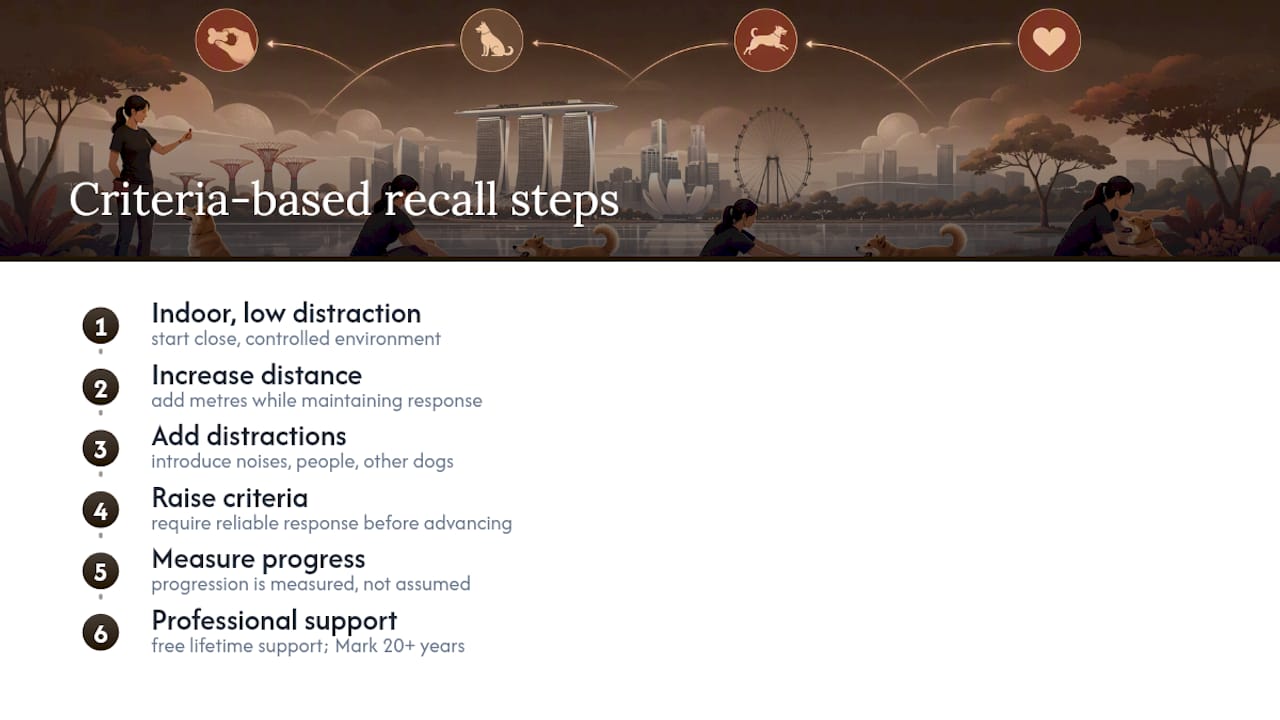
This staged, criteria-based approach reflects the same principles used in AVS-accredited training programmes across Singapore, where progression is measured, not assumed. Mark, Happy-Dog Training Singapore’s lead trainer, has spent more than 20 years applying humane, science-based methods to real behavioural cases, from anxious rescues to high-drive working breeds.
If your dog’s recall has stalled for weeks despite consistent effort, or if safety is a genuine concern around roads or aggression triggers, that’s the point to bring in professional support. Happy-Dog Training Singapore backs every programme with free lifetime support after training ends.
What most recall advice gets wrong
Most recall guides treat the cue itself as the hard part. It isn’t. The hard part is resisting the urge to skip stages once your dog starts performing well indoors, because a clean recall in your hallway tells you almost nothing about what happens near a barking dog at the park.
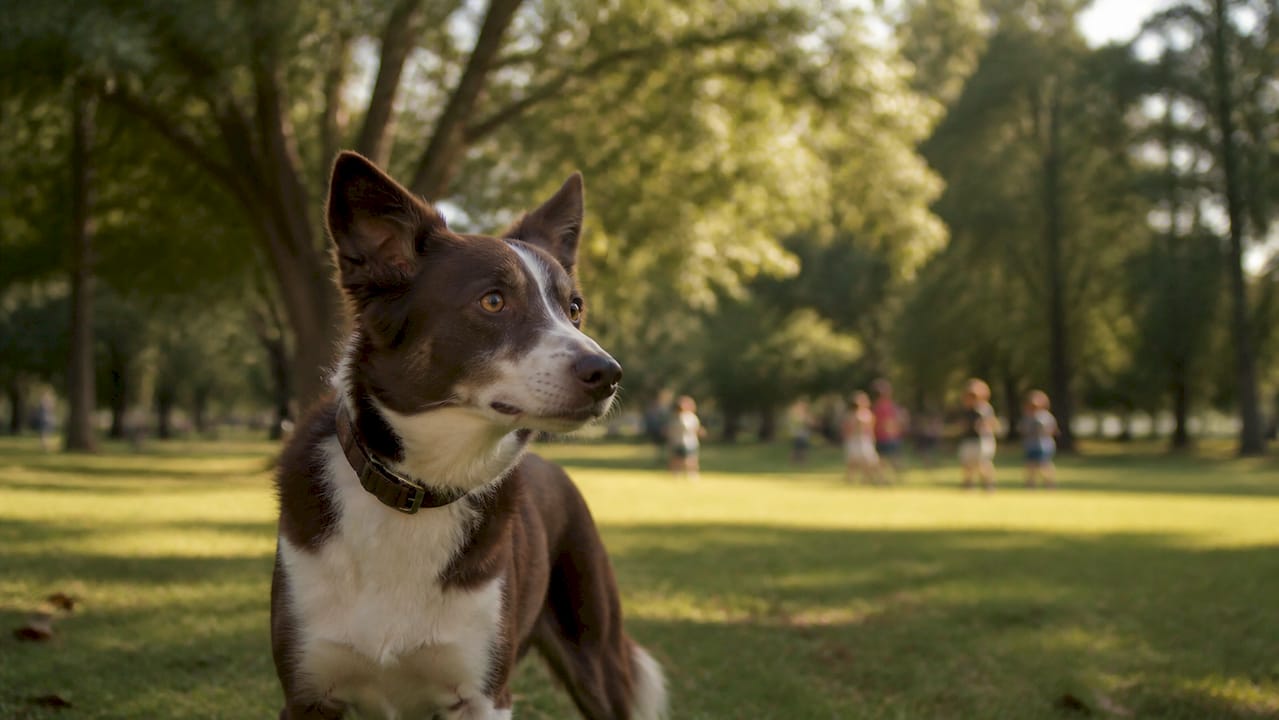
The conventional advice to “just practise more” misses the actual lever: measurable criteria. A dog owner who tracks success rate and turn latency, even loosely, will catch a regression weeks before someone relying on gut feel notices anything wrong. That’s the gap between owners who get a reliable recall and owners who get an inconsistent one that works at home and falls apart outside.
If you take one thing from this guide, take the discipline of changing one variable at a time. Owners routinely raise distance and distraction together the first time a dog succeeds at a lower level, then wonder why the whole thing collapses. Slow, boring, criteria-led proofing beats enthusiastic guesswork every time, and it’s the difference between hoping your dog comes back and knowing they will.
— Mark
Want hands-on help? What the 4-week intensive covers
If you’d rather have a trainer build and troubleshoot your dog’s recall plan alongside you, Happy-dogtraining’s approach cuts out the guesswork entirely. Unlike generic online guides or trial-and-error at the park, the 4-Week AVS-Approved Intensive Programme gives your dog a personalised, criteria-based plan built around their specific drive, distractions, and history, with a trainer physically present to correct handling mistakes in real time.
The programme suits owners of distracted, high-drive, or previously unreliable dogs, and those with genuine safety concerns around roads or reactive triggers. It opens with a full behavioural assessment, followed by a personalised staged proofing plan and hands-on sessions that build from house to long line to real-world distraction. Every programme includes free lifetime support after completion, so questions don’t stop when the sessions do. To get started, book an assessment through the Happy-Dog Training Singapore site and see which class format, private or group, suits your dog’s needs and your budget.
Sources
Recommended
Comments