How to prepare your dog for board and train
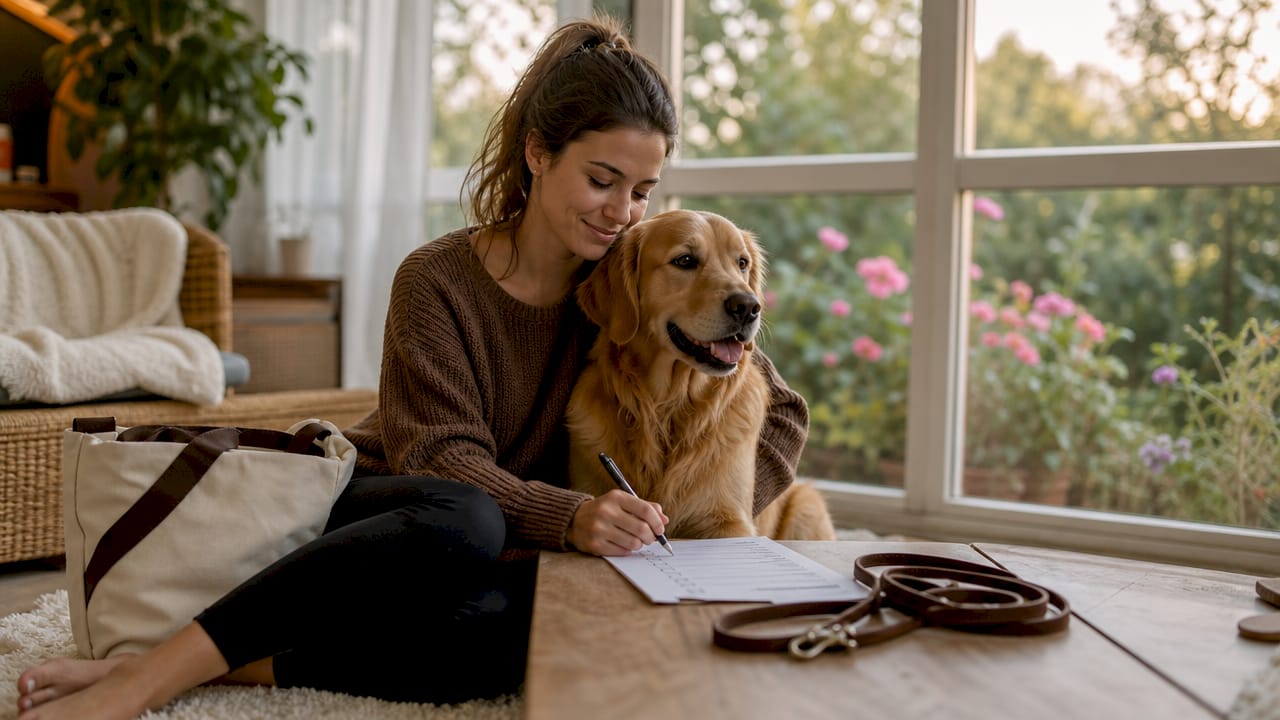
Preparing your dog for board and train is a set of intentional steps taken before a residential training stay to maximise your dog’s comfort, health, and learning readiness. A successful stay depends on three pillars: health documentation, gradual acclimation to separation, and short positive-reinforcement sessions at home. Facilities such as Happy-dogtraining and programmes reviewed by MSPCA-Angell consistently show that dogs who arrive with foundational habits and reduced anxiety progress faster and retain skills longer. Getting these steps right before drop-off makes the difference between a dog who thrives and one who spends the first week simply settling in.
How to prepare your dog for board and train: the complete checklist
The most common mistake owners make is treating board and train preparation as purely logistical. Health checks, vaccination records, a familiar blanket, and a few weeks of short training sessions at home are all part of the same preparation strategy. Each element reduces the gap between where your dog is now and where the programme expects them to be on day one.
Board and train programmes typically include daily training sessions, meals, progress updates, and a transfer lesson for owners at the end. That final transfer lesson only works if your dog has already built some capacity to focus and respond. Preparation at home is what makes that lesson stick.
What vaccinations does your dog need before a board and train stay?
Core vaccinations are the non-negotiable starting point for any boarding stay. Most facilities require proof of rabies, distemper/parvo (DHPP or DAPP), and bordetella before accepting a dog. These three are often called the boarding “big three” because group settings create high transmission risk for all three diseases.
Timing matters as much as the vaccines themselves. Administer all required vaccinations 7 to 14 days before arrival so your dog’s immune system has time to build protection. A vaccine given the day before drop-off offers very little practical defence.
Beyond the big three, some facilities and locations require additional cover. Depending on where you are based, leptospirosis and canine influenza vaccines may also be requested. Check directly with your chosen facility well in advance, as requirements vary.
Documentation is equally important. Vaccination records must include the vaccine type, date administered, expiry date, and your vet’s verification. Facilities can and do refuse dogs who arrive without up-to-date proof. Keep both a digital copy and a printed copy to hand.
Rabies vaccination (current and within expiry)
DHPP or DAPP (distemper, hepatitis, parvovirus, parainfluenza)
Bordetella (kennel cough), usually required within 6 to 12 months
Leptospirosis and canine influenza (check facility requirements)
Recent health certificate from your vet
Written vaccination records with vet signature and contact details
Pro Tip: Book your vet appointment at least three weeks before your dog’s boarding start date. This gives you time to address any gaps in vaccination history and collect the paperwork without rushing.
How do you acclimate your dog to separation before boarding?
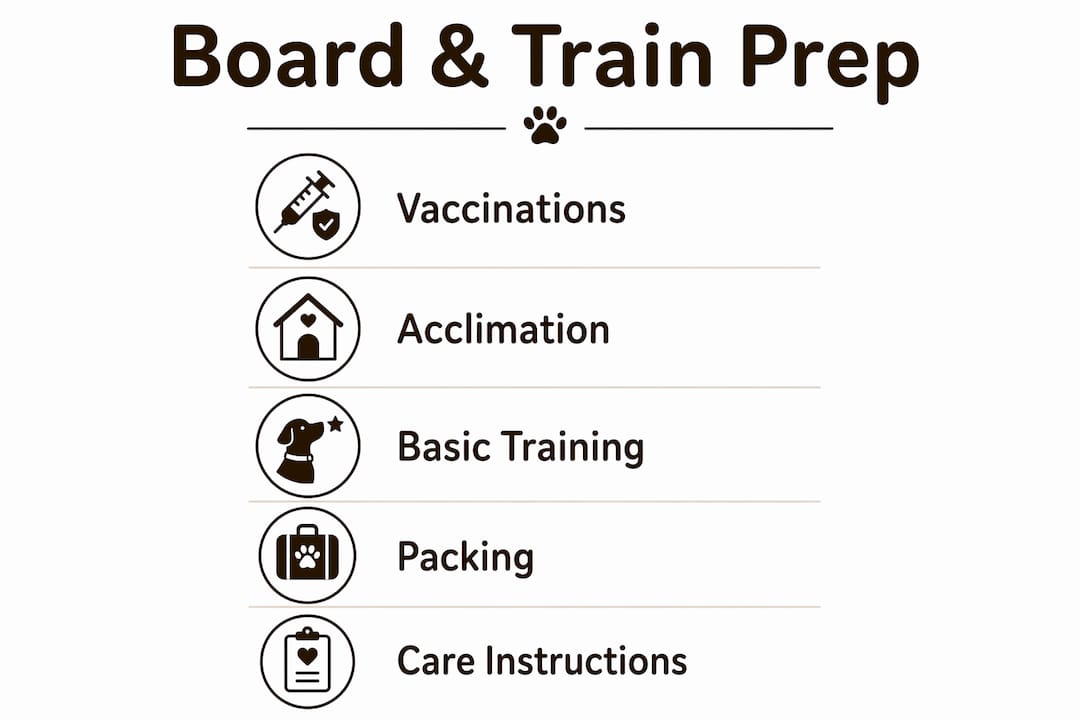
Acclimation is the preparation step most owners skip, and it is the one that causes the most distress on drop-off day. Dogs who have never experienced being away from their owners for more than a few hours can find the sudden transition to a boarding facility genuinely overwhelming. That stress directly reduces their ability to focus and learn.
The good news is that gradual acclimation works reliably well. Practising short separations at home and considering trial daycare visits are two of the most effective ways to familiarise your dog with the experience of being cared for by someone else. Each small step builds confidence and reduces the novelty of the boarding environment.
Follow this sequence over two to three weeks before the stay:
Start with short absences at home. Leave your dog alone in a separate room for 10 to 15 minutes. Gradually extend this to one or two hours over several days.
Introduce a crate or designated rest space. If the facility uses crates, practise calm crate time at home so the space feels safe rather than unfamiliar.
Visit the facility before drop-off day. Many facilities welcome a brief introductory visit. This lets your dog sniff the environment and meet the trainer without the pressure of an immediate stay.
Book a trial daycare session. Trial stays for anxious dogs markedly reduce separation anxiety and improve training engagement. Even one short daycare visit creates a positive association with the space.
Bring a familiar item. A toy or blanket that carries your scent gives your dog a sensory anchor in an unfamiliar place. Familiar items ease the transition and improve comfort during the first few days.
Pro Tip: Watch your dog’s body language at each stage. Yawning, lip-licking, and tucked tails are signs of stress. If your dog shows these signals, slow down the acclimation process rather than pushing forward.
You can also find practical anxiety reduction strategies from pet care specialists that complement the steps above, particularly for dogs with high attachment or existing separation anxiety.
What dog training tips help at home before the programme?
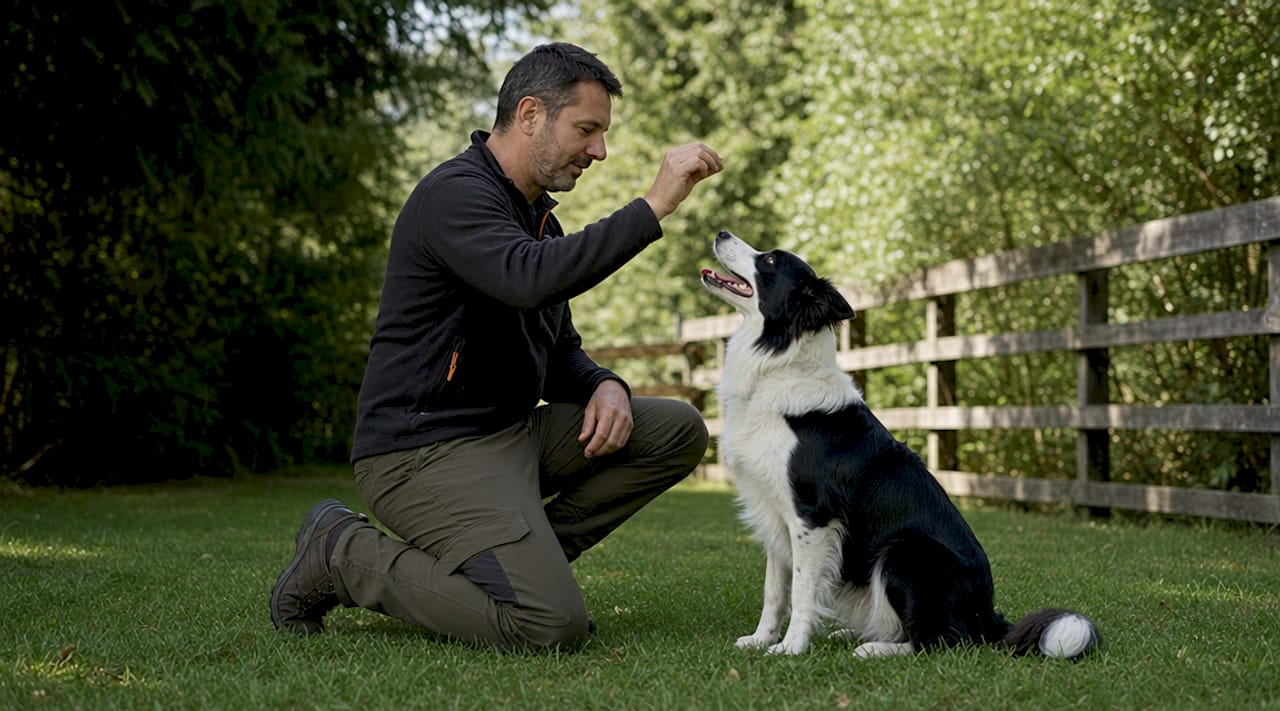
Starting some basic training at home before the board and train stay is one of the highest-return preparation moves you can make. Short, frequent sessions of around five minutes with immediate rewards build effective habits and reduce the time the trainer spends on foundational work during the stay. That means more of the programme can focus on the specific behaviours you enrolled for.
Focus on four foundational behaviours: sit, stay, come, and loose-leash walking. These are the building blocks most board and train programmes build upon. A dog who already responds reliably to “sit” and “come” in a calm environment will transfer those skills to the facility far more quickly than one who has never heard the cues before.
The table below compares three common pre-training approaches so you can choose what fits your schedule and your dog’s current level.
Approach | Strengths | Limitations |
Short daily sessions (5 min, twice daily) | Builds habits without fatigue; aligns with MSPCA-Angell guidance on reward timing | Requires consistency; progress is gradual |
Group obedience class before boarding | Adds socialisation; introduces structured training environment | Less tailored to individual dog’s needs |
Owner-led reward-based training at home | Strengthens bond; uses familiar environment for confidence | Owner skill level affects quality of sessions |
Positive reinforcement is the method that transfers best to board and train environments. Use high-value treats such as small pieces of chicken or cheese, and reward within two seconds of the correct behaviour. This timing is what makes the reward meaningful to your dog.
Pro Tip: Keep a short log of which commands your dog responds to reliably and which ones need work. Share this with the trainer at drop-off. It gives them an accurate starting point and avoids wasted time.
For more guidance on reward-based training methods that align with what professional trainers use, the Happy-dogtraining resource library is a practical starting point.
What to pack and what to tell the facility before drop-off
Packing the right items and writing clear care instructions are the final preparation steps that protect your dog’s wellbeing during the stay. Bringing your dog’s usual food plus extra portions, along with detailed feeding and medication instructions, prevents digestive upsets and ensures the facility can manage your dog’s routine without guesswork.
Written instructions matter more than verbal ones. Staff change shifts, and a clear written note travels with your dog in a way that a conversation at drop-off does not. Be specific: write feeding times, portion sizes, medication names and doses, and any known triggers or sensitivities.
Here is a practical packing checklist:
Food: Your dog’s usual brand, enough for the full stay plus two to three extra days
Medication: In original packaging with clear dosage instructions and your vet’s contact details
Familiar comfort item: One toy or blanket with your scent (check the facility’s hygiene policy first)
Vaccination records: Printed copy and digital backup
Written care instructions: Feeding schedule, medication routine, known fears or triggers, and preferred rewards
Emergency contacts: Your mobile number, an alternative contact, and your vet’s details
Check the facility’s policy on personal items before packing. Some facilities restrict soft toys for hygiene reasons, while others actively encourage them. Confirming this in advance avoids disappointment on drop-off day.
Key takeaways
Preparing your dog for a board and train stay requires health documentation, gradual acclimation to separation, short positive-reinforcement sessions at home, and clear written care instructions delivered to the facility before drop-off.
Point | Details |
Vaccinations and timing | Administer the big three vaccines 7 to 14 days before arrival and bring written records with vet verification. |
Gradual acclimation | Practise short separations and book a trial daycare visit to reduce anxiety and improve training focus. |
Short training sessions | Run five-minute reward-based sessions twice daily on sit, stay, come, and leash manners before the stay. |
Packing and instructions | Bring your dog’s usual food, familiar comfort items, and detailed written care and medication instructions. |
Communicate with the trainer | Share a log of your dog’s current command responses at drop-off to give the trainer an accurate starting point. |
What I have learned from years of pre-stay preparation
After working with hundreds of dogs at Happy-dogtraining, the pattern I see most often is this: owners focus almost entirely on logistics and almost not at all on their dog’s emotional readiness. They arrive with the right food and the vaccination records, but their dog has never spent a night away from them. The first two days of the stay are then spent managing distress rather than training.
The insight that changed how I approach pre-stay advice is this: reducing the behavioural mismatch between a dog’s current stress response and the programme’s expectations is the single most effective preparation move. A dog who can sit calmly for five minutes and tolerate a short separation is ready to learn. A dog who cannot do either will spend the first days of the stay simply adjusting.
I also want to be honest about expectations. Board and train is not a fix that happens to your dog while you wait. The transfer lesson at the end of the programme is where your role begins. Owners who do not follow through with consistent practice at home after pickup typically see the new behaviours fade within weeks. The preparation you do before the stay and the practice you commit to after it are what make the training last.
My strongest advice: contact the trainer before drop-off, share your dog’s current behaviour honestly, and ask what you can do in the two weeks before the stay to make their job easier. That conversation alone sets the right tone for everything that follows.
— Mark
Ready to take the next step with Happy-dogtraining?
If you have worked through the preparation steps in this guide and your dog is ready for a structured residential programme, Happy-dogtraining offers board and train programmes designed around each dog’s individual needs. With over 20 years of experience and AVS-accredited methods, the team works on obedience, fearfulness, and reactivity using science-based, reward-focused techniques.
Whether your dog needs foundational obedience or more targeted behaviour modification, the intensive training programme at Happy-dogtraining is built to deliver lasting results. Every client also receives free lifetime support after training, so the progress your dog makes during the stay continues long after they come home. Visit Happy-dogtraining to explore programme options and book a consultation.
FAQ
What vaccinations are required before a board and train stay?
Most facilities require rabies, distemper/parvo (DHPP or DAPP), and bordetella as a minimum. Some locations also require leptospirosis and canine influenza vaccines, so confirm requirements with your chosen facility at least three weeks before the stay.
How long before boarding should I start acclimation?
Begin two to three weeks before drop-off. Start with short separations at home, then progress to a trial daycare visit so your dog builds positive associations with the boarding environment before the full stay begins.
What basic commands should my dog know before board and train?
Sit, stay, come, and loose-leash walking are the most useful foundations. Short training sessions of around five minutes with immediate rewards are the most effective way to build these behaviours before the stay.
What should I pack for a board and train programme?
Pack your dog’s usual food with extra portions, any medication in original packaging, a familiar comfort item, printed vaccination records, and written care instructions covering feeding times, medication doses, and known triggers.
Will my dog’s training last after the board and train programme ends?
Lasting results depend on consistent owner follow-through after pickup. The transfer lesson at the end of the programme teaches you how to maintain the new behaviours, but daily practice at home is what makes them permanent.
Recommended
Comments