Puppy vaccination schedule and socialisation guide
The puppy vaccination schedule is defined as a series of core vaccines given between 6 and 16 weeks of age, running almost simultaneously with the critical socialisation window that opens at just 3 weeks old. The American Veterinary Society of Animal Behavior (AVSAB) recognises that these two timelines overlap, and managing both at once is the single most important task you face as a new puppy owner. Get the balance right and you raise a healthy, confident dog. Ignore either side and you risk either disease or a lifetime of fear and reactivity. This guide walks you through the full puppy vaccination timeline, the socialisation period, and exactly how to handle both together.
What is the typical puppy vaccination schedule and why does timing matter?
The core vaccine series, known as DA2PP or DHPP, is given as three doses at 6–8, 10–12, and 14–16 weeks, spaced to overcome a specific biological challenge. Maternal antibodies, passed from mother to puppy through milk, actively interfere with vaccine efficacy in the early weeks of life. This means a single early dose is rarely enough to build lasting immunity, which is why the series must continue until at least 16 weeks.
The rabies vaccine is given separately, typically between 12 and 16 weeks, and is required by law in many countries and regions. Your vet will advise on local legal requirements, but you should plan for this dose alongside the tail end of the core series. Some puppies at higher risk, such as those in areas with high parvovirus prevalence, may receive additional non-core vaccines like leptospirosis or Bordetella.
Age | Vaccine | Protection level |
6–8 weeks | DA2PP (first dose) | Partial; maternal antibodies still present |
10–12 weeks | DA2PP (second dose) | Building; maternal interference reducing |
12–16 weeks | Rabies (single dose) | Full legal protection; varies by region |
14–16 weeks | DA2PP (third dose) | Full core immunity achieved |
12–16 months | Booster shots | Sustained long-term protection |
Skipping or delaying doses does not simply push immunity back by a few days. It can leave your puppy in a prolonged window of vulnerability, particularly against parvovirus, which survives in soil for months.
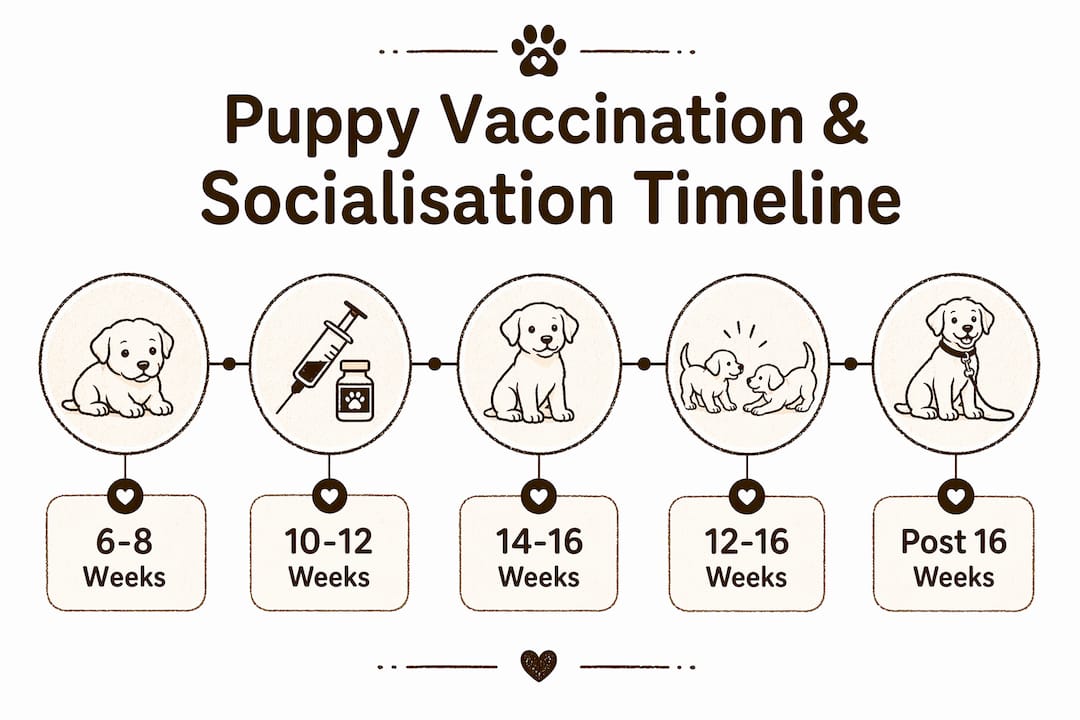
Pro Tip: Never assume one vaccine means your puppy is protected. Full immunity from the core series only develops after the final dose at 14–16 weeks, plus approximately 7–14 days for the immune response to mature.
When does puppy socialisation happen and why does it matter so much?
The socialisation period runs from approximately 3 weeks to 14–16 weeks of age, and it is the single most influential phase of your dog’s behavioural development. During this window, a puppy’s brain is primed to accept new experiences as normal. Positive exposures during this time build confidence that lasts a lifetime. Missed exposures create gaps that are genuinely difficult to fill later.
Socialisation is best understood not as simply meeting other dogs, but as a broad programme of short, positive encounters with the full range of things your puppy will encounter as an adult. Metro Vet describes this as daily micro-exposures to diverse stimuli, which builds far broader confidence than dog-to-dog play alone. The goal is a puppy who finds the world interesting rather than frightening.
Key socialisation experiences to cover during this period include:
People: Men, women, children, people wearing hats, glasses, or uniforms
Animals: Vaccinated, calm adult dogs; cats; other household pets
Environments: Different floor surfaces, stairs, lifts, car rides, outdoor sounds
Handling: Ears, paws, mouth, and body touched gently and regularly
Sounds: Traffic, thunder recordings, household appliances, crowds
Objects: Umbrellas, pushchairs, bicycles, bags
Under-socialised puppies face a significantly higher risk of fear-based reactivity, aggression, and anxiety as adults. The overlap between the vaccination timeline and the socialisation window is not a problem to wait out. It is a challenge to manage actively and thoughtfully.
How to safely socialise your puppy during the vaccination series
Safe socialisation during incomplete vaccination is entirely possible, and it is far less risky than keeping your puppy isolated. The key is controlling the environment rather than avoiding exposure altogether. Controlled socialisation with hygiene measures and vaccinated participants is safer overall than no socialisation during the vaccination period.
The practical approach comes down to managing ground contact and knowing which environments carry real risk.
Environment | Safe? | Why |
Puppy class with vaccination proof | Yes | Controlled, cleaned, vaccinated participants only |
Home playdate with vaccinated dogs | Yes | Known health status, familiar ground |
Friend’s garden with vaccinated dogs | Yes | Low-risk surface, controlled contact |
Dog park | No | Unknown vaccination status, contaminated ground |
Pet store floors | No | High foot traffic, unknown contamination |
Public pavements (before final vaccine) | Caution | Carry puppy or use a stroller instead |
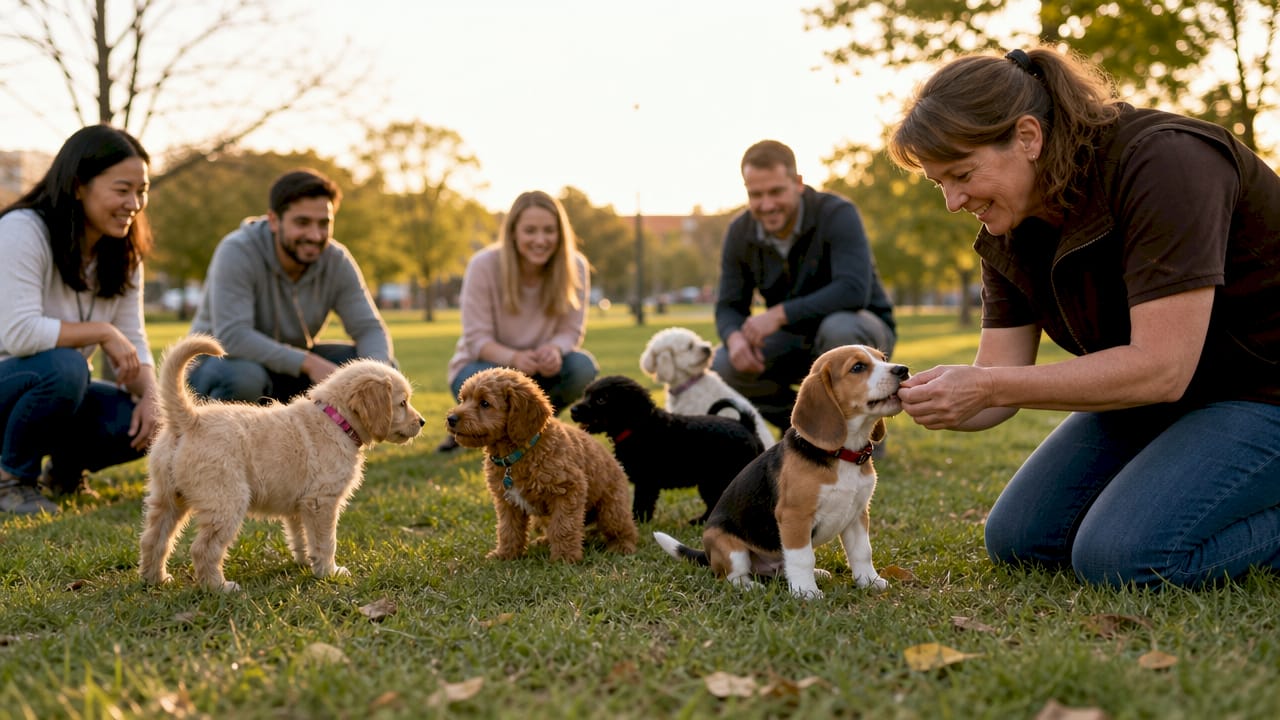
Professional puppy classes must enforce strict hygiene protocols, including sanitising floors between sessions and checking vaccination records at the door. When these standards are met, classes can begin safely after the first vaccine dose, provided at least 7 days have passed since that dose was given. This is one of the most effective ways to socialise your puppy during the vaccination series.
For outings before the final vaccine, carry your puppy in your arms, a sling, or a pet stroller. This allows full exposure to sights, sounds, and smells without ground contact. Car rides through busy areas, visits to outdoor markets, and sitting near a school gate at pick-up time all count as excellent, low-risk socialisation.
Pro Tip: Use puppy socialisation tips from reward-based training to pair every new experience with a small treat. This builds a positive emotional response to novelty from the very first week.
When can your puppy explore freely after vaccination is complete?
Full public ground contact is recommended from 7 to 14 days after the final vaccine dose in the core series, once your vet confirms the immune response is complete. This is the moment many owners have been waiting for, but the transition works best when it is gradual rather than sudden.
Follow this sequence for the smoothest transition:
Days 1–7 post-final vaccine: Continue carrying or using a stroller for public outings. Stick to familiar, low-traffic areas.
Days 7–14: Begin short walks on quiet pavements and in friends’ gardens with vaccinated dogs. Keep sessions brief and positive.
Week 3 onwards: Introduce busier streets, parks with low dog traffic, and new surfaces such as grass, gravel, and sand.
Week 5 onwards: Gradually introduce off-lead play in secure, low-risk areas with known dogs.
Week 6 and beyond: Dog parks and high-traffic public areas can be considered, but wait an extra two weeks beyond the minimum recommendation for added safety.
Pair every new surface and environment with treats and calm praise. Reward-based training at this stage creates lasting positive associations that make your puppy genuinely enjoy new experiences rather than merely tolerate them. Leash training indoors before the vaccination series is complete means your puppy arrives at this stage already comfortable with the lead, making outdoor walks far less stressful for both of you.
Socialisation does not stop at 16 weeks. Continuing to introduce new people, places, and experiences through adolescence and into adulthood maintains the confidence your puppy has built.
How to adjust plans for rescue or late-vaccinated puppies
Rescue puppies or those with an unknown vaccination history present a specific challenge. A full vaccine restart is required, which typically takes 4 to 6 weeks to complete, and this delay often means the socialisation window is already narrowing or has partially closed by the time the puppy arrives home.
The approach for these puppies requires both patience and creativity:
Assume no prior immunity and begin the full core series immediately with your vet.
Prioritise indoor socialisation with known, vaccinated dogs in clean home environments while the vaccine series is underway.
Use controlled carry-based outings to expose your puppy to sounds, sights, and people without ground contact risk.
Work with a professional trainer who understands fear periods and can guide exposure at the right pace for your puppy’s age and temperament.
Avoid abrupt transitions from isolation to full public exposure. Gradual expansion of the social world reduces the risk of fear and reactivity developing.
Older puppies between 4 and 6 months may already show signs of fear or caution around unfamiliar stimuli. This is normal and manageable with consistent, positive, reward-based exposure. The socialisation window may be narrowing, but it is not closed, and every positive experience still counts.
Key takeaways
The puppy vaccination schedule and socialisation window overlap directly, and managing both together through controlled, reward-based exposure is the most effective way to raise a healthy, confident dog.
Point | Details |
Vaccination timing is precise | Core DA2PP vaccines run from 6 to 16 weeks; skipping doses leaves immunity incomplete. |
Socialisation starts before vaccines finish | The critical window opens at 3 weeks; waiting for full vaccination means missing it entirely. |
Controlled environments are safe | Puppy classes with vaccination proof and home playdates with vaccinated dogs are low-risk options. |
Carry your puppy for early outings | Strollers and arms allow full sensory exposure without dangerous ground contact. |
Rescue puppies need adapted plans | A full vaccine restart and gradual, indoor-led socialisation protects both health and behaviour. |
What I have learned from 20 years of puppy training in Singapore
The mistake I see most often is not recklessness. It is over-caution. New owners hear “parvovirus” and decide to keep their puppy home until every vaccine is done. By the time the puppy is cleared for public life at 16 weeks, they have missed the most receptive weeks of their entire life. I have worked with dogs who were perfectly healthy but terrified of strangers, traffic, and other dogs, purely because those early weeks were spent in isolation.
The science here is clear, and so is the practical reality. Balanced, controlled socialisation during the vaccination period is safer for your puppy’s long-term wellbeing than waiting. A puppy who attends a well-run class at 8 weeks, plays with two vaccinated dogs at home, and rides in a carrier through a busy street market is not being put at risk. That puppy is being given the foundation for a calm, happy adult life.
What I always tell owners is this: pair your vet visits with a socialisation checklist. Every time you go in for a vaccine, come home with a plan for the next two weeks of exposure. Make it a habit. The vaccination timeline and the socialisation schedule are not competing priorities. They are two parts of the same plan.
The puppies I see thrive most are the ones whose owners started early, stayed consistent, and asked for help when they were unsure. Professional guidance during this window is not a luxury. For many puppies, it is the difference between a confident dog and a fearful one.
— Mark
Start your puppy’s socialisation journey with Happy-dogtraining
Getting the balance between vaccination and socialisation right is much easier with expert support alongside you. Happy-dogtraining offers puppy socialisation classes in Singapore that require vaccination proof from all participants and follow strict hygiene protocols, so your puppy gets safe, structured social exposure from the earliest appropriate age.
With over 20 years of experience and AVS accreditation, the certified trainers at Happy-dogtraining guide you through every stage of the vaccination and socialisation timeline, using reward-based methods that build genuine confidence in your puppy. Classes are kept small, environments are controlled, and every session is designed to complement your vet’s vaccination plan. Enrol early to make the most of your puppy’s critical window.
FAQ
When can puppies start socialisation classes?
Puppies can begin socialisation classes after their first vaccine dose, provided at least 7 days have passed and the class enforces vaccination proof and hygiene protocols for all participants.
Is it safe to take my puppy out before vaccinations are complete?
Yes, with precautions. Carry your puppy in your arms or a stroller to avoid ground contact, and stick to environments where other dogs are known to be vaccinated. Avoid dog parks and pet store floors entirely until the full series is complete.
How many vaccines does a puppy need before socialisation?
The core vaccine series requires three DA2PP doses at 6–8, 10–12, and 14–16 weeks, plus a rabies dose at 12–16 weeks. Socialisation in controlled settings can begin safely after the first dose.
What happens if my puppy misses the socialisation window?
Missing the peak window does not make socialisation impossible. Older puppies and adult dogs can still learn to accept new experiences through patient, reward-based exposure, though progress may be slower and professional guidance from a trainer is strongly recommended.
Do rescue puppies need a different socialisation approach?
Yes. Rescue puppies with unknown vaccination history need a full vaccine restart, which takes 4 to 6 weeks. During this time, prioritise indoor socialisation with vaccinated dogs in clean home environments and use carry-based outings for sensory exposure without ground contact risk.
Recommended
Comments