What is in-home dog training? A practical guide
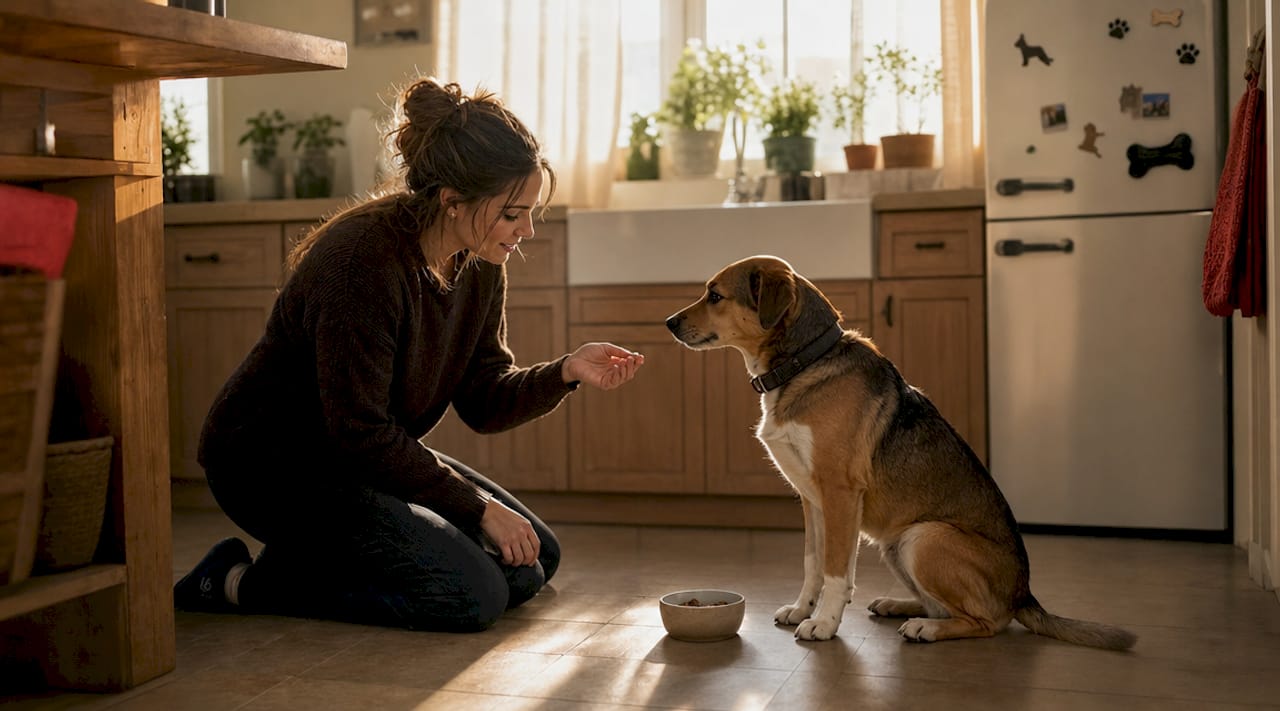
In-home dog training is a one-on-one service where a professional trainer works directly inside your home to address your dog’s behaviour in the exact environment where it occurs. Unlike group classes held at a training facility, this approach lets the trainer observe your dog’s real triggers, your household routines, and the specific situations that cause problems. Whether your dog barks at the doorbell, jumps on guests, or pulls towards the kitchen counter, the training happens right where those habits live. The result is a personalised plan that fits your home, your dog, and your daily life.
How does in-home dog training work?
In-home dog training is structured around observation first and coaching second. The trainer arrives at your home, watches how your dog moves through its space, and identifies the triggers and routines that shape its behaviour. This is far more revealing than asking you to describe the problem from memory. What you see in a session is often different from what you expect.
A typical programme follows this sequence:
Initial assessment. The trainer discusses your goals, your dog’s history, and any specific concerns. This covers who feeds the dog, what the daily routine looks like, and which behaviours are most disruptive.
Environmental observation. The trainer watches your dog in action, noting how it responds to sounds, movement, visitors, or other household triggers.
Hands-on coaching. The trainer demonstrates a technique, then guides you through practising it with your dog. This real-time coaching covers your timing, your body language, and how you deliver rewards.
Micro-exercises to start immediately. Most owners leave the first session with two to three practical tasks they can apply that same day, before the full training plan is even established.
Follow-up sessions. Sessions typically last one hour and are scheduled weekly or fortnightly, with progress reviewed and exercises adjusted at each visit.
Between sessions, you practise the exercises your trainer has set. Progress is tracked, and the plan evolves as your dog improves. This structure means you are never left guessing what to do next.
Pro Tip: Keep a short daily log of your dog’s behaviour between sessions. Note what triggered a reaction, how you responded, and what happened next. This gives your trainer precise information to refine the plan faster.
What are the benefits of in-home training versus group classes?
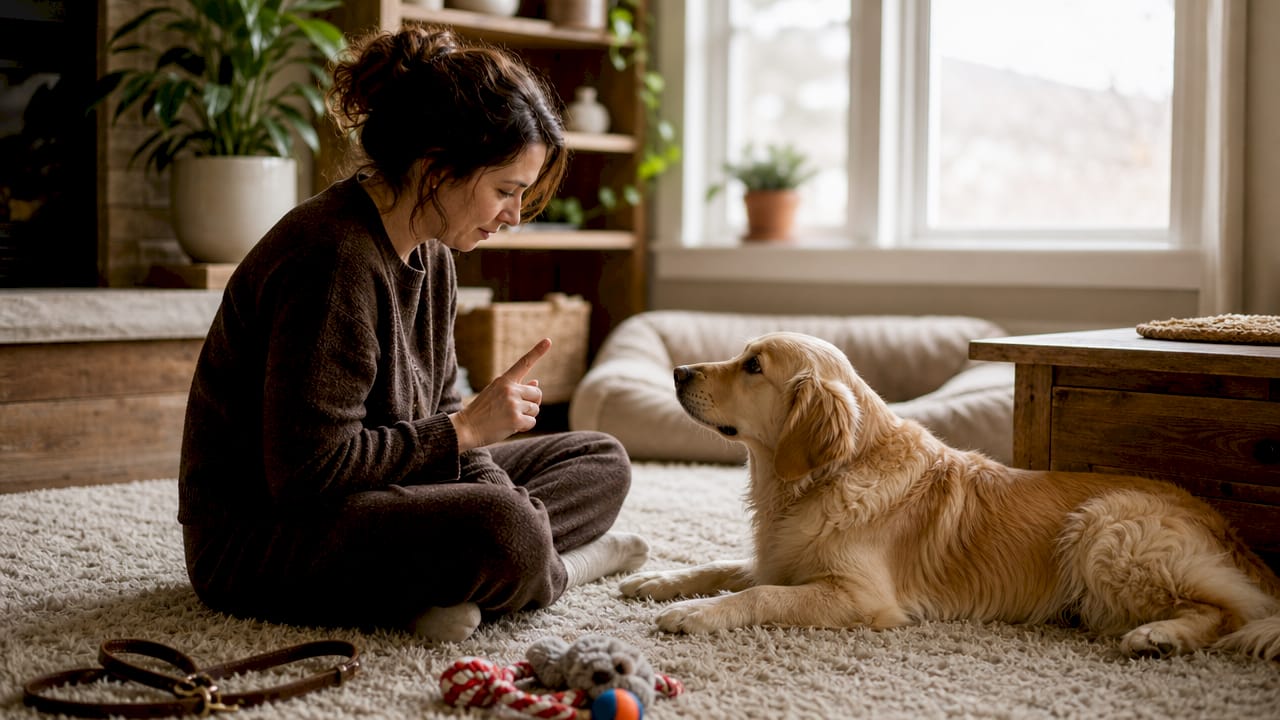
The core advantage of private, home-based training is that it targets behaviour where it actually happens. Training in the home setting allows immediate skill application because the dog is learning in the exact context where reliability matters most. A dog that sits perfectly in a training hall may still bolt out of your front door, because it has never practised that skill at home.
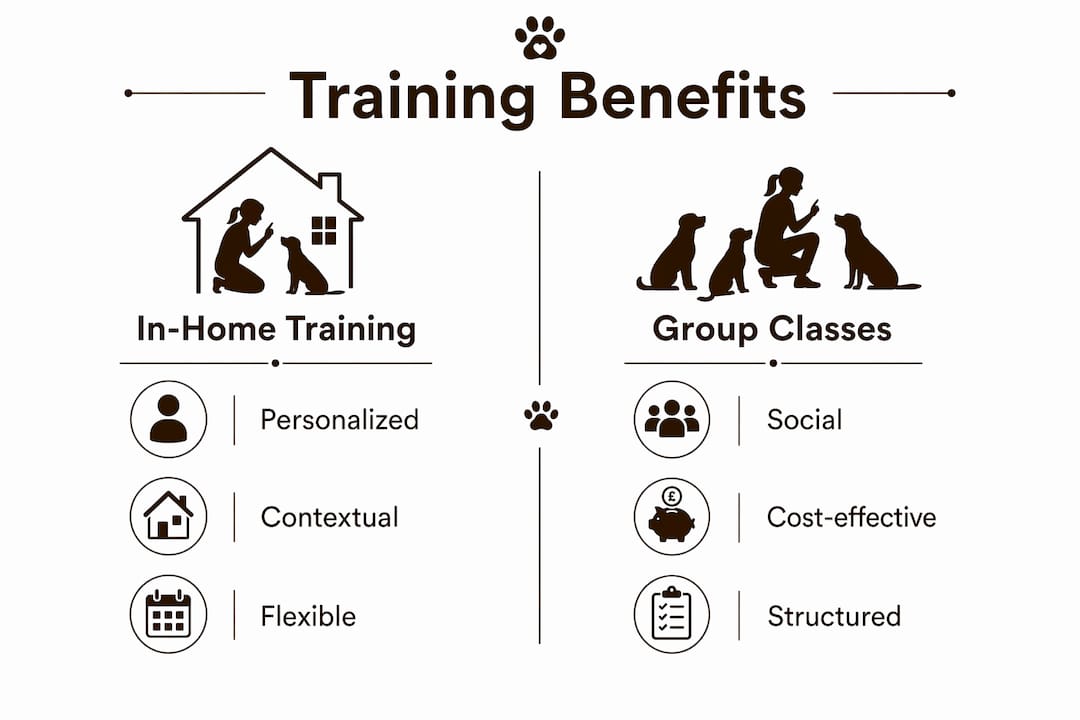
Here is how the three main formats compare:
Format | Best for | Key limitation |
In-home private training | Home-specific behaviours, anxious or reactive dogs, busy owners | Higher cost per session than group classes |
Group classes | Socialisation, basic obedience, confident dogs | Can overwhelm reactive dogs; not home-specific |
Online training | General guidance, motivated owners, mild issues | No real-time feedback on your handling |
Beyond the comparison, in-home training offers several specific advantages worth knowing:
Reduced distractions. Your home is a familiar, calm environment. Dogs that are anxious or reactive around other dogs or strangers can focus and learn without being overwhelmed.
Customised to your household. The training plan accounts for who feeds the dog, what triggers exist, and what rules your family wants to maintain. There is no generic template.
Owner skill-building. You practise alongside your dog with a trainer watching and correcting your technique in real time. This builds your confidence as much as it builds your dog’s skills.
Ideal for specific home behaviours. Issues like barking, jumping, and doorway problems are addressed directly in the context where they occur, making the training far more relevant.
For puppies, starting training at home builds strong behavioural foundations early. You can read more about early puppy training and how a home-based approach supports confident development from the start.
What in-home dog training techniques are commonly used?
Experienced in-home dog trainers draw on a consistent set of methods, all grounded in positive reinforcement and clear communication. The goal is not to teach your dog a list of commands. Successful training focuses on teaching clear communication so that unwanted behaviour is prevented, not just interrupted.
The most effective techniques used in home sessions include:
Positive reinforcement. Rewarding the behaviour you want, the moment it happens, using treats, praise, or play. Timing is everything. A reward delivered two seconds late teaches the wrong lesson.
Marker training. Using a precise signal, such as a clicker or a short word like “yes,” to mark the exact moment your dog does the right thing. This bridges the gap between the behaviour and the reward.
Environmental management. Adjusting the home setup to prevent your dog from rehearsing unwanted behaviour while training is in progress. Baby gates, leashes, and controlled access are all tools here. Preventing repetition of a bad habit is faster than undoing it.
Cue clarity. Teaching your dog to respond to one clear, consistent cue rather than a mix of words and gestures from different family members. Everyone in the household uses the same language.
Practical exercises for common issues. Door manners are taught by practising the exact routine of someone arriving at your front door. Recall is practised in your garden or living room. Barking is addressed by identifying the trigger and training an incompatible response, such as going to a mat.
For dogs that are reactive towards other dogs, private reactive dog training in a controlled home environment is often the safest and most effective starting point before any group exposure.
Pro Tip: Ask your trainer to demonstrate each exercise at least twice before you try it yourself. Watching the technique with your own dog makes it far easier to replicate correctly between sessions.
How can you maximise the success of in-home training?
The trainer does the teaching, but you do the practising. Effective sessions balance assessment and hands-on coaching precisely so that you can apply skills immediately at home. Your consistency between visits is what determines how quickly your dog improves.
Follow these steps to get the most from every session:
Practise daily, not just before sessions. Short, frequent practice of five to ten minutes is more effective than one long session the day before your trainer arrives. Dogs learn through repetition spread over time.
Set realistic goals. Behaviour change takes weeks, not days. Celebrate small wins, such as your dog sitting calmly when the doorbell rings once, rather than expecting perfection immediately.
Keep the environment consistent. If your trainer has set management rules, such as keeping your dog on a lead near the front door, apply them every single time. One inconsistent moment can undo several days of progress.
Involve everyone in the household. If one family member uses different cues or allows behaviours others are working to change, the dog receives mixed signals. Align the whole household on the same approach.
Communicate openly with your trainer. If an exercise is not working, say so at the next session. A good trainer adjusts the plan based on your real experience at home, not a theoretical ideal.
The in-home advantage extends beyond training sessions. When your dog is comfortable and confident in its own space, learning transfers faster and lasts longer.
Key takeaways
In-home dog training is the most effective format for addressing home-specific behaviours because it places training, observation, and owner coaching in the exact environment where problems occur.
Point | Details |
Training in context | Behaviours like barking and door-jumping are addressed where they actually happen, improving reliability. |
Session structure | Each visit includes assessment, demonstration, and hands-on owner practice with two to three take-home exercises. |
Owner involvement | Your consistency and daily practice between sessions determines how quickly lasting change occurs. |
Customised plans | The trainer accounts for your household routines, triggers, and family rules to build a plan that fits your life. |
Best candidates | Anxious, reactive, or home-specific behaviour cases benefit most from the calm, familiar home environment. |
Why in-home training changed how I think about dog behaviour
After working with dogs and their owners for over two decades, the single most consistent observation I have made is this: most behaviour problems are not dog problems. They are environment problems. The dog is responding to something in its home, and no amount of training in a neutral facility will reliably change that response.
What surprises owners most during a first in-home session is how much information the environment reveals. A dog that “just barks randomly” is almost always barking at a very specific trigger, whether it is a sound from a neighbouring flat, a shadow through a frosted window, or the sound of a particular lift. You cannot see that from a training hall. I can see it the moment I walk through your door.
The other thing I have learnt is that owner confidence matters as much as dog skill. When you practise a technique correctly and see your dog respond, something shifts. You stop feeling anxious about your dog’s behaviour and start feeling capable of managing it. That shift is what makes the training last. A dog reads your calm, consistent energy and responds to it. The wagging tail and the relaxed body language you see after a few weeks of good practice are not just your dog improving. They are a reflection of you improving too.
Realistic expectations matter here. Significant behaviour change typically takes several weeks of consistent effort. The owners who see the best results are not the ones with the most obedient dogs at the start. They are the ones who practise every day, ask questions, and trust the process.
— Mark
Start your in-home training journey with Happy-dogtraining
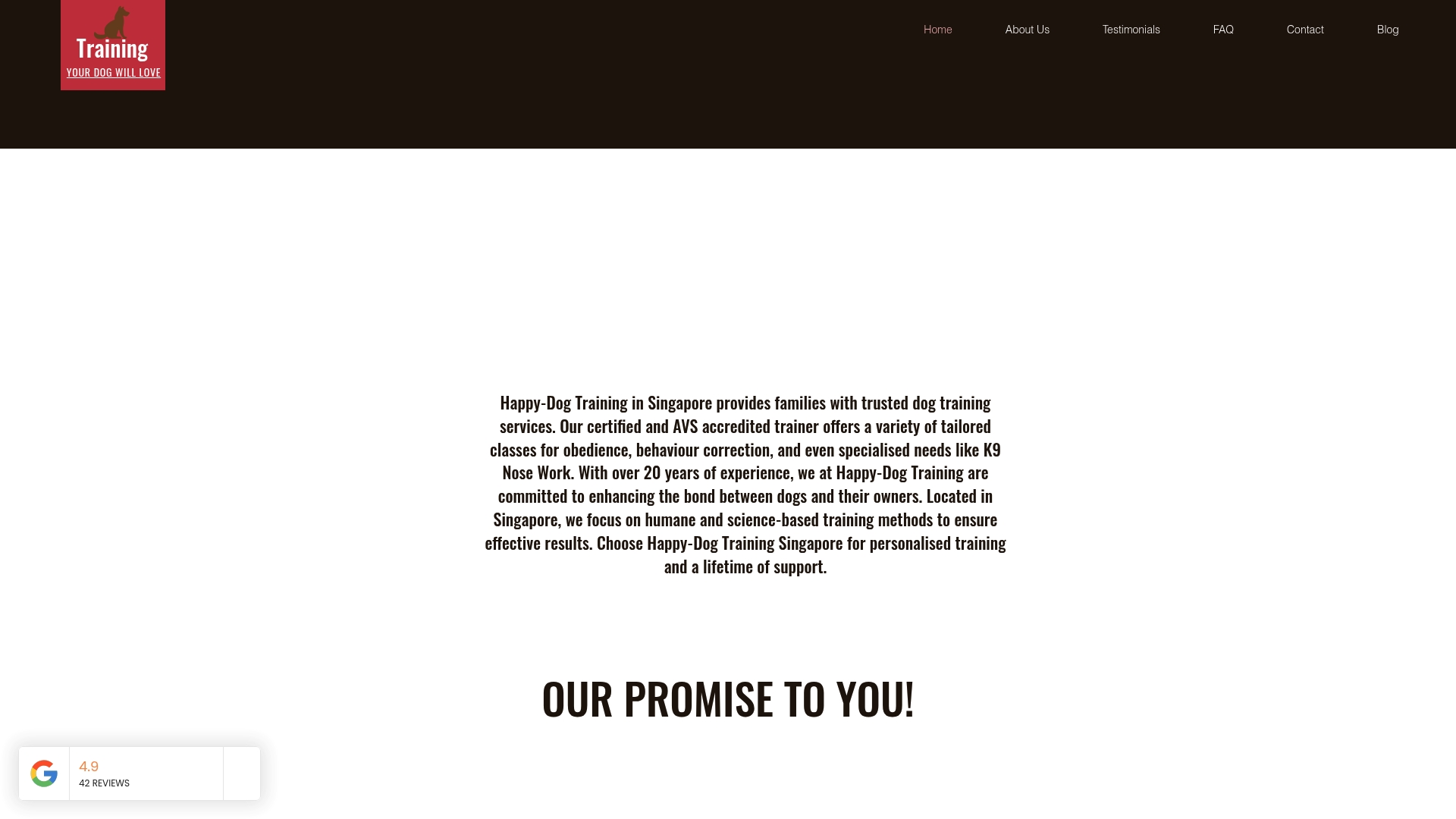
Happy-dogtraining brings over 20 years of certified, AVS-accredited expertise directly to your home in Singapore. Every programme is built around your dog’s specific behaviour, your household routines, and your goals as an owner. Whether you are dealing with barking, jumping, fearfulness, or aggression, the approach is always humane, science-based, and tailored to your situation. Sessions are scheduled at your convenience, and every client receives free lifetime support after training is complete. Explore the full range of private training packages and find the right option for your dog today.
FAQ
What is in-home dog training exactly?
In-home dog training is a one-on-one service where a professional trainer visits your home to address your dog’s behaviour in its real environment. Sessions cover assessment, hands-on coaching, and practical exercises tailored to your household.
How many sessions does in-home training typically require?
Most programmes include an initial consultation followed by several weekly one-hour sessions, with the number depending on the complexity of the behaviour being addressed. Owners also practise daily exercises between visits to build progress consistently.
Is in-home dog training effective for reactive dogs?
In-home training is particularly effective for reactive or anxious dogs because the familiar home environment reduces stress and allows focused learning without the distractions of group settings. Addressing reactivity where it occurs produces more reliable results.
How much does in-home dog training cost compared to group classes?
In-home private training costs more per session than group classes, but the personalised attention, customised plan, and direct owner coaching often produce faster and more lasting results for home-specific behaviour issues.
What should I do between in-home training sessions?
Practise the two to three exercises your trainer has assigned for five to ten minutes each day, keep the household rules consistent, and note any specific triggers or reactions to share at your next session.
Recommended
Comments