What is threshold in dog training?
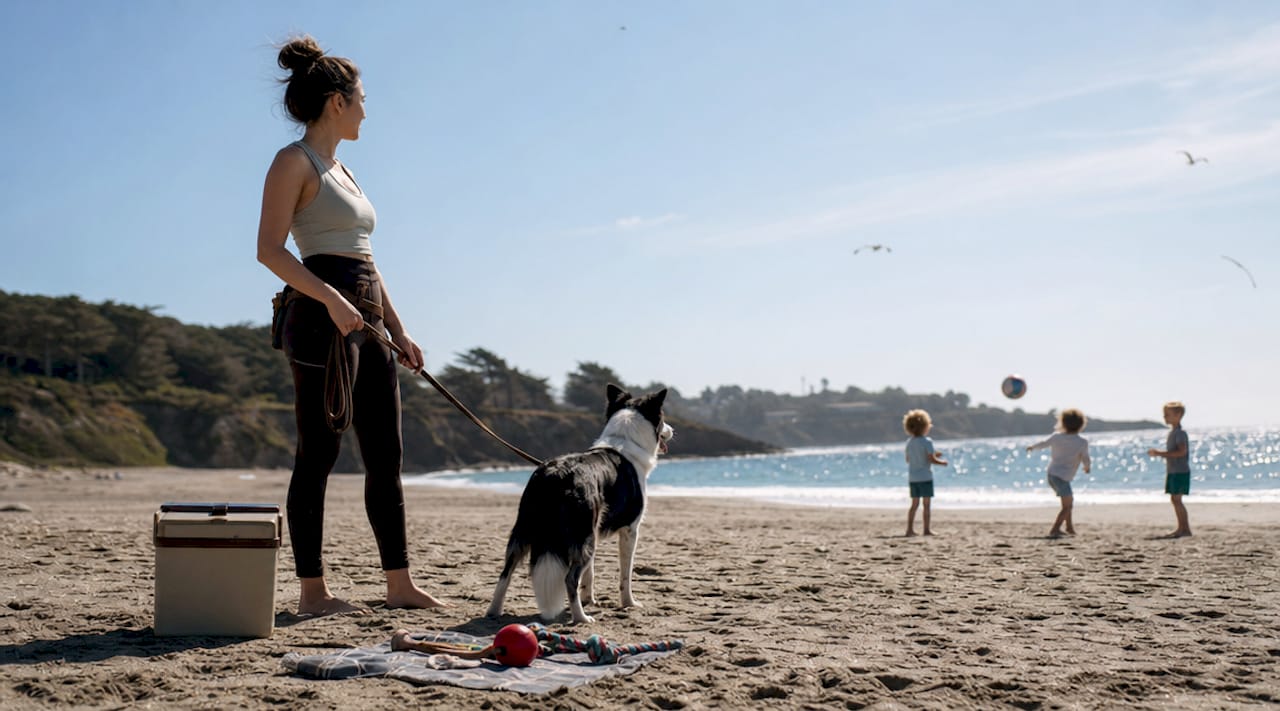
A threshold in dog training is the precise point at which a dog shifts from a calm, manageable state to one of stress, reactivity, or overwhelm. Below this point, your dog can think, learn, and respond to cues. Above it, the fight-or-flight response takes over, making learning effectively impossible. Understanding training thresholds is not just useful knowledge. It is the foundation of every successful behaviour modification programme, whether you are working with a nervous rescue dog or a boisterous adolescent who lunges at other dogs on the lead.
What signs show a dog is nearing their threshold?
Recognising the early warning signs is the most practical skill you can develop as a dog owner. Most people notice the dramatic reactions, such as barking, lunging, or growling. The real skill lies in spotting what happens before those moments.
Dogs communicate their rising stress through subtle body language signals. Learning to read these signals gives you the chance to intervene before your dog crosses into reactivity. Watch for the following:
Lip licking or yawning when there is no food present and your dog is not tired
Avoiding eye contact or turning the head away from a trigger
Panting in cool conditions or when your dog has not been exercising
Stiffening of the body or a slow, deliberate freeze
Whale eye, where the whites of the eyes become visible
Refusing food or treats that your dog would normally take eagerly
Seeking escape by pulling away or hiding behind you
Once a dog crosses their threshold, two very different responses can follow. Some dogs shut down or escalate aggressively, depending on their individual temperament and past experiences. A dog that shuts down may go quiet and appear to comply, but is actually too overwhelmed to engage. A dog that escalates will bark, lunge, or snap. Both responses signal the same thing: your dog has gone past the point where productive training is possible.
Pro Tip: Practise watching your dog in low-stress situations first. The better you know their relaxed body language, the faster you will spot the early signs of rising stress when a trigger appears.
Why do thresholds vary between dogs and change over time?
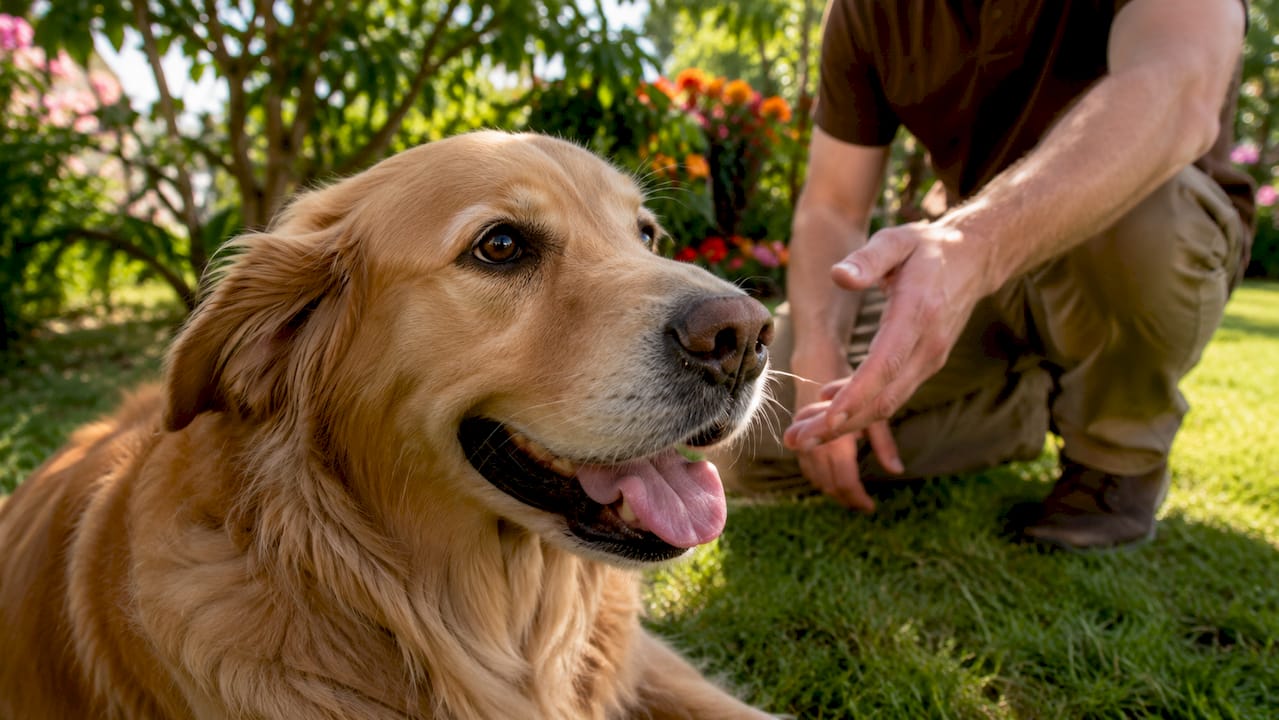
No two dogs share the same threshold, and even the same dog will have different thresholds on different days. This is one of the most important concepts in understanding training thresholds, and it is the reason that fixed rules like “always stay five metres away from other dogs” rarely work in practice.
Several factors influence where a dog’s threshold sits on any given day:
Individual sensitivity. Some dogs are naturally more reactive due to genetics, breed traits, or early socialisation gaps. A Border Collie bred for intense environmental awareness will often have a lower threshold to movement than a Basset Hound.
Prior experiences. A dog that has had a frightening encounter with another dog will have a lower threshold around dogs than one with a neutral history. Negative experiences lower the threshold; positive ones raise it.
Physical health and pain. A dog in discomfort is far more likely to react. Pain lowers the threshold significantly, which is why a sudden increase in reactivity should always prompt a veterinary check.
Emotional state at the time. A dog that is already aroused from play, or anxious from a thunderstorm the night before, will have a lower threshold than one that is rested and calm.
Environment and location. Thresholds vary depending on context, including the location, the number of triggers present, and the intensity of each one. A dog may cope well with one dog at a distance in a quiet park but fall apart when two dogs appear on a busy street.
This fluidity means you must assess your dog’s threshold fresh each session. What worked on Monday may not work on Friday. Developing this observational habit is what separates owners who make real progress from those who feel stuck.
How do trainers measure and set thresholds during training?
Setting a threshold for training is not a one-time calculation. It is an ongoing process of observation, adjustment, and careful exposure. The goal is always to keep your dog sub-threshold, meaning calm enough to notice the trigger but not overwhelmed by it.
The table below shows the key difference between sub-threshold and over-threshold states during a training session:
State | What you observe | Training outcome |
Sub-threshold | Dog notices trigger, remains calm, accepts food | Learning occurs; positive associations form |
At threshold | Dog is tense, may hesitate, food acceptance drops | Limited learning; proceed with caution |
Over-threshold | Dog barks, lunges, refuses food, cannot focus | No learning; risk of sensitisation increases |
In practice, trainers begin by identifying the threshold distance, which is the physical distance from a trigger at which the dog first notices it but remains calm. This is your starting point. Threshold training uses gradual, controlled exposure combined with counterconditioning, pairing the trigger with something the dog genuinely loves, such as high-value treats or play, to build a new emotional response.
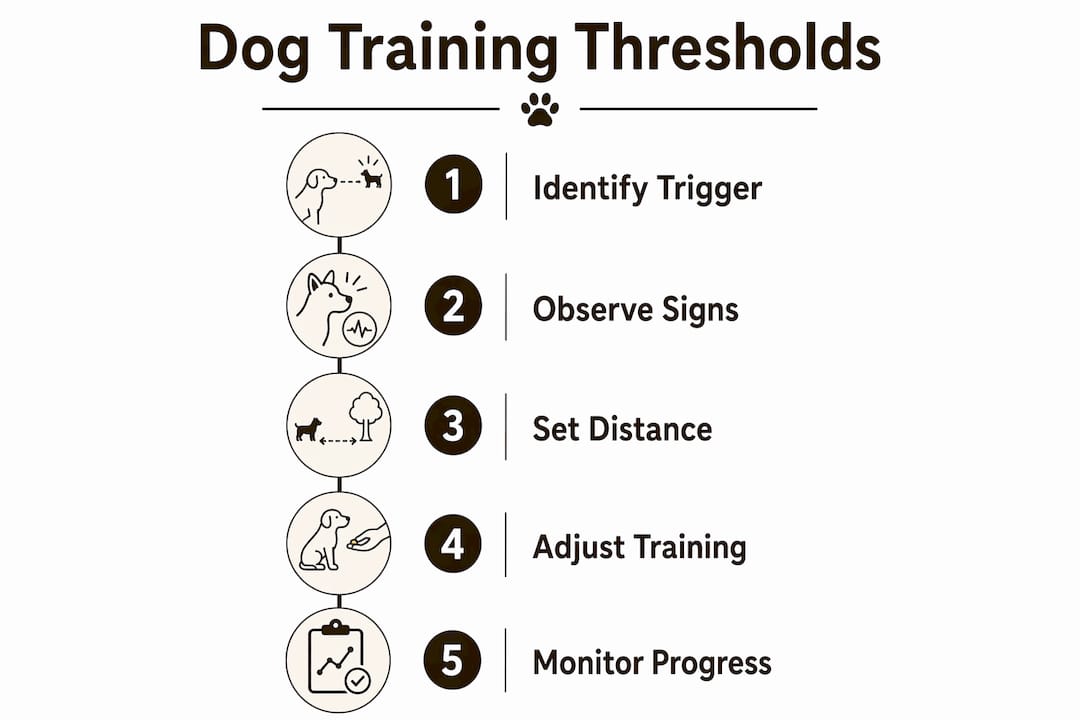
The critical rule is this: pushing dogs past their threshold risks sensitisation, which means the fear or reactivity worsens rather than improves. Progress must be slow enough that the dog’s nervous system can adapt. Increasing the intensity or proximity of a trigger should only happen once the dog is consistently calm and engaged at the current level. Patience here is not optional. It is the mechanism through which lasting change happens.
Pro Tip: If your dog stops taking treats during a session, that is your clearest signal that they have crossed their threshold. End the session calmly, move further away from the trigger, and try again at a greater distance next time.
What are effective strategies for managing thresholds in reactive dogs?
Managing and gradually improving your dog’s threshold requires a consistent, structured approach. The good news is that with the right methods, most dogs make meaningful progress. Here is what works:
Start at a distance that guarantees success. If your dog reacts to other dogs at 10 metres, begin training at 20 metres. Success at a comfortable distance builds confidence and creates the positive associations needed for progress.
Use high-value rewards. Standard kibble rarely cuts it when a dog is near their threshold. Use something genuinely exciting, such as cooked chicken, cheese, or a favourite toy, to compete with the trigger’s emotional pull.
Apply desensitisation and counterconditioning together. Combining these two methods is the proven approach for raising thresholds over time. Desensitisation reduces the emotional charge of the trigger through gradual exposure. Counterconditioning replaces the negative association with a positive one.
Create a safe space at home. A crate or quiet corner that your dog voluntarily chooses gives them a place to decompress after stressful events. This reduces the cumulative stress load that lowers thresholds over time.
Keep sessions short. Fifteen minutes of focused, sub-threshold training is worth more than an hour of pushing too hard. Over-threshold training worsens fears and sets progress back. End on a calm, successful moment every time.
Stay calm yourself. Your dog reads your body language constantly. Tense leads, held breath, and anxious energy all communicate that there is something to worry about. Calm, neutral behaviour from you signals safety.
Know when to seek professional help. If your dog’s reactivity is severe, or if you are not seeing progress after consistent effort, a qualified trainer who understands threshold-based behaviour modification can make a significant difference. Specialist reactive dog classes provide the controlled environment and expert guidance that home practice alone cannot replicate.
Consistency matters more than intensity. Small, regular sessions where your dog finishes calm and confident will outperform sporadic, ambitious training every time.
Key takeaways
Keeping your dog sub-threshold is the single most important factor in effective behaviour modification, because learning only occurs when the nervous system is calm enough to process new information.
Point | Details |
Threshold defined | The tipping point between calm behaviour and stress or reactivity in any given situation. |
Early signals matter | Lip licking, whale eye, and food refusal are key signs your dog is approaching their limit. |
Thresholds are fluid | Health, environment, and prior experiences all shift where a dog’s threshold sits each day. |
Sub-threshold training works | Gradual exposure with positive reinforcement builds tolerance without triggering sensitisation. |
Short sessions win | Ending training before distress occurs protects welfare and accelerates long-term progress. |
What 20 years of threshold work has taught me
After two decades of working with reactive and fearful dogs across Singapore, the single most common mistake I see is well-meaning owners who push just a little too far. They see their dog coping and think, “Let’s try getting a bit closer.” The dog reacts. The owner apologises and retreats. And the dog has just learned, once again, that the trigger is something to be afraid of.
Threshold awareness is not a technique. It is a mindset. The owners who make the fastest progress are not the ones with the most time or the most treats. They are the ones who learn to read their dog with genuine curiosity, noticing the small flicker of tension before it becomes a full reaction. That observational skill is something you build over weeks of paying close attention, and it changes everything.
I have also seen the opposite mistake: owners who are so cautious about crossing the threshold that they never make progress at all. The goal is not to avoid triggers forever. It is to build your dog’s tolerance gradually, so that over time, what once caused a meltdown becomes something your dog can notice and move on from. That transformation is entirely possible. I have watched it happen hundreds of times, and it never gets old.
The humane training methods that underpin threshold work are not just kinder. They are more effective. Science and experience point in exactly the same direction here.
— Mark
Ready to work on your dog’s thresholds with expert support?
Understanding thresholds is one thing. Applying that knowledge in real-world situations, with a reactive dog on a busy street, is another challenge entirely. Happy-dogtraining offers specialist classes and personalised programmes designed around exactly this work.
The Dog Reactive Dog Class at Happy-dogtraining provides a controlled, supportive environment where your dog can practise staying sub-threshold around other dogs, with expert guidance at every step. For dogs whose reactivity stems from fear, the fearful dog programme offers a tailored approach to building confidence safely. With over 20 years of experience and AVS accreditation, Happy-dogtraining gives you and your dog the tools to make real, lasting progress together.
FAQ
What does “threshold” mean in dog training?
Threshold in dog training refers to the boundary between a dog’s calm state and a reactive or stressed state. Below threshold, a dog can learn and respond to cues. Above it, the stress response takes over and learning stops.
How do I know if my dog has crossed their threshold?
Clear signs include refusing food, barking or lunging, panting without physical exertion, and an inability to focus on you. These signals indicate your dog is over-threshold and the session should end or the distance from the trigger should increase immediately.
Can a dog’s threshold improve over time?
Yes. Through consistent desensitisation and counterconditioning, most dogs develop a higher tolerance to their triggers. Progress requires keeping the dog sub-threshold during every training session and increasing exposure only as calmness is reliably maintained.
Why does my dog react on some days but not others?
Thresholds are fluid and shift based on factors such as health, fatigue, prior stress events, and the environment. A dog that coped well yesterday may have a lower threshold today due to poor sleep, mild discomfort, or accumulated stress from earlier in the day.
When should I seek professional help for threshold training?
Seek professional support if your dog’s reactivity is intense, if you are not seeing progress after consistent effort, or if safety is a concern. A qualified trainer can assess your dog’s individual threshold levels and design a programme that moves at the right pace for lasting results.
Recommended
Comments