What to pack for dog boarding training in 2026

Knowing what to pack for dog boarding training is the single most important step you can take before dropping your dog off for their stay. The four categories that matter most are food, medication, comfort items, and documentation. Get these right and you give your dog the best possible chance of settling in quickly, maintaining their routine, and thriving under the care of boarding or training staff. This guide walks you through each category with practical, specific advice so you can pack with confidence.
1. What food and treats to pack for dog boarding training
Pre-portioning your dog’s regular food and labelling each portion with the feeding time is the single most effective way to prevent digestive upset during a boarding stay. Dogs have sensitive digestive systems, and switching food mid-stay, even briefly, can cause loose stools, vomiting, and discomfort. Bringing their usual food removes that risk entirely.
When preparing food for the stay, keep these points in mind:
Pack enough food for the full duration of the stay, plus two extra days in case of delays or extended care.
Label each portion clearly with your dog’s name, the meal time, and the quantity. Use zip-lock bags or small containers for easy handling.
If your dog has a specialised diet, allergies, or takes supplements mixed into food, write this information on a separate card attached to the food bag.
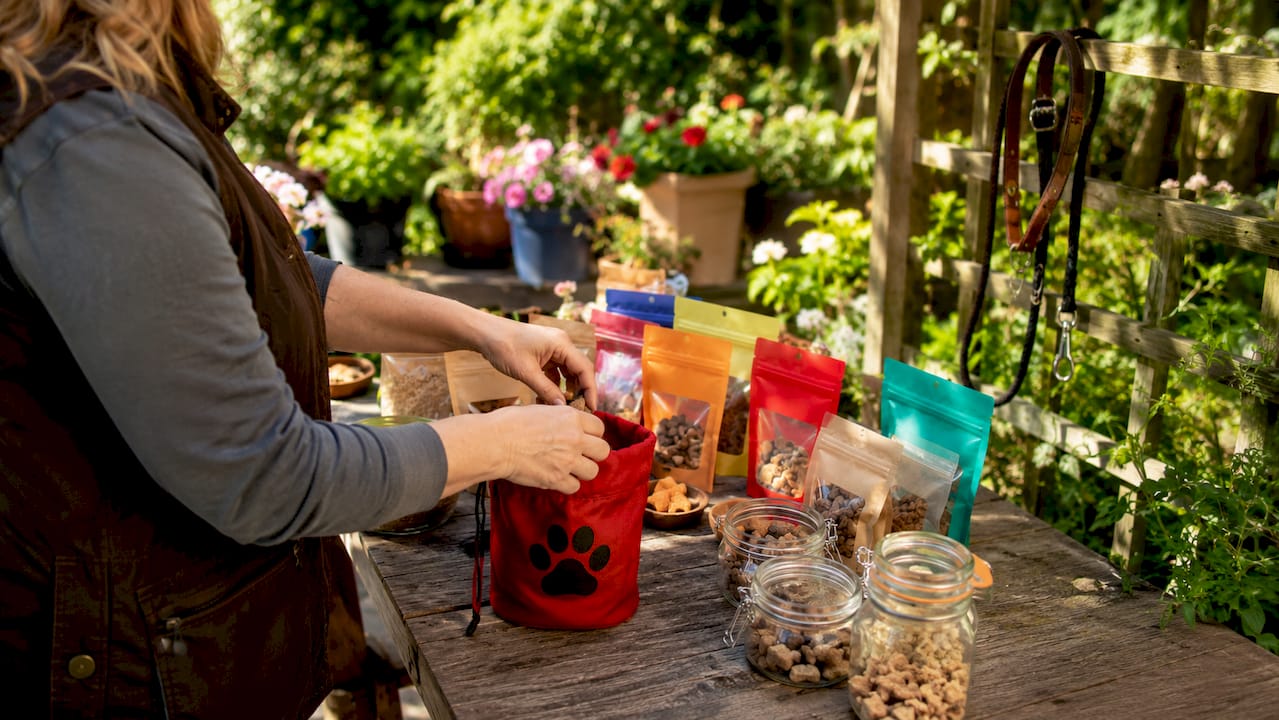
Include a small supply of high-value treats your dog already knows and loves. These are particularly useful during reward-based training sessions, where familiar treats help dogs focus and respond more readily.
Treats serve a dual purpose during boarding and training. They comfort anxious dogs and act as effective rewards during marker training or obedience work. Choose treats your dog finds genuinely motivating rather than packing something new.
Pro Tip: Pack treats in a separate, clearly labelled bag from meals. This makes it easy for staff to use them during training sessions without accidentally overfeeding at mealtimes.
2. Essential medication and supplement packing for your dog
Clear dosage instructions and original prescription-labelled containers reduce dosing errors significantly. This is not optional. When boarding staff are caring for multiple dogs, ambiguity around medication timing or quantity creates real risk. Your job is to make their job as simple as possible.
Follow these steps when packing medication:
Keep all medication in its original packaging with the prescription label intact. Do not transfer tablets into unmarked containers.
Write a separate, handwritten or printed medication schedule that includes the drug name, dose, timing, whether it should be given with food, and any known side effects to watch for.
Pack at least two to three extra days of supply beyond the stay duration. Travel delays, extended stays, or lost items happen, and running out of critical medication mid-stay is a serious problem.
For supplements like fish oil, joint support, or calming aids, include the same level of detail. Staff cannot be expected to guess dosage or timing.
Hand the medication directly to a staff member on arrival rather than leaving it in your dog’s bag. Confirm verbally that they have received and understood the instructions.
Including a detailed feeding and medication schedule with exact timing, food relations, and dosage facilitates staff compliance and reduces risk. Think of it as a handover document, not just a note.
Pro Tip: Take a photo of each medication label and your written schedule before you leave. If anything gets lost or damaged, you can resend the information immediately.
3. Comfort items from home that help reduce boarding stress
An unwashed T-shirt or familiar bedding offers genuine reassurance to dogs during boarding because scent is the primary way dogs process their environment. Dr. Erin Ray emphasises that familiar scents from the owner are one of the most powerful tools available for reducing boarding stress. This is not a sentimental gesture. It is a practical, science-backed strategy.
When choosing comfort items, consider the following:
Bedding or a blanket from home. Choose something your dog sleeps on regularly so it carries a strong, familiar scent. Wash it only after the stay, not before.
An unwashed T-shirt or worn item of clothing. Your scent on fabric is deeply reassuring to most dogs. A single item is enough.
A favourite toy. Choose something durable and familiar rather than something new. Familiar toys provide occupation and a sense of normalcy.
A chew or long-lasting treat. These are particularly useful for dogs who need mental stimulation to settle in a new space.
Owners should consider their dog’s habits before sending items that might be destroyed or cause harm. Destructive chewers can turn a soft toy into a choking hazard within minutes. If your dog is a heavy chewer, skip plush toys and opt for a rubber Kong or a nylon chew instead.
The choice of comfort scent items should consider durability and replaceability. Avoid sending expensive or irreplaceable items. A worn T-shirt costs nothing to replace and does the job just as well as a treasured blanket.
For more ideas on what keeps dogs comfortable and settled, the dog comfort checklist from Percy Loves is a practical reference worth bookmarking.
4. Necessary documentation and health information to bring
Vaccination records are required by most boarding facilities to reduce disease transmission risk in shared spaces. Core vaccines for dogs in Singapore typically include distemper, parvovirus, and hepatitis, with kennel cough vaccination strongly recommended for any dog entering a boarding environment. Arriving without these records can result in your dog being turned away.
Bring the following documents to every boarding or training admission:
Document | Why it matters |
Vaccination records | Required by most facilities; confirms protection against contagious diseases |
Veterinarian contact details | Allows staff to reach your vet quickly in a medical situation |
Emergency contact numbers | Provides a backup if you are unreachable during the stay |
Feeding and medication schedule | Reduces errors in routine care and administration |
Identification details | Confirms collar tags match records; useful if a dog escapes or is misidentified |
Keep copies of all documents in a waterproof folder or plastic sleeve inside your dog’s bag. Do not rely on digital copies alone. Staff handling multiple dogs during busy periods need physical documents they can refer to quickly.
5. Leash, collar, and identification tags
Leash and collar with ID tags are consistent must-have items across every credible boarding checklist. Your dog should arrive wearing a well-fitted collar with a current ID tag showing your name and contact number. Pack a spare leash in their bag as well, particularly if the facility takes dogs on group or individual walks.
For dogs undergoing training, the right equipment matters even more. A flat collar works for most dogs, but if your dog pulls heavily or has a history of slipping collars, a properly fitted harness is a safer choice. Discuss equipment preferences with your trainer before the stay so they can work with what your dog already knows.
6. Extras and optional items based on your dog’s needs
Some boarding services expect you to provide personal hygiene or outdoor accessories for your dog, so it is worth checking with the facility in advance. Optional extras can meaningfully improve your dog’s experience, particularly for longer stays.
Consider packing the following based on your dog’s individual needs:
Waste bags. Not all facilities provide these for walks. A roll of biodegradable bags takes up no space and is always useful.
Grooming tools. For longer-coated breeds, a brush or comb prevents matting during extended stays. Include it with a note asking staff to use it if time allows.
Seasonal items. In cooler months, a lightweight dog sweater or jacket is worth including for outdoor time. In warmer weather, paw balm protects against hot pavements.
Orthopaedic or supportive bedding. Older dogs or those with joint conditions benefit from extra cushioning. A portable orthopaedic mat is a thoughtful addition for senior dogs.
A familiar water bowl. Some dogs refuse to drink from unfamiliar bowls, which can lead to dehydration. A collapsible bowl from home removes this barrier.
The packing list for dog daycare and boarding does not need to be complicated. Focus on your dog’s specific habits and health needs rather than packing everything you own.
Key takeaways
A well-prepared dog boarding bag covers food, medication, comfort items, and documentation before anything else.
Point | Details |
Pack familiar food | Bring your dog’s usual food, pre-portioned and labelled, to prevent digestive upset. |
Original medication packaging | Keep all medication in labelled original containers with a written dosing schedule. |
Use scent-based comfort items | An unwashed T-shirt or familiar bedding reduces stress more reliably than new items. |
Bring all documentation | Vaccination records, vet contacts, and feeding schedules are required at most facilities. |
Choose safe comfort items | Avoid plush toys for heavy chewers; opt for durable rubber or nylon alternatives. |
What I have learned after 20 years of seeing dogs arrive for training
After two decades of working with dogs at Happy-dogtraining, the pattern I see most often is not under-packing. It is disorganised packing. Owners arrive with a full bag but no labels, or medication in an unmarked container, or a beloved blanket that their dog will shred within the first hour.
The owners whose dogs settle fastest are the ones who treat packing as a communication exercise. They are not just sending items. They are sending instructions, routines, and reassurance to a team of people who have never met their dog before. A clearly labelled bag with a one-page summary of your dog’s routine is worth more than any expensive toy or premium treat.
I also see owners underestimate the power of scent. A worn T-shirt is genuinely one of the most effective calming tools available, and it costs nothing. Dogs do not need novelty. They need familiarity, and scent delivers that faster than anything else.
One more thing: do not send irreplaceable items. I have seen cherished blankets destroyed in under ten minutes by anxious dogs. Pack things you would not mind losing, and save the sentimental items for the reunion.
— Mark
Prepare your dog for a confident, happy stay with Happy-dogtraining
Packing the right items gives your dog a strong start, but the foundation of a truly smooth boarding or training experience is a dog who already feels confident and responsive. Happy-dogtraining has spent over 20 years helping Singapore dog owners build exactly that. Whether your dog struggles with fearfulness, reactivity, or basic obedience, the team uses humane, science-based methods tailored to each dog’s individual needs. Explore the board and train programme for a structured approach that combines expert care with real behavioural progress. For dogs who need more targeted support, the AVS-approved intensive programme delivers lasting results. Visit Happy-dogtraining to find the right fit for your dog.
FAQ
What are the dog boarding essentials every owner should pack?
The core dog boarding essentials are your dog’s regular food pre-portioned by meal, all medication in original packaging with written instructions, a comfort item carrying your scent, vaccination records, and your veterinarian’s contact details. Multiple sources confirm these as the consistent must-haves across all boarding stays.
How should I label food and medication for boarding?
Label each food portion with your dog’s name, the meal time, and the quantity. For medication, keep it in the original prescription container and attach a separate written schedule showing the drug name, dose, timing, and whether it should be given with food.
What comfort items help dogs settle during boarding?
An unwashed item of your clothing, such as a T-shirt, and a piece of familiar bedding are the most effective comfort items because they carry your scent. Dr. Erin Ray recommends familiar scents as a primary tool for reducing boarding stress, though owners should avoid sending items that a destructive chewer could turn into a hazard.
Do I need vaccination records for dog boarding in Singapore?
Yes. Vaccination records are required by most boarding facilities to reduce the risk of disease transmission in shared spaces. Bring physical copies of your dog’s core vaccine history and confirm kennel cough vaccination requirements with your specific facility before arrival.
What items for dog training should I include in the boarding bag?
For training stays, pack high-value treats your dog already knows, a well-fitted collar or harness, and a leash your dog is comfortable with. Familiar training rewards help staff maintain consistency with reward-based training methods your dog has already learned at home.
Recommended
Comments