Fix Singapore HDB Dog Barking in 24–72 Hours With AVS Trainer Plan
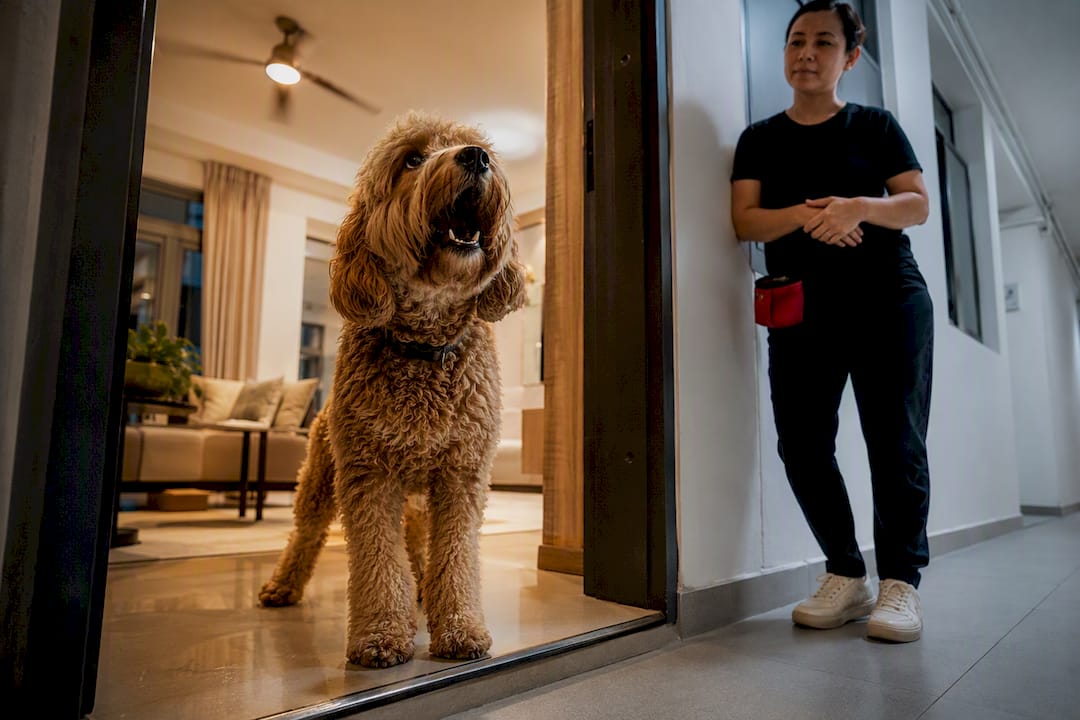
If your neighbour’s dog won’t stop barking, record it with a timestamp and raise it with them calmly before escalating. If you’re the owner, acknowledge the complaint, start documenting your fixes straight away, and consider an AVS-accredited trainer if the barking looks like separation anxiety. HDB, the Animal and Veterinary Service (AVS), the Community Mediation Centre (CMC), and the Community Disputes Resolution Tribunal (CDRT) each have a role, roughly in that order.
TL;DR:
Recording continuous, timestamped videos and maintaining a detailed log of barking patterns are essential evidence for resolving disputes at mediation or tribunal levels.
Most nuisance barking responds well to small environmental adjustments within two weeks, such as white noise, repositioning the dog’s resting area, or providing enrichment toys.
Early engagement, like polite communication and documented remedial efforts, helps owners avoid escalation to enforcement or legal actions, including fines or loss of pet approval.
Professional trainers should be consulted for entrenched issues like separation anxiety, with accredited, reward-based methods preferred to build credible evidence for mediation.
Complaints are handled sequentially by HDB, AVS, RC, CDRT, with early documentation guiding effective resolution and reducing the risk of penalties or pet rehoming.
Table of Contents
Quick checklist: what to do in the first 24 to 72 hours
Most barking disputes cool down fast when the first move is measured rather than confrontational. Here’s the sequence that tends to work, whichever side of the wall you’re on.
If you’re the neighbour:
Note the pattern for two or three days before saying anything. Time of day, duration, and how often it happens matters more than a single bad night.
Approach the owner in person or via a polite note. Say what you’re hearing and when, not what you assume is happening inside their flat.
Avoid threats, HDB letterheads, or anything that sounds like an ultimatum. It tends to make owners defensive rather than cooperative.
If direct contact doesn’t help within a week or two, contact your Residents’ Committee (RC) or Town Council, who can log the issue and sometimes mediate informally before anything formal starts, following the property management complaint process explained for SA landlords.
If you’re the owner:
Acknowledge the complaint the same day it reaches you. Silence reads as indifference, even when you’re genuinely working on it.
Start a remediation log immediately. Note what you’ve tried, when, and keep receipts.
Begin low-effort fixes such as white noise or a calmer departure routine while you assess the bigger picture.
Record barking as one continuous clip with a visible timestamp rather than a short, edited snippet. Continuous recordings hold up far better if the matter ever reaches mediation, because they show pattern and duration rather than a single cherry-picked moment.
Who actually handles a barking complaint in Singapore?
Singapore’s escalation path for a dog noise complaint runs through several agencies, each with a distinct role and none of them acting as a first stop for a one-off noisy night.
HDB enforces pet-keeping conditions attached to your flat. It investigates nuisance complaints and, in cases of repeated non-compliance, can fine owners or revoke approval to keep a pet.
AVS handles licensing and animal welfare. It runs an Animal Response Centre and online complaint channels for welfare concerns, and can refer owners to accredited trainers when disruptive behaviour is the root cause.
Town Council or RC is usually the earliest, lowest-friction route. They can mediate locally or forward a report before things become official.
Community Disputes Resolution Tribunal (CDRT) is the last resort. Once mediation has genuinely been attempted and failed, either party can file here for a remedial order or damages.
Barking complaints are common enough that HDB receives around 4,000 pet-related feedback reports a year, and dogs accounted for 47% of those between 2021 and 2025. You are far from the only household dealing with this.
What evidence actually helps a complaint or a defence
Evidence quality decides whether a case gets resolved at the mediation stage or drags into a tribunal claim. Vague memories and one dramatic video clip rarely convince anyone.
Record in continuous, timestamped clips, not a highlight reel. Include enough context that a viewer can identify the source flat and the time of day.
Keep a written log: date, start and end time, and a short, factual description. “Continuous barking, 11:40pm to 12:15am, no visible trigger” is more useful than “kept me up again.”
If you’re the owner, document your remedial actions too: receipts for white noise machines, notes from a trainer, dated photos of environmental changes.
Pro Tip: Mediators respond far better to a dated log kept over two weeks than to a single furious voice recording sent at 1am. Consistency reads as credibility.
Practical fixes owners can start today
Most nuisance barking in an HDB flat responds to a handful of environmental and routine changes, often within a fortnight if applied consistently.
White noise or a fan near the door or window softens the triggers, like corridor footsteps or lift chimes, that set off alert barking.
Reposition the resting area away from the front door or shared corridor wall, especially in a corridor unit where noise carries.
Draft excluders or a visual barrier across the door gap can stop a dog fixating on shadows and movement outside.
A calm, low-drama departure routine reduces anxiety-driven barking that flares up minutes after you leave.
More exercise and enrichment toys before you leave for the day settle a dog that’s barking simply because it’s understimulated.
These fixes are usually enough for boredom or alert barking that started recently. If the barking is intense, prolonged, or clearly tied to your absence rather than external triggers, it points to something more entrenched, and that’s when professional input matters. Our guide on training dogs for HDB living covers more on adapting routines to flat life specifically.
When should you call in a trainer, and what should they deliver?
Separation anxiety and entrenched reactive barking rarely resolve on their own. A few signs tell you it’s time to bring in professional help rather than keep tweaking the routine.
Barking starts within minutes of you leaving and continues for long stretches, not just the odd bark at the door.
Chewing, scratching at exits, or accidents alongside the barking, all classic separation anxiety markers.
The dog barks at anything that moves past the door, regardless of how much exercise or enrichment it’s had.
A properly accredited trainer will give you a written assessment, a structured desensitisation or behaviour modification plan, and hands-on coaching so you’re applying the plan correctly, not guessing. Government guidance itself points owners toward AVS-accredited trainers when disruptive behaviour is identified, because a documented plan carries weight in mediation that a verbal promise never will.
Pro Tip: When vetting a behaviourist, ask what accreditation they hold and whether they use force-free, reward-based methods. Anyone who leads with punishment tools as a first resort is a red flag, not a shortcut.

What happens if it goes to enforcement or tribunal?
Most disputes never reach this stage, but knowing the realistic consequences helps both sides take the earlier steps seriously.
HDB can issue fines for breaches of pet-keeping conditions, and in cases of repeated, unresolved non-compliance, can revoke approval to keep the pet, which may mean rehoming.
AVS enforces licensing rules separately. An unlicensed dog, or one linked to a genuine welfare concern, can trigger its own penalties through AVS’s licensing and complaint channels, regardless of how the noise dispute itself resolves.
CDRT can issue remedial orders, requiring specific action within a set timeframe, and can award damages where a complainant demonstrates real loss or distress. Filing carries a modest fee, and the judiciary’s own guide sets out the forms and evidential expectations in detail.
None of these outcomes happen overnight, and none of them happen without mediation being attempted first. That gap between complaint and consequence is exactly why early, documented action from the owner tends to change how the whole process plays out.
A trainer’s view on getting this right
Most barking I’m called out for isn’t stubbornness, it’s an unmet need: boredom, anxiety, or a trigger nobody’s addressed. Start remediation and write it down from day one. A documented, welfare-led response almost always keeps things out of enforcement territory, because it shows good faith rather than avoidance.
— Mark
How Happy-dogtraining can help with persistent barking
If the barking is separation-driven, entrenched, or you simply want it sorted properly rather than managed around the edges, Happy-dogtraining offers a documented, force-free path that doubles as evidence of good faith if mediation ever comes up. Our Separation Anxiety programme is built specifically for dogs that bark, whine, or destroy things once the door closes, and every session leaves you with a written record you can point to.

For broader obedience issues sitting behind the barking, Private Obedience Dog Training Classes at $200 per class give you a structured, one-to-one plan, while Board & Train (from $700 per week) suits owners who need faster, more intensive change and a clear paper trail to show. First contact typically starts with an assessment of what’s actually driving the barking, followed by a written plan and realistic timelines, sometimes backed by ongoing support once training ends. Details vary by service provider. Book an assessment through the separation anxiety page to get started.
Sources
FAQ
What can I do if my neighbour complains about my dog’s barking?
Acknowledge the complaint promptly, start a documented remediation plan the same week, and consider contacting an accredited trainer if the barking looks anxiety-driven rather than boredom-driven.
What can I do if my neighbour’s dog won’t stop barking?
Record the barking with clear timestamps over several days, raise it politely with the owner first, and escalate to your Town Council or RC, then AVS or HDB, if direct contact doesn’t resolve it.
My neighbour’s dog is barking all night. What should I do?
Log the exact times and duration for a few nights, then approach the owner with that specific record rather than a general complaint, since dated evidence carries far more weight at mediation than a vague description.
Is debarking legal in Singapore?
Debarking is not a recognised or recommended remedy under Singapore’s animal welfare framework; AVS focuses on licensing, welfare investigations, and referring owners to accredited trainers rather than surgical alteration of the dog.
Do I have to go through mediation before filing a CDRT claim?
Yes. Parties must attempt mediation at the Community Mediation Centre before the CDRT will accept a formal claim over a barking dispute.
Recommended
Comments