5 Stage Threshold Plan to Stop Dog Barking in Elevators for Apartment Dogs
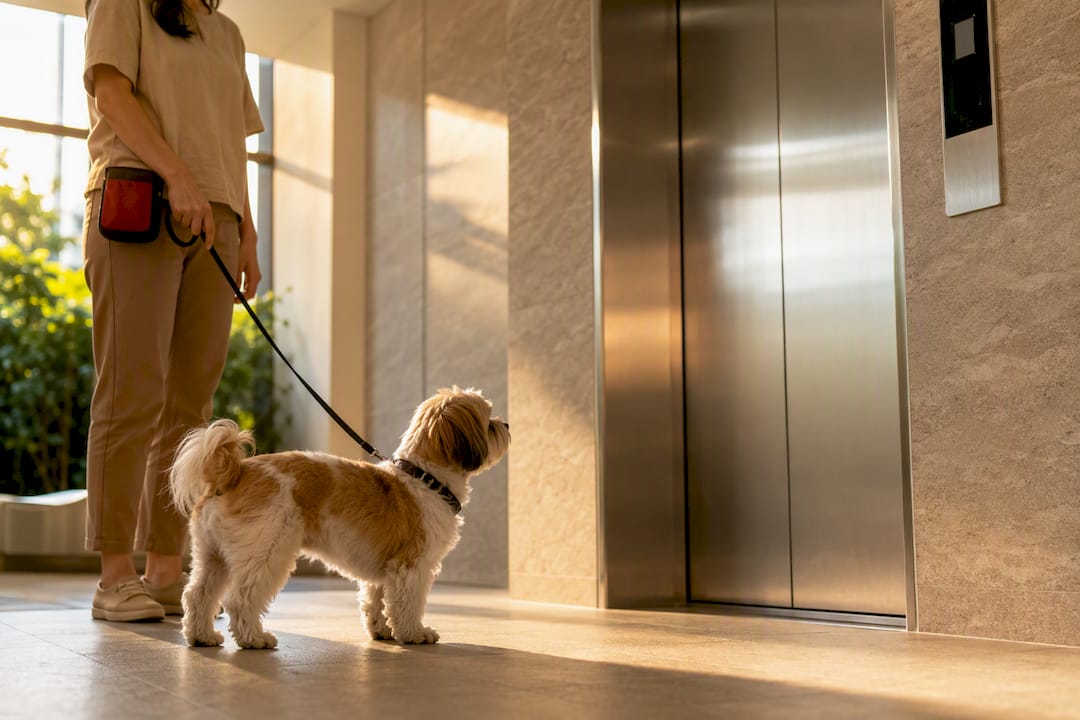
If your dog barks in the elevator, step aside now, create distance, and wait for a quieter ride rather than forcing your dog in. Never rescue or drag a frightened dog through the doors. That keeps everyone safe today. The lasting fix is threshold-based desensitisation and counter-conditioning to teach your dog that lift chimes, doors, and rides are nothing to fear.
TL;DR:
Dogs showing fear in elevators often tremble, tuck their tails, or try to back away, requiring desensitisation at their specific threshold distance.
Progressing gradually through staged training, from noise exposure to short rides, ensures better results than forcing a dog through a lift before readiness.
Managing environment risks involves standing aside from doors, keeping the dog slightly behind, and avoiding pushing the dog into situations that trigger panic or frustration.
Sudden changes in behaviour or signs of extreme panic should prompt a vet visit and professional assessment to rule out medical issues and develop a tailored training plan.
Inconsistent reward timing and abandoning gradual training can hinder progress; professional help emphasizes patience, tracking, and respecting the dog’s pace for long-term success.
Table of Contents
What makes dogs bark in elevators?
Barking in tight, mechanical spaces almost always comes down to one of four motivations, and working out which one you’re dealing with changes everything about how you respond. Punishing the noise without knowing the cause is discouraged, because it can mask real anxiety and push a nervous dog towards a worse reaction later, according to Cornell University’s Riney Canine Health Center.
Look for these patterns:
Fear or panic shows up as trembling, a tucked tail, flattened ears, or a dog trying to back away from the lift doors altogether.
Excitement or territorial barking looks different: a forward-leaning body, tail up and often wagging, sometimes lunging towards the doors rather than away.
Alarm or startle responses hit hard and fast when a chime sounds or the doors slide open unexpectedly, catching the dog off guard.
Frustration builds when your dog wants to reach something (another dog, a person, the hallway) and the closing doors or your lead stop them getting there.
Elevators are unusually tricky because they create a mismatch between what a dog sees and what its inner ear feels, a sensory conflict that can provoke genuine fear even in otherwise confident dogs, per Zoeta/DogSoul’s guide to elevator fear.
Before you train anything, run a simple threshold test. Find the distance from the lift where your dog notices it, chimes, doors, footsteps, but still takes treats, breathes normally, and can look at you. That distance is your starting point, and understanding what threshold means in dog training will shape every session that follows. If barking appeared suddenly, or you notice wobbliness, pain, or disorientation, see a vet first. Sudden changes are rarely just behavioural.
A staged plan to stop the barking for good
Once you know your dog’s threshold distance, the fix is a slow build, not a single brave leap. Zoom Room’s trainers describe elevator work as inherently progressive: sound first, then voluntary approach, then brief rides, never forcing entry at any stage, according to Zoom Room’s elevator training guidance. Here’s the sequence that works.
Stage 0, prepare. Stock high-value treats (think small pieces of chicken or cheese, not kibble), record or find lift chime sounds online, and pick a quiet time of day. Decide on a physical “wait zone” a few metres from the doors where you’ll always start.
Stage 1, lobby desensitisation. Stand at a distance where your dog can hear the lift arrive and see the doors open without reacting. Reward calm attention toward you, not toward the lift. Repeat until your dog looks bored rather than braced.
Stage 2, threshold work. Let your dog choose to step closer. Reward a paw on the threshold, then calmly walk away together. This teaches your dog that approaching the lift is always their decision and always ends safely.
Stage 3, single-floor rides. Once your dog moves confidently to the doors, try a short ride in an empty car. Reward calm behaviour the moment the doors close, and again when they open.
Teach alternative cues alongside all of this: a solid “sit” or “station” on a mat, “look at me,” a practised U-turn, and a reliable recall for the lobby.
Counter-conditioning the chime itself, so it reliably predicts food rather than danger, gradually shifts your dog’s emotional response from dread to neutral or even positive, note Dogs Trust’s guidance on barking. That’s the whole point of the exercise: you’re not teaching your dog to tolerate the lift, you’re changing how it feels about the lift.
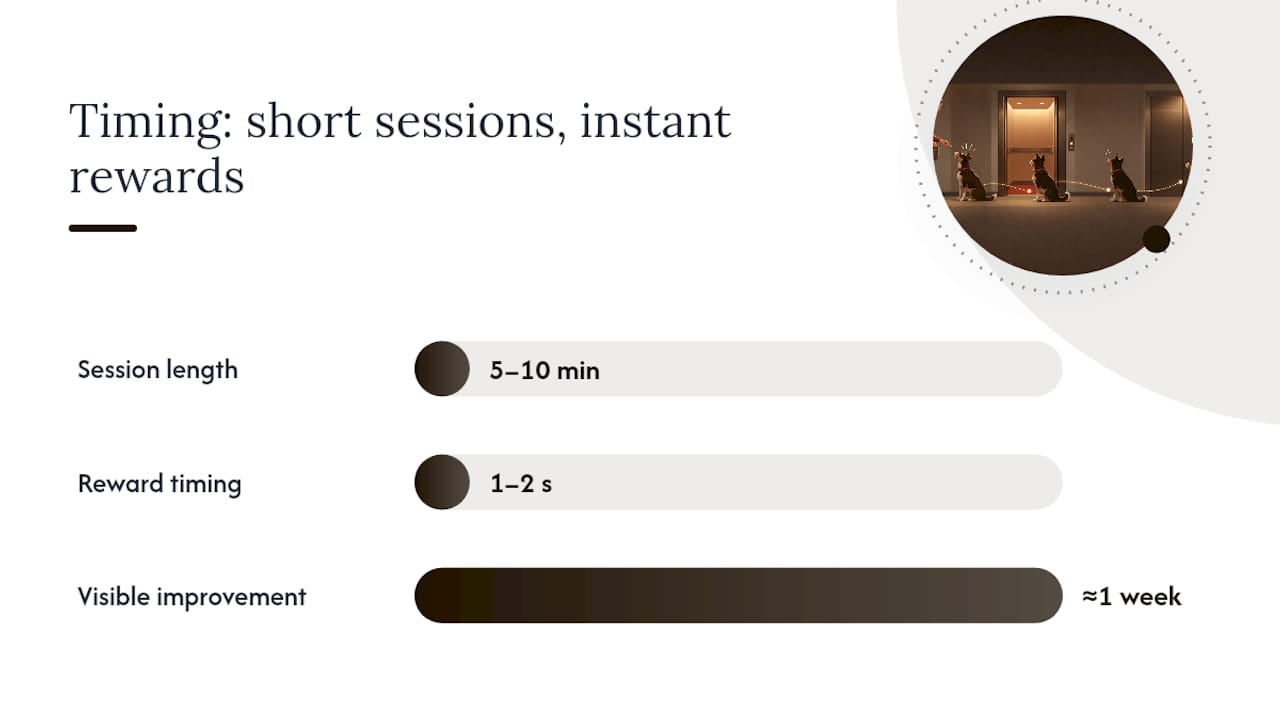
Keep sessions short, five to ten minutes, several times a day, and only move to the next stage once your dog stays comfortably under threshold at the current one. Mark the exact moment your dog notices the trigger and stays calm, then reward within a second or two. Timing matters more than treat quality here.
Pro Tip: End every single session on a win, even a small one, and jot down the distance and trigger you worked at. Trainers who track this consistently see faster, more durable progress than those who train in long, irregular bursts, because it turns “is this working?” into a measurable answer.
Avoid flooding your dog with the full experience before they’re ready, and never physically push or carry a dog through doors it’s avoiding. That single act can undo weeks of careful work. Expect small wins: calmer body language in the lobby after a week, a shorter recovery time after a startle, tolerance of one closed-door cycle before a ride feels achievable.
Safety tactics for elevator arrivals and rides
Training takes weeks. Life doesn’t wait, so you need rules for right now. Management matters as much as training in tight, high-risk spaces, because every reactive outburst your dog rehearses in a real lift makes the next one more likely, according to ApartmentDogExpert’s advice on elevator lunging.
Wait to the side, never directly in front of the doors. Standing off-centre gives you room to move and stops your dog fixating on the exact spot a trigger will appear.
Keep your dog slightly behind you on a short, relaxed lead. A tight, anxious grip on the lead transmits straight down to your dog, so soften your hands even when you’re nervous.
If the car opens with a dog, stranger, or noise your dog can’t handle, step back and wait for the next one. Carry small dogs if the lobby is crowded and stepping back isn’t fast enough.
Use the stairs when it’s safe and practical, particularly during peak hours when lifts are busiest and most stressful.
Have a recovery routine ready for the days it goes wrong. Move away calmly, give your dog space, scatter a few treats on the floor to encourage sniffing (a genuinely calming activity), and let things settle in a quiet spot before you try again.
None of this is admitting defeat. It’s what buys you the safety to keep training properly, and DogSenseGuide’s research on barking triggers in high-rise buildings backs the same principle: managing the environment reduces chronic barking just as much as direct training does.
When should you call a professional trainer?
Most elevator reactivity improves with consistent, threshold-based practice. Some cases need a professional in the room, and there’s no shame in recognising that early rather than after months of stalled progress.
Watch for these red flags:
Any snapping, growling with intent, or biting directed at people or other dogs.
Panic that doesn’t ease even during short, well-managed sessions.
Behaviour that gets worse despite weeks of careful, controlled practice.
A sudden change in temperament with no obvious cause, which deserves a vet visit alongside behavioural support, warns ApartmentDogExpert’s guide to elevator fear.
A proper behaviour consult should include a threshold assessment specific to your dog, direct coaching on your handling and timing, a written desensitisation plan you can run at home, and a referral to a vet where pain or a medical cause seems likely. When choosing help, look for force-free, evidence-based credentials, AVS accreditation in Singapore is a solid marker, and ask how the trainer would build a plan around your dog’s actual triggers rather than a generic template. An effective approach follows this model, with ongoing support offered after programme completion.
What trainers wish owners knew about elevator barking
Mark, an AVS-accredited trainer, sees the same two mistakes again and again. The first is forcing or scooping up a frightened dog to “just get it over with.” It feels efficient in the moment and it almost always backfires, because the dog learns the lift is a place where choice gets taken away, which deepens the fear rather than resolving it.
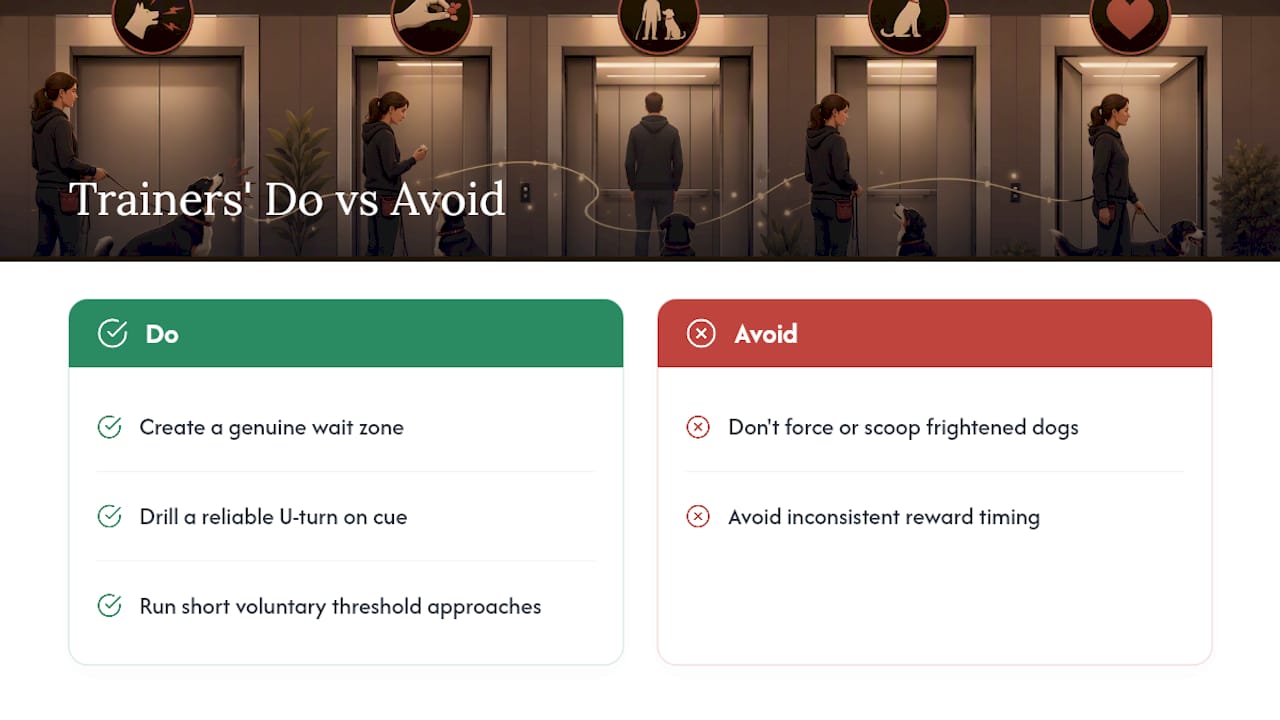
The second is inconsistent reward timing. Treating sometimes for calm behaviour and sometimes for nothing sends mixed signals that stall progress for weeks.
On a first session, the fixes are usually small: establish a genuine wait zone, drill a reliable U-turn on cue, and run a handful of short, voluntary threshold approaches where the dog decides how close to get. Those three changes alone often shift a dog’s confidence within days.
— Mark
How professional training can help with elevator reactivity
Happy-dogtraining is built for exactly this kind of close-quarters, high-rise problem, not generic obedience drills. If your dog’s elevator barking sits closer to fear or panic, Fearful Dog Classes build confidence step by step. If it tips into growling, snapping, or genuine aggression at the doors, the Aggressive Behaviour Consult (priced at $200 to $250 per session) gives you a one-on-one threshold assessment and a plan built around your dog specifically. For ongoing reactivity in lifts, lobbies, and corridors, the Reactive Dog Classes at $200 per class work through the same staged approach covered above, with a trainer watching your timing in real time.

A first consult focuses on identifying your dog’s actual triggers and threshold distance, then coaching you through the handling adjustments that make the biggest difference fastest. Clients receive ongoing support after training finishes to assist with questions that may arise later or new situations. If you’d rather work one-to-one from the start, Private Obedience Dog Training Classes run $200 per class and can be built entirely around your building’s lifts and lobbies. Book a session and bring your dog’s specific triggers to the first appointment.
Sources
For deeper background beyond this guide, Cornell’s Riney Canine Health Center covers the science of diagnosing bark motivation. Dogs Trust and the ASPCA both detail working under threshold and counter-conditioning in more depth. For hands-on drills, Zoom Room’s elevator tips and ApartmentDogExpert’s lunging guide offer practical, apartment-tested exercises.
FAQ
How do I train a dog not to bark in an apartment?
Identify the specific trigger, hallway noise, lift chimes, neighbours, then work at a distance where your dog notices it but stays calm, rewarding that calm attention consistently. Consistency and short daily sessions matter more than long, occasional ones, and pairing this with cues like stopping barking at guests covers most common apartment triggers.
Why is my dog afraid of elevators?
Lifts create a mismatch between what your dog sees and what its inner ear senses during movement, a sensory conflict that can trigger genuine fear even in confident dogs, according to Zoeta/DogSoul’s research on elevator fear. Sudden chimes, moving doors, and unfamiliar dogs or people packed into a small space add to the effect.
Why do dogs bark when someone goes upstairs?
This is usually alarm barking, a startle response to unexpected sound or movement rather than the dog reacting to the person specifically. It overlaps heavily with the same triggers that cause elevator barking, and the same threshold-based desensitisation approach applies.
How do dogs perceive elevators?
Dogs rely heavily on their vestibular system for balance, and a lift’s motion without matching visual cues can feel disorientating rather than simply unfamiliar. Combined with mechanical noise and confined space, this explains why elevators provoke stronger reactions than most everyday urban triggers.
What is the typical charge for a reactive dog class?
Reactive Dog Classes are priced at $200 per class, covering the staged desensitisation work described throughout this guide, according to Happy-dogtraining’s reactive dog class page. Pricing for other programmes, including the Aggressive Behaviour Consult, is listed directly on the relevant service page.
Recommended
Comments