Rebuild Crate Trust Without Force for Singapore Dogs That Hate Crates
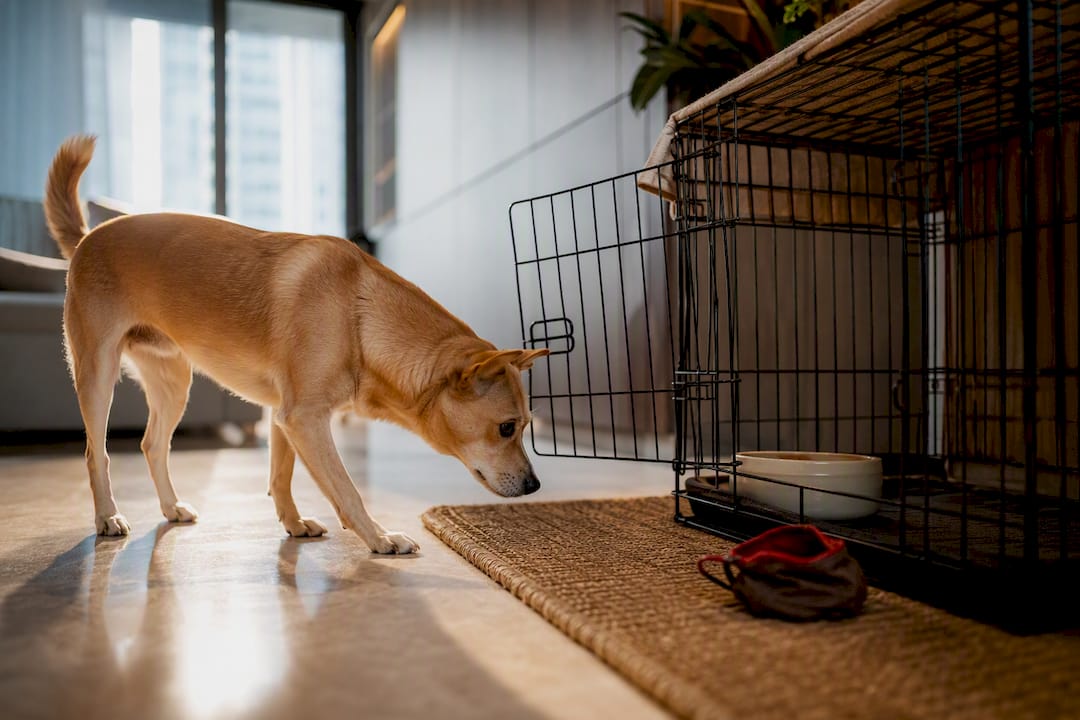
Don’t force it. If your dog hates the crate, the fix is slow, food-driven desensitisation, not persistence or punishment. Limit daytime crating to roughly 4 to 6 hours, rebuild trust through counterconditioning, and if your dog ever shows real panic, pause and bring in a certified trainer or vet.
TL;DR:
Avoid forcing your dog into the crate or shutting the door while they are distressed, as these actions reinforce crate fear and undo progress.
Desensitization and pairing the crate with positive experiences, like treats and toys, are essential, taking small steps from door openness to independent relaxation.
Watch for signs of severe stress or self-injury, such as frantic escape attempts or bleeding paws, and seek professional help if these occur.
Proper crate setup includes appropriate size, comfortable bedding, and placement in a main living area to enhance comfort and reduce triggers.
Limit adult dogs to around 4 to 6 hours of crating, and consider alternatives like day-care or supervised confinement for dogs with chronic fears or health issues.
Table of Contents
What to do right now if your dog won’t go in the crate
Before you touch any long-term plan, stop doing the two things that make crate fear worse: forcing your dog inside and shutting the door while they’re distressed. Both teach your dog that the crate is something to dread, and both undo weeks of careful work in seconds.
Over the next day or two, focus on small, low-pressure wins instead:
Never push, lift, or shove your dog into the crate, even gently.
Never close the door on a dog who is whining, panting hard, or pacing.
Tire your dog out first: a proper walk or play session before any crate work.
Offer a brief, voluntary crate visit with a favourite treat tossed just inside.
Praise quietly and let your dog wander out again while still calm, on their own terms.
Keep sessions short. Three or four calm seconds beats three anxious minutes.
Get your kit ready before you start: pea-sized high-value treats (think chicken or cheese, not dry biscuits), a stuffed Kong or similar food toy, and something that smells like you, an old t-shirt or a worn pillowcase works well.
Pro Tip: Feed one entire meal near the crate opening today, then tomorrow, just inside it. You’re not “training” yet, you’re just quietly rewriting the story your dog tells themselves about that space.
A step-by-step plan to rebuild trust in the crate
Real progress with a crate-avoidant dog comes from desensitisation and counterconditioning: exposing your dog to the crate in tiny, unthreatening doses while pairing it with something they already love. Trainers recommend re-introducing a crate this way rather than forcing entry, and it’s the same principle Happy-dogtraining leans on with fearful and reactive dogs across every case type.
Phase 1: The open door
Scatter treats near the crate entrance for a few days, letting your dog approach freely.
Move meals gradually closer, then feed one full meal just inside the doorway.
Once your dog steps in without hesitation to eat, start feeding meals fully inside with the door open.
Add a favourite chew toy inside the crate so your dog chooses to linger there alone.
Phase 2: The closed door, briefly
Close the door for two or three seconds while you sit right beside the crate.
Open it again before any sign of stress appears, then praise softly.
Add a few seconds each session, always staying in the room.
If your dog whines or scratches, that’s your cue to shorten the next session, not push through it.
Phase 3: Building real independence
Once your dog settles calmly with the door closed for a minute or two, start stepping away, first to another room for a few seconds, then longer. Introduce a simple cue word like “crate” as your dog enters voluntarily, and slowly phase out the food lure so the cue alone does the work. Feeding meals in or near the crate throughout this process keeps reinforcing that good things happen there.
Your only real progress marker is body language, not the clock. A relaxed dog lies down, breathes normally, and may even doze off. A stressed dog paces, pants heavily, or stares at the door. If stress shows up, drop back a step rather than pushing forward, one step backward now prevents weeks of setback later.
Timelines vary enormously by dog. Puppies with no prior bad experiences often settle into a crate routine within a couple of weeks. Adult dogs and rescues, especially those with an unknown history, typically need a slower, gentler timeline, sometimes stretching across several months. That’s not a failure on your part. It’s simply how long trust-rebuilding takes when a dog has learned, somewhere along the way, that confined spaces mean something bad.
Red flags that mean it’s time to stop and get help
Most crate resistance responds to patience and the phased plan above. But some reactions go beyond ordinary reluctance, and pushing through them can genuinely hurt your dog.
Watch for these warning signs during any session:
Frantic escape attempts, digging, biting at the bars, throwing their whole body against the door.
Self-injury: bleeding paws, broken nails, or worn patches of fur around the muzzle.
Heavy, uncontrollable drooling that soaks the crate floor.
Complete refusal of even the highest-value treats, a sign the fear response has taken over appetite entirely.
Soiling inside the crate from a dog who was previously reliably house-trained.
A sudden change in behaviour, especially alongside signs of pain, limping, or unusual lethargy, warrants a vet visit first. Pain can masquerade as crate aversion. If the panic is chronic and unrelated to physical health, some dogs simply aren’t suitable candidates for crating and need a different confinement solution altogether, which a certified trainer or veterinary behaviourist can help you work out.
Pro Tip: Don’t leave a dog showing any of these signs alone in a crate “to get used to it.” That approach doesn’t build tolerance, it builds trauma. Supervised alternatives buy you time to get proper support.
Setting up the crate itself to remove hidden triggers
Sometimes the issue isn’t fear of confinement at all, it’s a crate that’s simply uncomfortable. Getting the physical setup right often speeds up training more than any technique.
Size it correctly: your dog should stand, turn around, and lie stretched out comfortably, but a crate that’s too large removes the denning effect, while one that’s too small feels punishing.
Place the crate in a main living area rather than an isolated room, dogs are pack animals and often relax faster within sight of the family.
Keep it away from heat vents, direct sun, and loud appliances; a rattly metal tray under thin bedding can startle a dog every time they shift weight.
Add a thick, supportive bed and something carrying your scent, a worn t-shirt works better than a fresh blanket.
Include a food-dispensing toy or long-lasting chew reserved only for crate time, so the space earns a reputation as the good-stuff zone.
Small environmental fixes like these remove barriers that have nothing to do with training and everything to do with comfort.
How much exercise and crate time your dog actually needs
A tired, mentally satisfied dog settles into a crate far more easily than one bursting with pent-up energy. Before any crating session, a proper walk, some sniffing time, or a short play session makes a genuine difference to how calmly your dog accepts confinement.
On daily limits, don’t guess. Veterinary guidance points to roughly 4 to 6 hours as the maximum stretch an adult dog should spend crated at any one time, and puppies need far more frequent breaks, sometimes hourly depending on age and bladder control.
If your working hours run longer than that:
Book a midday dog walker to break up the stretch and offer a bathroom break.
Consider day-care a couple of days a week if your dog enjoys company.
Split crate time into two shorter sessions rather than one long one, with a walk in between.
Ask a neighbour or family member to check in if professional help isn’t available that day.
What if the crate genuinely isn’t right for your dog?
Not every dog needs to tolerate a crate, and forcing the issue with a dog who has severe separation-related distress or a genuine confinement phobia rarely ends well. Alternatives such as day-care, a pet sitter, or supervised containment exist for exactly this situation.
Reasonable substitutes include:
An exercise pen or baby-gated room, giving more space while still containing your dog safely.
Supervised tethering within sight while you’re home and active in the house.
A fully dog-proofed room with no loose cords, toxic plants, or small gaps a stressed dog could squeeze through.
Professional day-care or a trusted pet sitter for the hours you’re away.
Choose an alternative when your dog shows injury risk, complete food refusal, or panic that doesn’t ease across several calm, well-paced sessions. Whatever option you pick, check it the same way you’d check a crate: no escape routes, nothing chewable that could harm them, and constant water access.
When to call in a professional trainer
A qualified trainer or veterinary behaviourist starts by ruling out medical causes, pain, cognitive decline, or an underlying anxiety disorder can all masquerade as ordinary crate resistance. From there, they’ll assess how severe the separation-related distress actually is and whether there’s any risk of self-injury during confinement.
Expect a professional to lean on the same humane toolkit outlined above, just applied with more precision:
Structured desensitisation and counterconditioning plans tailored to your dog’s specific triggers.
Enrichment strategies that address boredom and pent-up energy alongside the crate work itself.
A realistic timeline based on your dog’s history, not a generic template.
There are trainers with extensive experience working through cases like these, from puppies with no crate exposure at all to rescues carrying real trauma, using science-based methods rather than shortcuts.
A note on patience, guilt, and realistic expectations
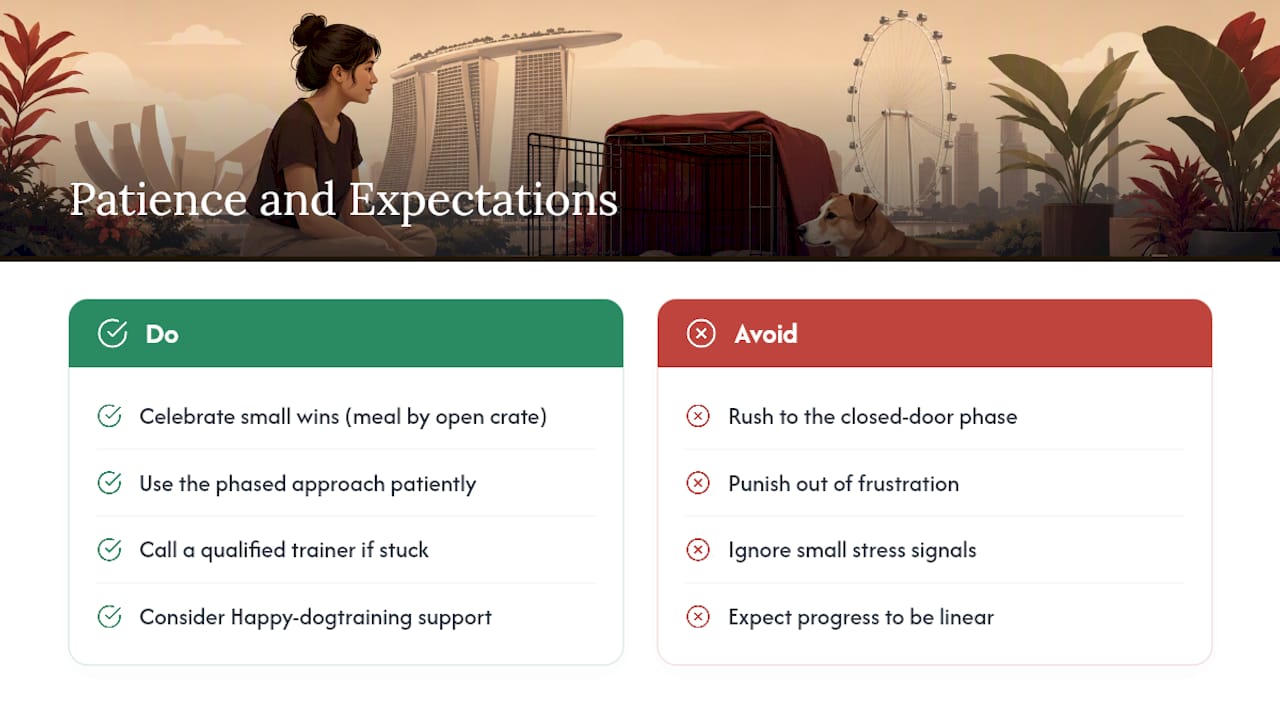
Owners usually derail this process the same way: rushing to the closed-door phase too soon, reaching for punishment out of frustration, or ignoring the small stress signals their dog is already showing them.
A win in week one might just be your dog eating a whole meal near an open crate without flinching. That counts. Progress with confinement work is rarely linear, and adult rescues especially deserve more grace than a training timeline suggests. If you’ve genuinely tried the phased approach and you’re still stuck, that’s not a sign you’ve failed your dog, it’s a sign it’s time to call someone who does this every day. Booking an assessment with a qualified trainer can save months of guesswork, and Happy-dogtraining’s free lifetime support means the help doesn’t stop once the sessions end. If you’re weighing up your options, Happy-dogtraining is a sensible place to start that conversation.
— Mark
Sources
Recommended
Comments