How dogs signal anxiety before departure
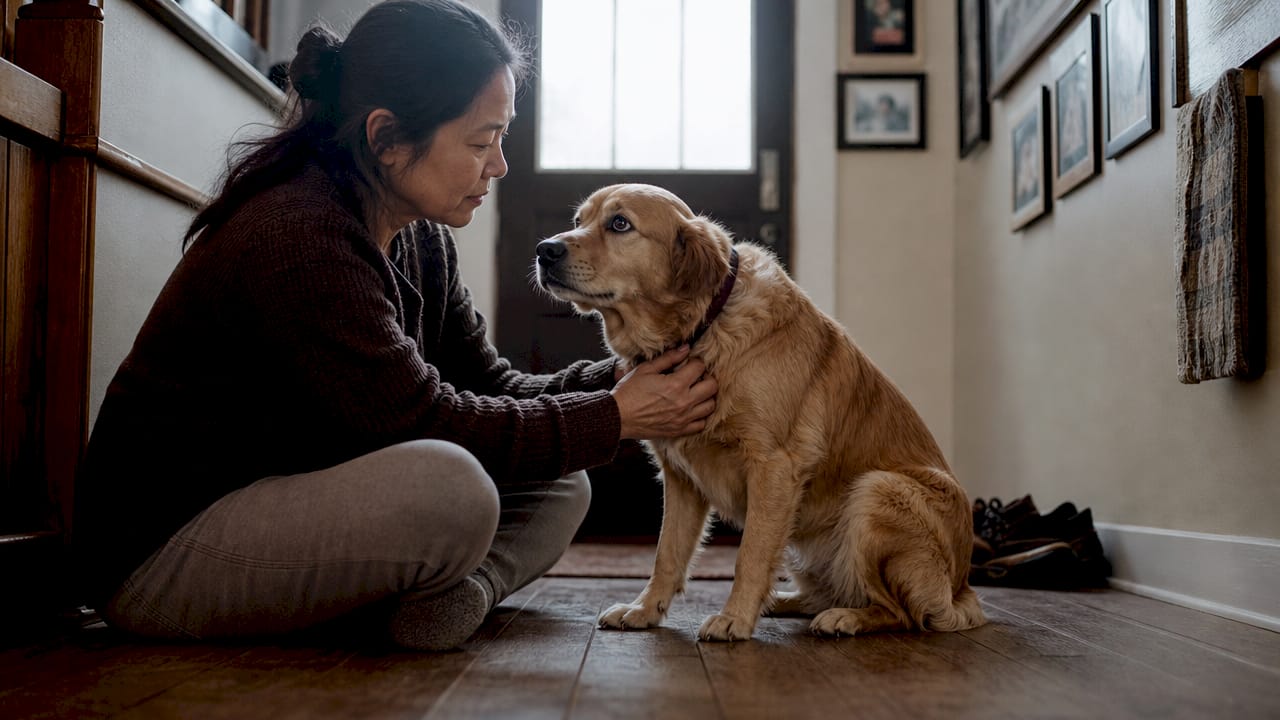
Dogs signal anxiety before departure through a cluster of identifiable behaviours and physiological changes that begin well before you pick up your keys. These signals are rooted in canine pattern recognition. Your dog does not simply react when the door closes. It reads your routine, your energy, and your sequence of actions, and it starts responding long before you leave. Understanding how dogs signal anxiety before departure is the first step towards helping your dog feel calmer and more confident when you are away. Recognising these signs early makes intervention far more effective, and the science behind it is both clear and encouraging.
Which behaviours and physical signs indicate a dog is anxious before you leave?
Pre-departure anxiety in dogs is defined as a stress response triggered by the anticipation of owner absence, distinct from general nervousness or boredom. The behaviours appear in a recognisable pattern, and once you know what to look for, they become hard to miss.
Behavioural signals to watch for:
Shadowing: Your dog follows you from room to room, staying within touching distance as you move around the house.
Pacing: Repetitive movement along the same path, often near the door or hallway.
Whining or vocalising: Low whines, soft barks, or persistent vocalisations that increase as you approach the door.
Lip licking and yawning: These are calming signals in canine communication, indicating internal stress.
Refusing treats: A dog that normally loves food but turns away from a treat before you leave is showing a significant stress response.
Trembling: Subtle shaking, particularly in the hindquarters or jaw.
Physical signs that confirm anxiety:
Dilated pupils, even in normal lighting
Pinned or flattened ears
Whale eye (the whites of the eyes become visible as the dog turns its head away but keeps watching you)
Tight, closed mouth rather than a relaxed, slightly open expression
These pre-departure anxiety signals are worth observing carefully in terms of timing, duration, and intensity. A single yawn means little. A sequence of lip licking, shadowing, and treat refusal within a short window is a clear distress pattern.
Pro Tip: Film your dog for ten minutes while you go through your normal morning routine. Watching the footage back gives you an objective view of when the anxiety begins and how quickly it escalates.
How do dogs detect their owner’s departure routine?
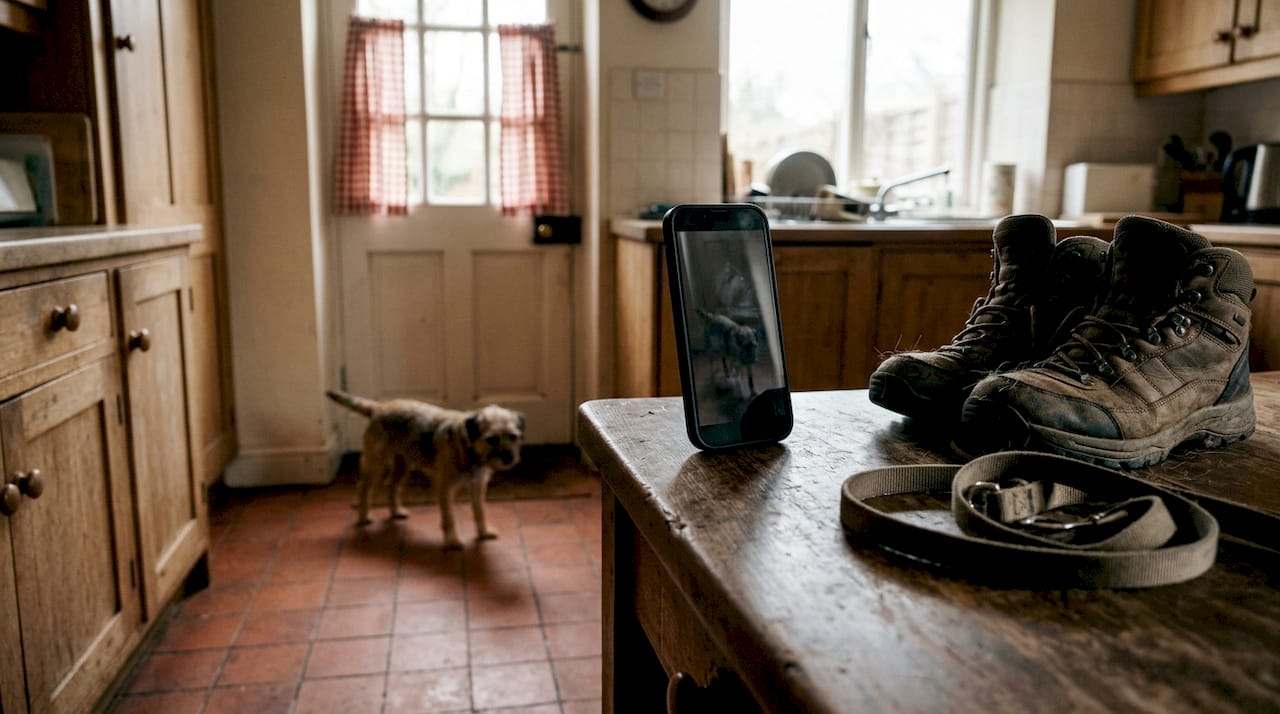
Dogs are pattern detectors. They do not understand the concept of “leaving for work,” but they learn the sequence of events that reliably predicts your absence. A 2020 University of Lincoln study confirmed that dogs react to audio recordings of owners preparing to leave with measurable stress behaviours. This means the sound of keys alone is enough to trigger a physiological response.
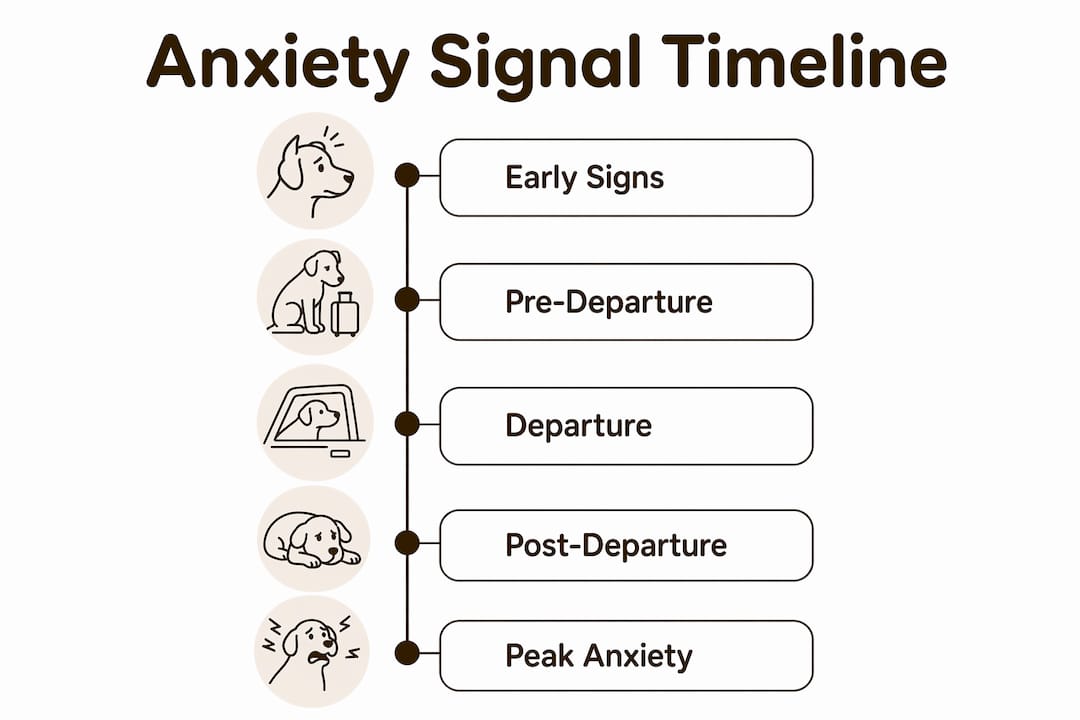
Canine behaviour expert Caroline Wilkinson describes dogs as pattern detectors who stack departure cues, building an emotional response from a sequence rather than a single trigger. Each cue in the chain adds weight to the anticipated outcome.
Common pre-departure triggers your dog has likely learnt:
The sound of keys jingling or being picked up
Putting on shoes or a coat
Closing a laptop or turning off a screen
Picking up a bag or briefcase
Applying perfume or deodorant
A change in your tone of voice or level of conversation
Your emotional state matters just as much as your actions. Veterinary behaviourist Dr Leslie Sinn notes that owners’ stress and activity levels directly influence dog anxiety during pre-departure preparations. If you are rushing, tense, or emotionally heightened, your dog registers that shift and responds to it.
Owners often reinforce anxiety unintentionally by maintaining predictable, high-stress departure rituals. Replacing these with neutral, calm cues is one of the most effective early interventions available.
Pro Tip: Pick up your keys and then sit down to watch television. Put on your shoes and then make a cup of tea. Performing departure cues without leaving breaks the predictive chain your dog has built.
What does research say about the timing of anxiety signals?
The timing of canine stress signals follows a consistent pattern that research has now mapped with reasonable clarity. Most owners miss the earliest signs because dogs begin showing distress 10–20 minutes before departure, often mistaking the behaviour for clinginess rather than anxiety. By the time you reach the door, the dog’s stress response is already well underway.
After departure, the pattern continues. Separation-related behaviours peak within the first 10 minutes after the owner leaves. That peak is followed by a partial settling, but anxiety cycles recur approximately every 23–28 minutes if the dog remains in a stressed state. Each cycle can be triggered by environmental sounds, memories, or stimuli associated with the owner.
The table below compares the typical timing and nature of anxiety signals across the pre-departure and post-departure phases.
Phase | Timing | Common signals |
Early pre-departure | 10–20 minutes before leaving | Shadowing, lip licking, yawning, restlessness |
Late pre-departure | 0–5 minutes before leaving | Pacing, whining, trembling, treat refusal |
Immediate post-departure | 0–10 minutes after leaving | Vocalisation, scratching at door, destructive behaviour |
Recurring anxiety cycle | Every 23–28 minutes | Renewed vocalisation, pacing, panting |
Visual checks alone do not give you the full picture. Camera recordings of the first 30–60 minutes post-departure are the most reliable way to assess the true intensity of your dog’s anxiety. What looks like a calm dog from the outside may be a dog that is silently pacing or scratching at exit points.
For a detailed breakdown of what happens once you leave, the separation anxiety symptoms guide from Happy-dogtraining covers the post-departure phase in depth.
How can you tell the difference between anxiety and excitement?
Anxiety and excitement can look deceptively similar, and misreading one for the other leads to mismanagement. Both states can produce panting, pacing, and vocalisation. The difference lies in body language, posture, and the specific context of the behaviour.
An excited dog shows a loose, wiggly body. Its tail wags broadly and freely, its mouth is relaxed and slightly open, and it approaches you with a bouncy, forward energy. An anxious dog, by contrast, shows tension throughout its body. Its movements are tight and repetitive rather than playful. The tail may wag, but the position is lower, and the wag is stiff rather than free.
Anxiety-specific physical markers include whale eye, pinned ears, a closed or tightly set mouth, and avoidance behaviour such as turning away while still watching you. An excited dog seeks engagement. An anxious dog often tries to stay close while simultaneously showing conflict signals, such as looking away or moving between you and the door.
Physiological differences also exist beneath the surface. Both states involve elevated heart rate and cortisol, but anxiety produces a sustained stress response rather than a short burst of arousal. If your dog’s panting continues long after you have stopped moving around the house, that persistence points to anxiety rather than excitement. Misdiagnosing the two states leads to mismanagement, and attention to physiological stress markers is the clearest path to an accurate reading.
What practical steps can owners take to manage pre-departure anxiety?
Early recognition is the foundation of effective management. Once you can identify your dog’s specific anxiety signals and the cues that trigger them, you can begin to change the association between those cues and your departure.
Identify your dog’s trigger sequence. Observe and note which specific actions cause the first anxiety signal. For many dogs, it is the sound of keys or the act of putting on shoes.
Practise desensitisation. Canine behaviour guidelines recommend performing pre-departure cues repeatedly without leaving, over several weeks, to reduce their predictive power.
Start with very short departures. Leave for 30 seconds, return calmly, and gradually increase the duration. This builds your dog’s tolerance without pushing it past its threshold.
Manage your own energy. Keep departures calm and low-key. Avoid long, emotional goodbyes, which heighten your dog’s arousal before you even reach the door.
Use a camera to monitor behaviour. Record the first hour after departure to understand the true pattern of your dog’s anxiety. This data shapes your training approach.
Reward calm behaviour, not anxious behaviour. Use reward-based training to reinforce settled behaviour during your pre-departure routine, not just after you return.
For a structured approach to building your dog’s confidence alone, dog alone training methods that use short intervals have a strong track record with anxious dogs.
Pro Tip: Perform your departure cues at random points during the day with no intention of leaving. Pick up your keys while watching television. Put on your coat and then sit back down. Done consistently over weeks, this breaks the emotional chain your dog has built around those cues.
Key takeaways
Dogs begin signalling anxiety before departure up to 20 minutes before you leave, and recognising these early cues is the most effective point for intervention.
Point | Details |
Anxiety starts early | Dogs show distress signals 10–20 minutes before departure, not just at the door. |
Pattern recognition drives anxiety | Dogs learn sequences of cues like keys and shoes that reliably predict owner absence. |
Anxiety and excitement differ | Tense body, whale eye, and avoidance distinguish anxiety from loose, playful excitement. |
Camera monitoring is essential | Recording the first 30–60 minutes post-departure reveals the true intensity of anxiety. |
Desensitisation breaks the cycle | Performing departure cues without leaving, over weeks, reduces their emotional trigger power. |
What I have learnt from watching dogs read their owners
After working with anxious dogs for many years, the pattern I see most often is not a dog that is badly behaved. It is a dog that is paying extremely close attention to its owner and reacting to information the owner does not realise they are broadcasting.
The most common mistake I see is owners interpreting clinginess as affection rather than as a distress signal. A dog that follows you into every room and sits pressed against your leg is not simply being loving. It is monitoring you because it has learnt that your movements predict something it finds frightening. That distinction matters enormously for how you respond.
Emotional contagion between owner and dog is real and underrated. When owners rush through their morning routine in a state of stress, their dogs absorb that energy and arrive at the departure moment already heightened. The calmest departures I have ever witnessed belong to owners who have learnt to slow down, move quietly, and treat leaving as a non-event. Their dogs settle faster and recover faster.
The good news is that these patterns are learnable and changeable. Dogs that once trembled at the sound of keys can learn that keys mean nothing in particular. That change takes patience, consistency, and a clear understanding of what your dog is actually communicating. Once you have that understanding, the path forward becomes much clearer.
— Mark
How Happy-dogtraining can help your anxious dog
If your dog shows signs of pre-departure anxiety and you are not sure where to begin, professional guidance makes a significant difference to outcomes.
Happy-dogtraining has over 20 years of experience working with anxious dogs in Singapore, using science-based, reward-based training methods tailored to each dog’s specific triggers and temperament. The fearful dog programme addresses the root causes of anxiety, including pre-departure cues and emotional conditioning, through a personalised approach that builds genuine confidence rather than simply managing symptoms. Every client receives free lifetime support after training, so you are never left to manage your dog’s progress alone. Reach out to Happy-dogtraining to find the right programme for your dog.
FAQ
What are the first signs a dog is anxious before you leave?
The earliest signs include shadowing, lip licking, yawning, and restlessness, typically appearing 10–20 minutes before departure. These are often mistaken for clinginess rather than recognised as distress signals.
How do dogs know their owner is about to leave?
Dogs learn sequences of pre-departure cues such as keys jingling, shoes being put on, and coat rustling. A 2020 University of Lincoln study confirmed that audio cues alone are enough to trigger a measurable stress response.
How long does dog anxiety last after the owner leaves?
Anxiety typically peaks within the first 10 minutes after departure and then recurs in cycles approximately every 23–28 minutes if the dog remains stressed. Camera monitoring of the first 30–60 minutes gives the clearest picture of severity.
Can I make my dog’s pre-departure anxiety worse without realising it?
Yes. Predictable, emotionally charged departure rituals reinforce anxiety over time. Long goodbyes, rushing, and a tense demeanour all signal to your dog that departure is something to worry about.
Is pre-departure anxiety the same as separation anxiety?
Pre-departure anxiety is the anticipatory phase of separation anxiety, the stress response that builds before you leave. True separation anxiety is defined as an intense panic response that continues after departure, often involving destructive behaviour at exit points and prolonged vocalisation.
Recommended
Comments