Why dogs perform better at home: a trainer's plan
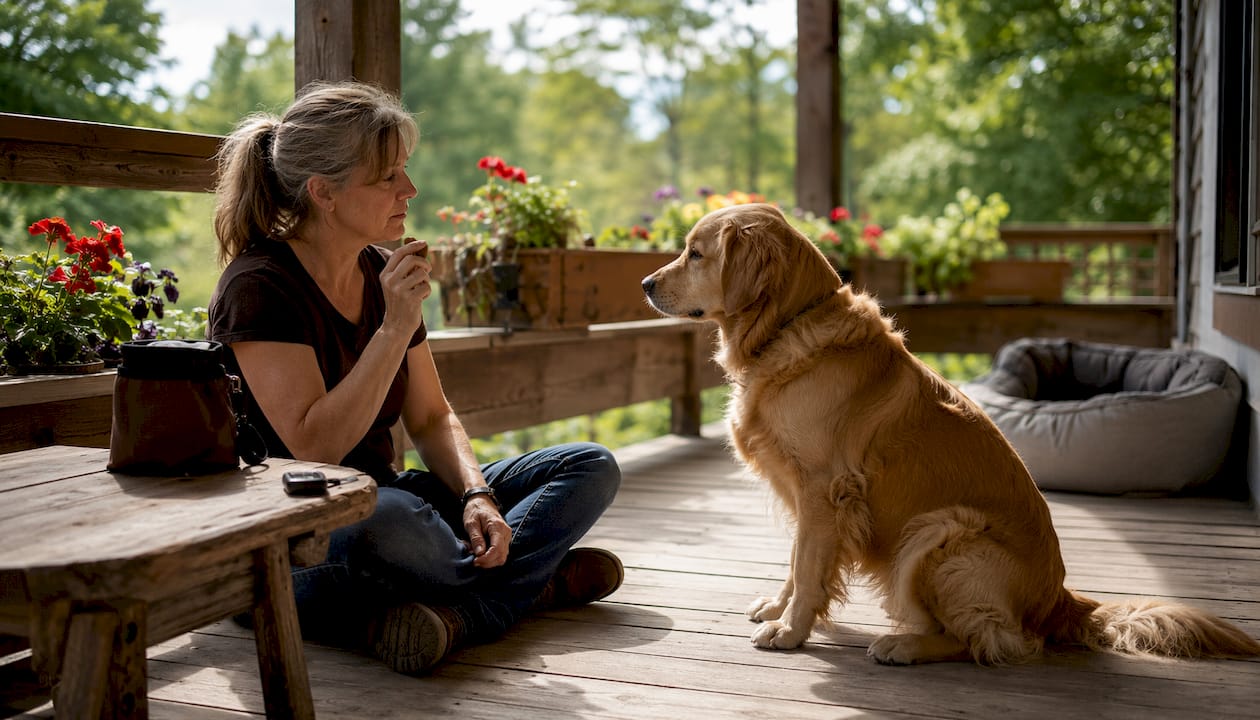
Your dog sits, stays, and comes back perfectly in the living room. Step outside and it’s a different story. This is not stubbornness or selective hearing. Dogs are highly situational learners: a cue practised in a calm, familiar home is a genuinely different task in a busy park. Three things make home the easier setting: predictable sensory inputs, lower stress hormones, and a secure bond with you. Once you understand that, the gap between home and outdoor performance becomes something you can close, step by step.
Context-specific learning explains the gap. Your dog has not forgotten the cue; the new environment has changed the picture entirely.
The hypothalamic-pituitary-adrenal (HPA) axis governs your dog’s stress response. At home, cortisol stays low, and focus stays high.
The AKC’s Three Ds (distance, duration, distraction) give you a practical framework to transfer cues between contexts.
This is a solvable problem, not a character flaw.
Table of Contents
Why dogs perform better at home: the neurobiology behind it
When your dog is at home, their nervous system is in a settled state. The HPA axis, the brain-body circuit that releases cortisol under threat, stays quiet because the environment is predictable. Lower cortisol supports focus and learning, allowing the parasympathetic system to dominate. Your dog can actually hear you.
Outdoors, that changes fast. Scent trails, squirrels, passing cyclists, and the sound of other dogs all compete directly with your voice. These are not minor distractions; they are competing rewards that the outdoor environment delivers for free, without you asking for anything. Your dog’s brain is doing exactly what evolution designed it to do: scanning for information.
Research from ELTE Eötvös Loránd University found that dogs tested indoors outperformed those tested outdoors on scent detection tasks, confirming that distracting outdoor stimuli affect performance even in tasks dogs do naturally. The environment shapes the result, not the dog’s willingness.
How generalisation works and why your dog needs proofing
Generalisation is the ability to apply a learnt cue in a new context. Dogs do not generalise automatically. A solid “sit” at home is stored as part of a whole picture: your kitchen, your posture, the smell of the room, the quiet. Change any of those elements and, from your dog’s perspective, the training environment has shifted enough to make the cue feel unfamiliar.
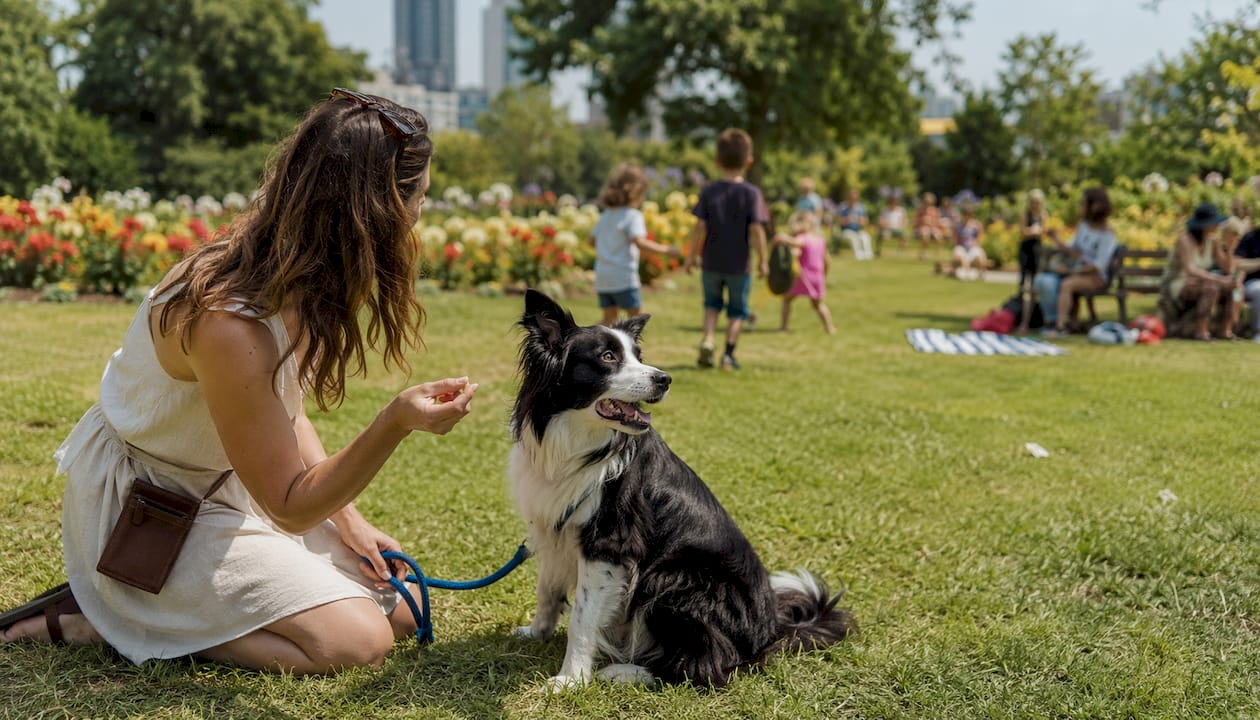
Trainers call the process of teaching generalisation proofing. You are not re-teaching the cue; you are teaching your dog that the cue means the same thing everywhere. The AKC’s Three Ds give you the levers: distance (how far you are from your dog), duration (how long the behaviour must hold), and distraction (what else is happening). Raising all three at once is the most common owner mistake, and it almost always produces failure.
Pro Tip: When a cue breaks down in a new location, lower one D only. If your dog stops responding to “sit” at the park, stay close, keep the duration short, and simply wait for a quieter moment. Rebuild success before raising the challenge again.
A step-by-step proofing plan from home to the park
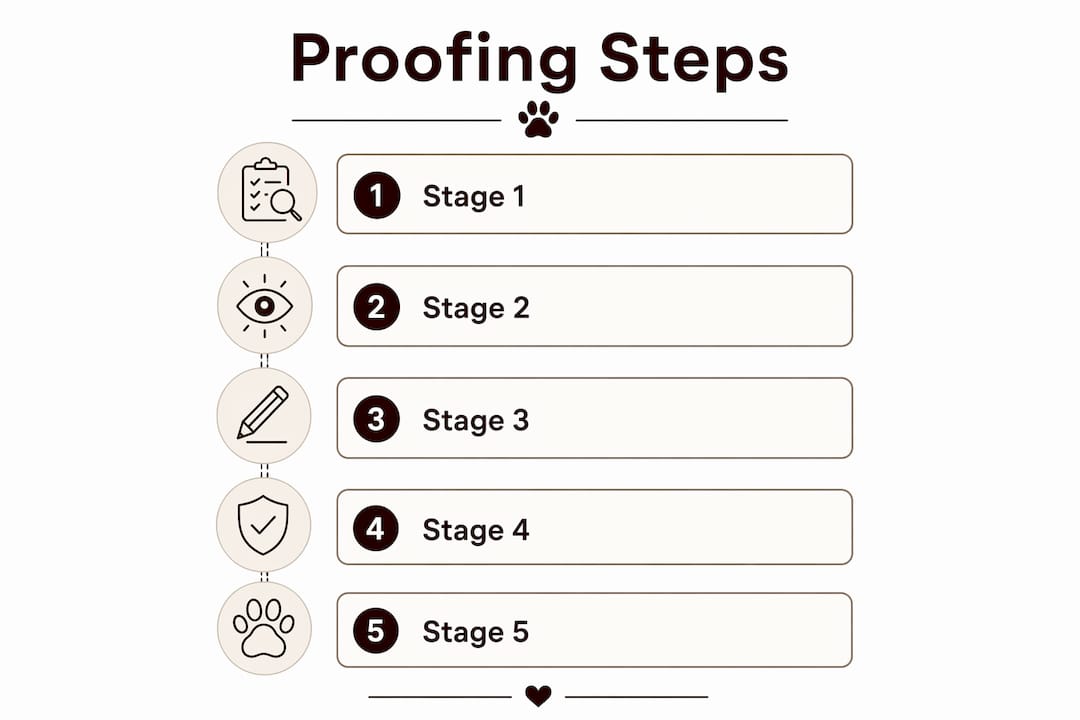
Work through these stages in order. Only move forward when your dog succeeds on eight out of ten attempts at the current level.
Home, no distractions. Short sessions of 3–5 minutes, high reinforcement rate (reward every correct response). This is your baseline.
Garden or backyard. New smells, mild movement. Keep sessions short and reward generously. If success drops, return to indoors briefly.
Quiet driveway or cul-de-sac. Occasional passing cars or pedestrians. Practise engagement skills such as name response and hand-targeting to keep attention on you.
Quiet park, low-traffic time. Early morning works well. Work at the edge of the space, away from the main path.
Busier park, moderate distraction. Introduce recall and stays. Keep sessions to 5–7 minutes and finish on a success.
Stage | Location | Session length | Success target before moving on |
1 | Home, indoors | 3–5 minutes | 8/10 correct responses |
2 | Garden / backyard | 3–5 minutes | 8/10 correct responses |
3 | Quiet street | 5 minutes | 8/10 correct responses |
4 | Quiet park | 5–7 minutes | 8/10 correct responses |
5 | Busier park | 5–7 minutes | 8/10 correct responses |
Realistic timeline: most dogs move through all five stages within four to eight weeks of daily short sessions. Some dogs with high arousal or prior anxiety may take longer, and that is entirely normal.
Pro Tip: Log three short wins per week in a notebook or phone note. Seeing steady progress keeps you motivated and helps you spot when a stage needs more time.
How your home environment and your own behaviour support transfer
A settled home life is the foundation of reliable obedience training. Consistent feeding times, predictable walks, and uninterrupted rest periods all reduce baseline cortisol. Predictable routines produce measurable reductions in pacing and reactivity, making your dog more ready to learn both at home and outside.
A genuine safe space matters too. A den or crate needs enclosure, familiar scent, and a low-traffic location. Moving it frequently undoes the calming effect. Leave it in one spot and let your dog choose when to use it.
Your own behaviour shapes your dog’s neurological readiness more than most owners realise. Calm arrivals and departures, consistent cue words, and predictable body language all signal safety. Comfort signals from owners are more powerful than treats alone at establishing that sense of security. If you arrive home excitedly and then expect a calm “sit” on the walk, you are sending mixed signals.
Pro Tip: Use the same hand signal and the same word every time, with every family member. Consistent cueing is one of the fastest ways to speed up generalisation. If you need help aligning everyone in the household, multiple handlers using different cues is one of the most common reasons progress stalls.
Quick fixes for common outdoor failures
Recall failure. Your dog hears you but does not come back. The distraction level is too high for the current stage of proofing. Move closer, use a higher-value reward (real chicken beats kibble here), and call only once. Repeated calling teaches your dog that the first call is optional.
Leash pulling. Pulling is self-reinforcing: the dog moves forward and gets closer to the interesting thing. Stop moving the moment the lead goes tight. Wait for slack, then reward and continue. Consistency across every walk is what changes the pattern.
Fixation or reactivity. Your dog locks onto another dog, a cyclist, or a jogger and stops responding to you. This is a threshold issue: you are too close to the trigger. Increase distance until your dog can look at the trigger and then look back at you. That “look back” is the behaviour you want to reward.
Red flags that suggest professional help is needed: aggression that escalates (lunging, snapping, biting), fear responses that do not reduce with distance, or no measurable progress after four weeks of correct staged proofing.
When to hire a professional in the UK
Some situations genuinely need a trained eye. Seek professional support when:
Your dog shows aggression toward people or other dogs, especially if it has escalated.
Fear responses are severe (trembling, inability to move, panic).
You have followed the staged proofing plan correctly for four weeks with no improvement.
You want hands-on coaching to get your technique right from the start.
In the UK, look for a trainer accredited by the Association of Pet Dog Trainers (APDT) or a behaviourist registered with the Animal Behaviour and Training Council (ABTC). The RSPCA also recommends seeking support from a certified trainer when stress or fear signs persist.
Typical UK cost ranges: one-to-one training sessions run roughly £50–£100 per hour depending on location and trainer experience. Group classes are usually £10–£20 per session. A full behavioural assessment from a clinical animal behaviourist can cost £150–£300 for the initial consultation. London and the South East tend to sit at the higher end of these ranges.
Questions to ask at the first call: What methods do you use? Are you APDT or ABTC registered? Do you offer follow-up support between sessions? Will you coach me as well as the dog?
For owners who want a structured, intensive option, Happy-dogtraining’s four-week obedience programme offers personalised, science-based training with free lifetime support after completion.
Your quick-reference checklist for walks and sessions
Check | What to do |
Session length | Keep to 5–7 minutes maximum outdoors; always finish on a success |
Reinforcement rate | Reward every correct response at early stages; thin rewards only once the behaviour is solid |
Engagement check | Ask for a name response or hand-target before each exercise to confirm your dog is with you |
Threshold signs | Watch for stiffness, scanning, or ignoring you; increase distance from the trigger immediately |
When to stop | If your dog fails three responses in a row, end the session calmly and try again later |
Daily practice | Two short sessions per day beats one long one; ten minutes total is enough |
Key takeaways
Dogs perform better at home because the familiar environment keeps cortisol low, reduces competing distractions, and allows the owner-dog bond to support focus — proofing transfers that reliability outside.
Point | Details |
Context-specific learning | A cue learnt at home is a different task outdoors; this is normal, not disobedience. |
Use the Three Ds | Lower distance, duration, or distraction one at a time when a cue breaks down in a new place. |
Routine builds resilience | Consistent feeding, walks, and rest reduce baseline cortisol and make your dog more ready to learn. |
Progress takes four to eight weeks | Most dogs move through all five proofing stages within four to eight weeks with daily short sessions. |
Know when to get help | Escalating aggression, severe fear, or no progress after four weeks of correct proofing warrants a professional assessment. |
The gap between home and outside is smaller than you think
Most owners come to me worried that their dog is being deliberately awkward outdoors. They are not. What you are seeing is a dog that learnt a behaviour in one context and has not yet been taught that the same rules apply everywhere. That is a training gap, and it is one of the most straightforward things to close when you approach it with patience and a clear plan.
Start with one cue. Pick “sit” or name response, and run through the five-stage proofing plan above over the next four to eight weeks. Log your wins. Notice when your dog checks in with you on a walk without being asked; that voluntary attention is the clearest sign the process is working. If you hit a wall, step back one stage rather than pushing through. Progress built on small, reliable successes lasts far longer than progress forced through difficulty.
If red flags appear, reach out to an APDT or ABTC-registered professional early. The sooner a behaviourist sees what is happening, the more options you have.
Further reading and sources
The following sources informed this guide. Items marked (practical) are most useful for owners; those marked (science) go deeper into the neurobiology and research.
Why Is My Dog Better Behaved at Home? — American Kennel Club (practical) — contextual learning, the Three Ds framework, and common owner errors during proofing.
What makes a dog feel secure at home — The Big Pet Shop (practical/science) — cortisol, routine, and the physiological basis of security.
What makes dogs feel comfortable at home — The Big Pet Shop (practical) — competing outdoor rewards and sensory overload.
Dog listens at home not outside — RSK9 Shadow Programme, NextGen Dog Trainers (practical) — engagement skills, threshold management, and the Three Ds in practice.
Why dogs need a safe space at home — PuppySimply (practical) — den setup, enclosure, and the parasympathetic response.
Testing olfactory abilities of family dogs — ELTE Eötvös Loránd University via Phys.org (science) — peer-reviewed evidence that indoor dogs outperform outdoor dogs on detection tasks.
Human analogue safe haven effect of the owner — PLOS One (science) — cardiac and behavioural evidence for the owner’s role as a stress buffer.
Understanding your dog’s behaviour — RSPCA (practical) — UK-specific guidance on reward training, safe spaces, and when to seek professional help.
Dog trainer reveals signs your pup feels emotionally safe — Newsweek (practical) — behavioural indicators of emotional security and routine-building tips from a certified behaviourist.
Best practices for home obedience training — Happy-dogtraining (practical) — trainer-endorsed techniques for building reliable home cues, with science-based context.
Recommended
Comments