Why dogs growl at family members: what owners should do
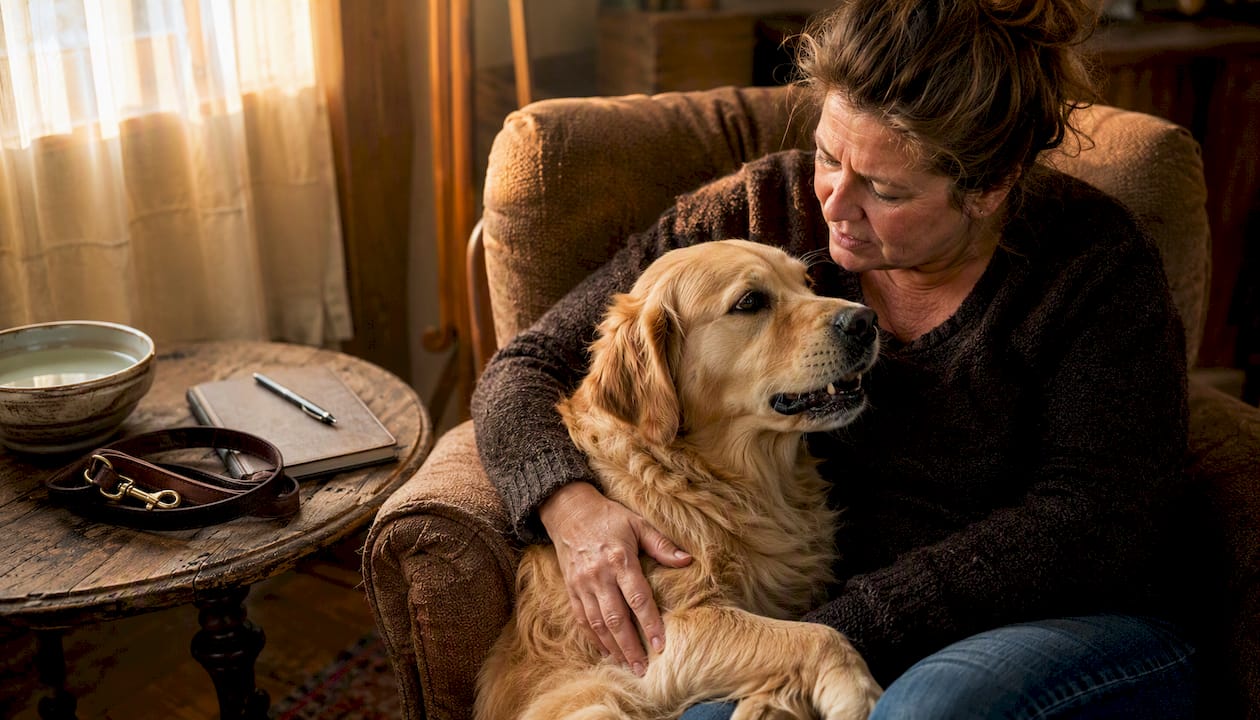
When your dog growls at someone in your household, it is almost always a warning, not spite. The growl most commonly signals fear, pain, resource guarding, protectiveness, or cumulative stress, and it is your dog’s way of saying “I’m not comfortable right now.” The single most important thing you can do in that moment is create distance calmly. Move the person away, secure your dog, and resist the urge to scold.
Create distance between the dog and the person being growled at. No chasing, no confrontation.
Avoid forced interaction. Do not make your dog “say sorry” or push the two together.
Never punish the growl. Suppressing it removes a vital warning signal and raises the risk of a bite.
Secure your dog in a calm, familiar space while you gather your thoughts.
Record the incident: note who was involved, what happened just before, where you were, and what the outcome was. That log will be invaluable for your vet or behaviourist.
Safety note: If there are children in the household, keep them separated from the dog until you have a clearer picture of what is triggering the behaviour. Children are frequently involved in bite incidents, which underlines why acting quickly and calmly matters so much.
Pro Tip: Jot down the three W’s straight after any growling incident: Who triggered it, What was happening (feeding, resting, being approached), and Where it occurred. Patterns in those notes often reveal the cause faster than memory alone.
Table of Contents
Why do dogs growl at family members? The main causes
Growling is normal canine communication, but when it is directed at a specific person in the household, it is worth understanding why. Here are the most common causes.
Fear and anxiety. A dog may be frightened of a particular person’s voice, posture, movements, or even scent. A child who moves unpredictably, a teenager who plays loud music, or a visitor who leans in too quickly can all trigger a fear response. The dog is not being mean; it is asking for space.
Pain or a medical condition. Discomfort makes handling and close proximity aversive. A dog with arthritis, an ear infection, or an undiagnosed injury may growl when a family member reaches towards the sore area, even accidentally. Pain is a frequent, overlooked cause of sudden behavioural changes, which is why a vet check should always come first when growling appears suddenly.
Resource guarding. Food bowls, favourite toys, sleeping spots, and even a particular person can all be guarded. A dog that growls when a child approaches its bed is not being dominant; it is protecting something it values.
Protective or possessive responses. Some dogs guard a specific household member, growling at others who come near “their person.” This can look like loyalty but is actually a form of anxiety-driven possessiveness that needs addressing.
Trigger stacking. This is one of the most overlooked causes. Small stressors accumulate throughout the day until the dog’s tolerance threshold is exceeded, and the next interaction, however innocent, tips it over. A dog that was startled by a loud noise, then had a difficult walk, then was disturbed while resting may growl at the first family member who approaches, even if that person has done nothing wrong.
Redirected or conflict-induced aggression. A dog that is already aroused or frustrated by something else (another dog outside the window, a delivery at the door) may redirect that tension onto the nearest person.
Play growling versus warning growls. Not every growl is a threat. Play growls tend to accompany loose, bouncy body language, a wagging tail, and an invitation to engage. Warning growls are lower in pitch, accompanied by stillness, and often paired with a hard stare or stiff posture. Learning to read the difference is genuinely useful.
Is growling the same as aggression?
No, and understanding that distinction can change everything about how you respond. A growl is a warning signal, not an automatic declaration of intent to bite. Dogs use growling to communicate discomfort before they feel the need to escalate. A dog that growls is, in a real sense, trying to avoid conflict.
Aggression is a spectrum of behaviours, and growling sits near the beginning of it. The body language around the growl tells you far more than the sound itself.
Signs of worry or mild discomfort:
Yawning or lip-licking when not tired or hungry
Averting the gaze or turning the head away
Ears pinned back
Tail tucked or held low
Panting without physical exertion
Signs that escalation is closer:
A hard, fixed stare
Stiff, still body (the dog has stopped moving)
Whale eye (the whites of the eyes are visible)
Lip lift or wrinkled muzzle
Low, sustained growl with no body movement
Punishing a growl is one of the most counterproductive things you can do. Suppressing the warning signal does not address the underlying discomfort; it simply teaches the dog to skip the warning next time. A dog that has been punished for growling may go straight to snapping or biting without any prior signal, which is far more dangerous for everyone.
When you hear a growl, respond calmly. Remove the person or the dog from the situation without drama, log what happened, and treat the growl as useful information rather than bad behaviour.
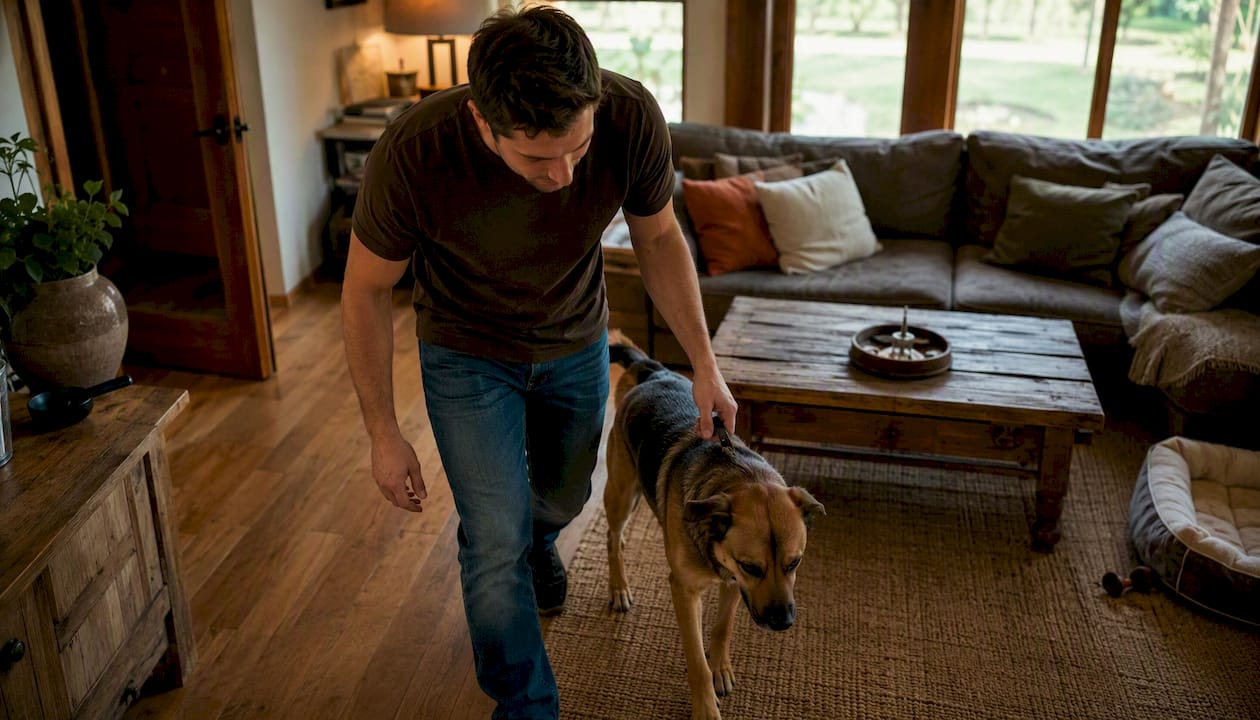
Pro Tip: Think of the growl as your dog’s way of filing a complaint. Your job is to read the complaint, not silence it. The more you listen, the safer your household becomes.
Immediate safety steps to prevent escalation
Acting well in the moment matters enormously. Here is a practical sequence to follow after a growling incident.
Stay calm and move slowly. Raised voices or sudden movements can escalate the situation quickly.
Create distance. Guide the person being growled at away from the dog. Do not drag the dog away by the collar if it is already tense.
Do not force reconciliation. Forced contact confirms the dog’s fear that its boundaries are being violated and can make things worse.
Secure the dog in a safe, quiet space (a crate, a separate room, a garden) until it has had time to settle.
Log the incident immediately: who was involved, what was happening just before, the location, any recent stressors that day, and what the dog did after.
Ongoing household management adjustments:
Set up safe zones where the dog can rest undisturbed. A crate or a bed behind a baby gate works well. Teach all family members that the dog’s safe zone is off-limits for interaction.
Use gating and supervised access to prevent unsupervised contact between the dog and the person being targeted, especially during feeding, resting, or high-arousal moments.
Avoid predictable triggers. If the dog guards its food bowl, feed it in a separate room. If it growls when woken suddenly, teach children not to approach a sleeping dog.
Keep a simple incident log using these prompts: Who? What was the dog doing? What did the person do? Where? What happened after? Bring this log to every vet or behaviourist appointment.
These adjustments are not permanent solutions, but they reduce the chance of an incident while you work on the longer-term plan.
A humane, stepwise plan to reduce growling at family members
This plan works best when followed in order. Skipping straight to training without addressing medical causes or safety first is a common mistake.
Veterinary check first. Before any training begins, rule out pain or illness. Ask your vet specifically about joint pain, ear or dental issues, neurological changes, and any recent shifts in behaviour. If pain is the cause, treating it may resolve the growling entirely. If the vet gives the all-clear, you have a clearer picture for the next steps.
Threshold management. Keep your dog below its stress threshold during this period. Map its day for stressors (walks, noise, visitors, disrupted rest) and reduce them where you can. Predictable routines help enormously. A dog that feels safe and settled is far less likely to growl.
Desensitisation and counter-conditioning. This is the core of the behaviour-change work. The goal is to change your dog’s emotional response to the person it has been growling at, from “that person makes me uncomfortable” to “that person predicts good things.” Desensitisation and counter-conditioning require strict control of intensity and timing.
A simple starting exercise: the targeted family member stands at a distance where the dog notices them but remains relaxed (this is sub-threshold). The moment the dog looks at the person calmly, it receives a high-value treat from a third party. Repeat five times, then give the dog a break of at least two minutes. Do not move closer until the dog is consistently relaxed at the current distance.
Teach alternative behaviours. Give your dog something constructive to do instead of growling. Three reliable ones:
“Look at me” (eye contact on cue) redirects attention and breaks fixation.
“Go to place” (go to your bed/mat) gives the dog a safe retreat it chooses voluntarily.
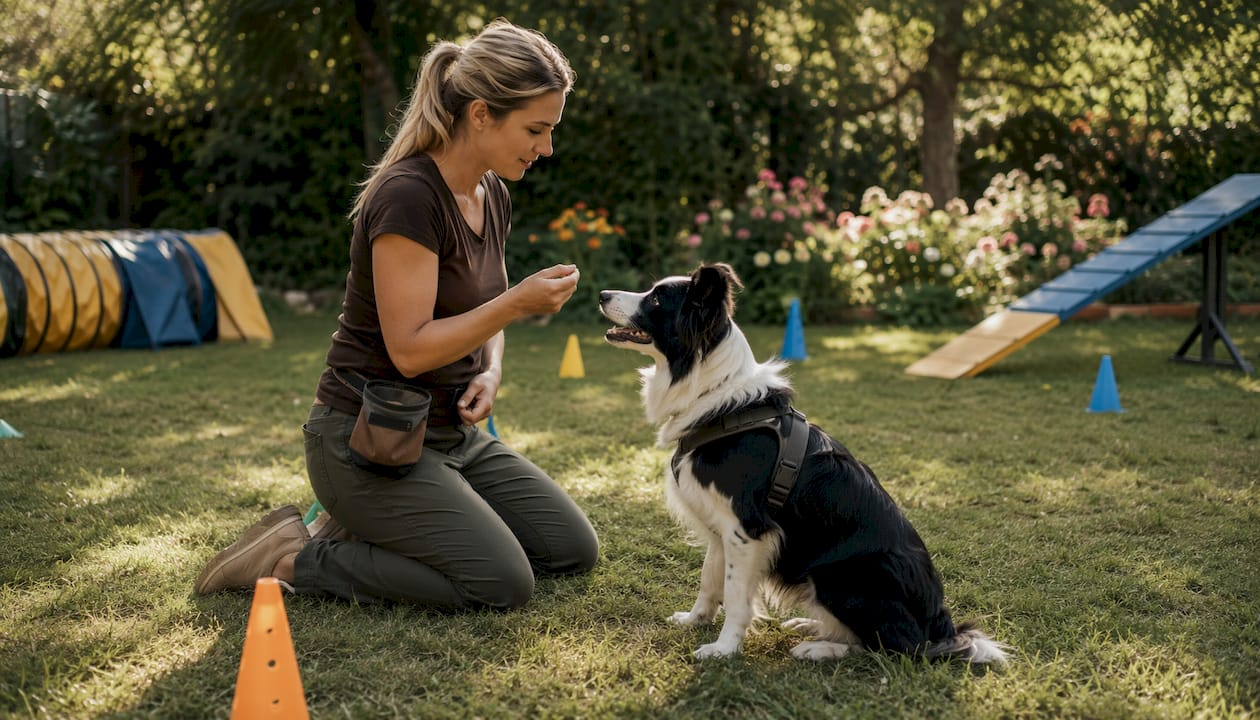
“Leave it” interrupts resource-guarding moments before they escalate. Practice each in short sessions of three to five minutes, two to three times a day.
Progress markers and realistic timelines. After two weeks of consistent management, most owners notice fewer incidents simply because triggers are being avoided. After six weeks of regular desensitisation work, many dogs begin to show relaxed body language at distances that previously caused growling. Twelve weeks of consistent, patient work often brings meaningful improvement in mild to moderate cases. If you are not seeing any change after four to six weeks, slow down and consult a professional rather than pushing harder.
Pro Tip: Keep sessions short and always end on a success. If your dog is struggling, you have moved too fast. Go back one step, not two, and rebuild confidence from there. Patience here pays off far more than speed.
For more on matching your approach to your dog’s temperament, the training methods by temperament guide at Happy-dogtraining is a practical starting point.
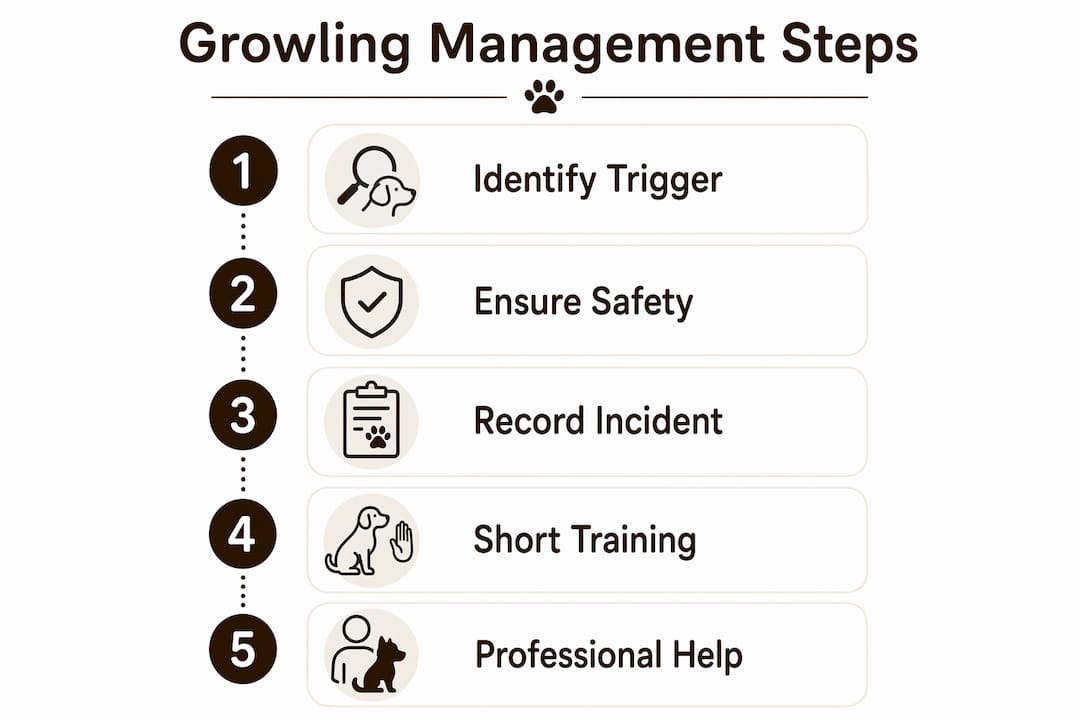
When should you call a professional?
Some situations genuinely need expert input, and recognising them early makes a real difference to outcomes.
See a vet promptly if:
The growling started suddenly with no obvious trigger
Your dog flinches, yelps, or shows other signs of pain when approached
There has been any snapping or biting alongside the growling
Your dog’s appetite, sleep, or energy levels have changed
Refer to a behaviour professional if:
Growling is recurrent and directed at specific family members
Management alone is not reducing incidents
There are children in the household
You feel unsafe or unsure about the next steps
Professional | What they can help with | Credentials to look for |
RCVS-registered vet | Rule out medical causes, prescribe medication if anxiety is severe | RCVS registration |
Veterinary behaviourist | Complex cases combining medical and behavioural factors | RCVS specialist status in behavioural medicine |
Clinical animal behaviourist | Behaviour assessment, modification plans, follow-up | CCAB or full membership of APBC |
Accredited force-free trainer | Management plans, in-home exercises, owner coaching | APDT (UK) membership, IMDT accreditation |
Questions worth bringing to your first appointment:
What is the most likely cause based on what you have observed?
What does a realistic timeline for improvement look like?
How should we manage the household safely during treatment?
Will medication be considered, and under what circumstances?
What home exercises can we start immediately?
Treatment plans for aggression typically combine management, behavioural modification, and sometimes medication when anxiety or impulse control is severely affected. A good professional will give you a clear plan, not just a list of things to avoid.
Red flags and realistic prognosis
Most dogs that growl at family members can improve meaningfully with the right approach. But some situations carry higher risk and need faster, more decisive action.
Red flags that require urgent professional input:
Snapping or biting with no prior growl (the warning signal has been suppressed or is absent)
Growling when being handled for routine care (grooming, nail trimming, veterinary examination)
Sudden onset of growling in a previously calm dog
Growling that is increasing in frequency or intensity week on week
Any bite that breaks the skin
When home rehabilitation may not be safe:
Young children are regularly in contact with the dog
There have been repeated unprovoked bites
The dog cannot be safely managed between sessions
In those cases, the priority is safety first, professional assessment second, and a realistic conversation about long-term management or rehoming if the risk cannot be reduced to an acceptable level.
Realistic prognosis: Mild to moderate cases, particularly those rooted in fear or resource guarding, often respond well to consistent management and reward-based work. Severe or long-standing aggression may require ongoing management rather than a complete resolution. Progress is rarely linear. A good week followed by a setback is normal, not failure.
According to VCA Animal Hospitals, US CDC data estimates around 800,000 people seek medical attention for dog bites each year, with children accounting for roughly half of those cases. UK figures differ, but the pattern of children being disproportionately affected is consistent across countries and reinforces why early intervention matters.
Key takeaways
A dog that growls at a family member is communicating discomfort, not acting out of spite, and the right response is calm management, a veterinary check, and a patient, reward-based behaviour plan.
Point | Details |
Never punish the growl | Suppressing the warning signal raises bite risk; treat it as useful information instead. |
Vet check comes first | Sudden growling often has a medical cause; rule out pain before starting any training. |
Manage the environment immediately | Safe zones, gating, and avoiding predictable triggers reduce incidents while longer-term work begins. |
Use desensitisation and counter-conditioning | Pair calm exposure to the trigger person with high-value rewards, always staying below the dog’s stress threshold. |
Seek credentialled help for complex cases | Look for CCAB, APBC, or APDT (UK) credentials; bring your incident log to the first appointment. |
A trainer’s perspective on what owners get wrong
The most common mistake owners make is treating the growl as the problem. It is not. The growl is the solution your dog has found to a problem it cannot solve any other way. When you punish it, you take away the only tool your dog has for communicating distress, and that is when things become genuinely dangerous.
The second most common mistake is reaching for “alpha” or dominance-based explanations. Clinical and veterinary guidance consistently shows that fear, conflict history, and reinforcement patterns are far more likely causes of family-directed growling than any dominance dynamic. Responding to a frightened dog with intimidation does not build respect; it builds more fear.
What actually works is treating the growl as a starting point for investigation. Where does it happen? Who triggers it? What was the dog’s day like before it happened? Mapping those details reveals the cause, and the cause points to the solution. A dog guarding its resting place needs a different plan from a dog in pain, which needs a different plan from a dog that has been inconsistently managed and is confused about what the rules are.
The dog aggression management techniques that work consistently share three things: they prioritise safety, they address the emotional state driving the behaviour (not just the behaviour itself), and they give the dog a clear, predictable world to live in. Predictability reduces anxiety. Reduced anxiety reduces growling.
If you are working through this at home and making progress, that is genuinely encouraging. If you are not, or if the situation feels unsafe, a professional assessment is not an admission of failure. It is the most responsible thing you can do for your dog and your family.
Useful sources and how to find UK-based help
The following resources are authoritative starting points for further reading.
American Kennel Club: Why dogs growl and how to handle it — clear overview of growl types and response strategies
VCA Animal Hospitals: Dog aggression toward family members (treatment) — evidence-based treatment framework
VCA Animal Hospitals: Aggression to family members (introduction and safety) — safety guidance and cause overview
Whole Dog Journal: Understanding why your dog growls — practical advice on reading growls and avoiding punishment
The Spruce Pets: Why does my dog growl? — accessible summary of triggers and management
PAW Vet Practice: Acupuncture for dogs with anxiety — integrative veterinary options for anxiety-driven behaviour
Finding UK-based help:
RCVS-registered vets: Search the Royal College of Veterinary Surgeons register for a vet with a behavioural medicine interest or ask for a referral to a veterinary behaviourist.
Clinical animal behaviourists: Look for CCAB (Certificated Clinical Animal Behaviourist) or full members of the Association of Pet Behaviour Counsellors (APBC).
Accredited trainers: The Association of Pet Dog Trainers UK (APDT) and the Institute of Modern Dog Trainers (IMDT) both maintain searchable directories of accredited, force-free practitioners.
Bring your incident log and, if possible, a short video of the behaviour to your first appointment. It gives the professional far more to work with than a verbal description alone, and it often shortens the assessment process considerably.
Recommended
Comments