Why humane training methods work better for your dog
Updated: Aug 14
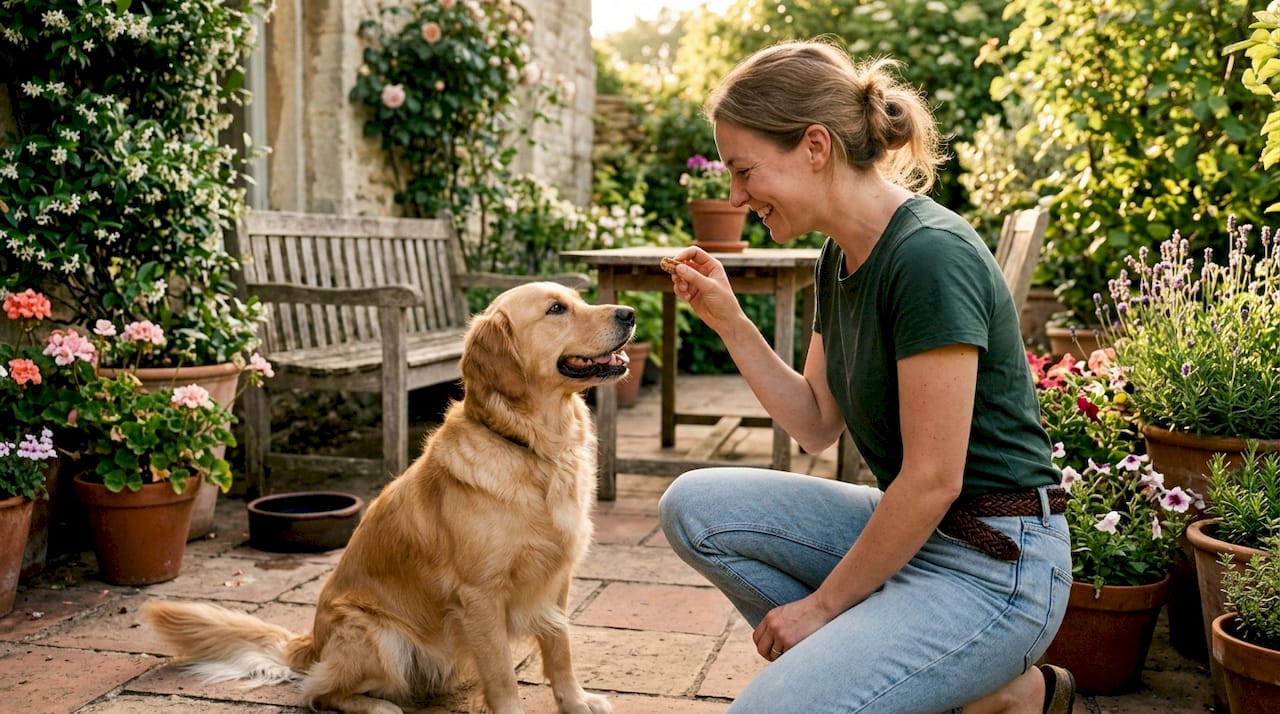
Humane dog training is defined as any method that teaches desired behaviours through positive reinforcement rather than fear, pain, or intimidation. The science is clear: reward-based training produces fewer behaviour problems, a stronger bond between you and your dog, and lasting results that punishment simply cannot match. Veterinary and neuroscience research consistently shows that positive reinforcement techniques reduce the risk of aggression, anxiety, and relinquishment. If you want a calmer, happier dog who genuinely wants to work with you, understanding why humane training methods work better is the most important place to start.
Why humane training methods work better: the brain science
Positive reinforcement works because it targets the dog’s reward system directly. When your dog performs a behaviour and receives a treat or praise, the brain releases dopamine. That dopamine signal tells the brain “this was worth doing again,” which is exactly how lasting learning takes root.
Dogs trained with reward-based methods develop what behaviourists call an optimistic emotional state. In that state, they are more curious, more willing to try new things, and more engaged with the person training them. Reward-based training reduces behaviour problems and lowers the risk of relinquishment and euthanasia. That is a significant finding. It means the method you choose does not just affect your training sessions; it shapes your dog’s entire quality of life.

Studies also show that dogs trained with punishment are less likely to engage socially and play less than dogs trained with rewards. Less play and less social engagement are early signs of chronic stress. A dog in a positive emotional state learns faster, retains more, and generalises new skills to different environments far more readily.
Here are the core positive reinforcement techniques that produce these results:
Marker training: A clicker or a short word like “yes” marks the exact moment the dog does the right thing, making the reward crystal clear.
High-value treat rewards: Soft, smelly treats such as chicken or cheese motivate far more than dry biscuits, especially in distracting environments.
Shaping: Rewarding small steps toward a final behaviour builds confidence and keeps the dog actively thinking.
Luring: Guiding the dog into position with a treat before fading the lure teaches the behaviour without force.
Capturing: Rewarding behaviours the dog offers naturally, such as sitting calmly, teaches the dog that good choices pay off.
Pro Tip: Time your reward within one to two seconds of the behaviour. Any longer and your dog may not connect the treat to the action you wanted.
What does aversive training actually do to a dog?
Aversive training activates the amygdala, the part of the brain that processes threat. When the amygdala fires, the hypothalamic-pituitary-adrenal (HPA) axis releases cortisol and adrenaline. These stress hormones prepare the dog to fight, flee, or freeze. That is the opposite of the calm, focused state needed for learning.
The most troubling aspect is how persistent these threat memories become. The amygdala tags memories with emotional weight, a process sometimes described as “learning fast, forgetting slow.” Even a single frightening event can create a lasting negative association with a person, a place, or a sound. Mild aversive stimuli activate these threat memory systems even when no obvious pain signs appear. That means a dog can be suffering neurologically without showing any outward distress.
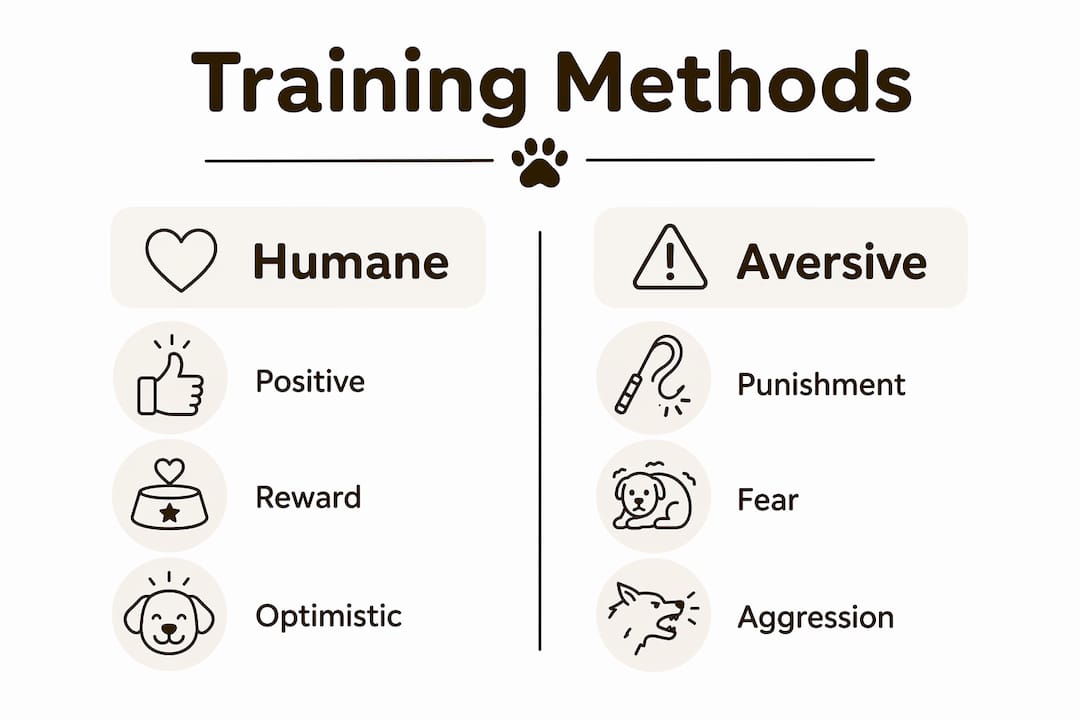
Repeated aversive training also shifts the dog away from goal-directed behaviour and toward rigid, fear-driven habit circuits. The dog stops thinking and starts reacting. That shift reduces learning flexibility, making it harder for the dog to adapt to new situations or respond reliably to cues.
Effect | Reward-based training | Aversive training |
Emotional state | Optimistic, engaged | Fearful, suppressed |
Aggression risk | Low | Elevated |
Social engagement | High | Reduced |
Learning flexibility | Strong | Weakened |
Long-term welfare | Positive | Compromised |
“Research shows welfare is compromised with aversive methods even in experienced hands. Punishment and negative reinforcement increase stress, fear, and aggression regardless of trainer skill. The debate should focus on welfare impacts rather than just immediate efficacy; all aversive tools cause measurable welfare costs.”
A 2017 review found that aversive methods linked to higher aggression, with 31% of dogs showing aggressive responses to “alpha rolls” and 41% responding aggressively to hitting or kicking. Those are not rare edge cases. They are predictable outcomes of using fear as a training tool.
Common myths about humane training and aversive tools
Several persistent myths keep dog owners from committing fully to reward-based methods. Each one deserves a direct answer.
Myth: “Punishment is sometimes necessary.” Punishment is never necessary to train effectively. The goal is to address the emotional cause of unwanted behaviour, not to suppress the behaviour through fear. A dog that lunges at strangers is usually anxious, not defiant. Treating the anxiety produces lasting change; punishing the lunge does not.
Myth: “Aversive tools are safe when used by a skilled trainer.” Welfare is compromised with aversive methods even in experienced hands. Skill level does not neutralise the physiological stress response. The HPA axis activates regardless of how precisely the correction is timed.
Myth: “Positive reinforcement spoils dogs.” Rewarding good behaviour does not spoil a dog. It builds a clear communication system. Your dog learns that specific actions earn good things, which creates a dog who actively offers calm, polite behaviour rather than one who complies only under threat.
Myth: “Low-level e-collars are harmless.” Even low-level stimulation activates the dog’s threat memory system. The absence of visible pain does not mean the absence of stress.
Myth: “Punishment fixes aggression faster.” Transfer of aversiveness is a well-documented phenomenon. A dog punished near another dog may associate the pain with that dog, making aggression worse, not better.
Pro Tip: If your dog is showing unwanted behaviour, ask “what is my dog feeling right now?” before asking “how do I stop this?” Addressing the emotion first produces far more reliable results.
Understanding these myths matters because they often lead well-meaning owners to choose methods that set their dogs back. The types of humane training methods available today are varied, evidence-based, and genuinely effective for every breed and temperament.
How to apply reward-based training at home
Switching to or starting with humane methods does not require professional equipment or a perfect environment. What it does require is consistency, good timing, and a willingness to set your dog up to succeed. Training failures most often result from owner timing errors or unmotivating rewards, not from any weakness in the method itself.
Choose the right reward. High-value treats increase motivation, reduce stress, and strengthen the bond between you and your dog. Use something your dog genuinely loves, not just something convenient for you.
Manage the environment. Set your dog up to succeed by removing triggers before training begins. A dog who cannot stop barking at the window cannot focus. Close the blinds, move to a quieter room, or train at a time of day when distractions are lower. The training environment shapes how quickly your dog learns.
Keep sessions short. Five to ten minutes of focused training beats a forty-minute session where both of you lose patience. End on a success, even if that means asking for something easy at the close.
Reward calm behaviour throughout the day. Do not wait for formal training sessions. When your dog settles quietly on their mat, mark and reward it. You are teaching your dog that calmness pays off at any time.
Address the emotion, not just the behaviour. If your dog is reactive, fearful, or anxious, work on building positive associations with the trigger at a distance. Gradually reduce that distance as confidence grows. This process, called counter-conditioning, changes how your dog feels rather than just what your dog does.
Transition gradually if switching from aversive methods. Stop all punishment immediately. Introduce a marker and begin rewarding the behaviours you want. Your dog may be confused at first. Patience and consistency will rebuild trust faster than you expect.
Following these steps consistently produces a dog who is genuinely happy to engage with you. Wagging tails and joyful moments in training are not a bonus. They are evidence that the method is working.
Key takeaways
Humane training methods work better because they build positive emotional states that support learning, while aversive methods activate stress systems that undermine it.
Point | Details |
Reward-based learning is neurologically sound | Dopamine released during positive reinforcement drives lasting memory and motivation in dogs. |
Aversive methods cause measurable harm | Even mild punishment activates the amygdala and HPA axis, raising stress and aggression risk. |
Punishment is never necessary | Addressing the emotional cause of behaviour produces more reliable, long-term change than suppression. |
Timing and reward quality matter | Training failures stem from poor timing or weak rewards, not from any flaw in humane methods. |
Environment management is part of training | Setting your dog up to succeed reduces frustration and accelerates progress for both of you. |
What twenty years of training has taught me about kindness and results
I have worked with hundreds of dogs across Singapore over more than two decades, and the pattern never changes. The dogs who arrive most shut down, most reactive, or most fearful are almost always the ones who have experienced the most correction. Their owners are often exhausted and confused, because the punishment seemed to work at first and then stopped working entirely.
What I have seen consistently is that the moment an owner switches to reward-based methods, the dog’s body language changes within days. The ears come forward. The tail lifts. The dog starts offering behaviours rather than waiting to be told what not to do. That shift is not magic. It is neuroscience in action.
The hardest part for most owners is trusting that kindness is not weakness. Speed is the usual concern: “Will this take longer?” In my experience, it does not. A dog who wants to work with you learns faster than a dog who is simply trying to avoid discomfort. The results also last longer, because the behaviour is built on genuine understanding rather than suppressed fear.
Training is communication. Every reward you give is a sentence in a language your dog is learning to read. When that language is clear, consistent, and free of threat, the conversation becomes genuinely joyful. That is what I want for every dog and owner I work with.
— Mark
How Happy-dogtraining can help you get started
Happy-dogtraining brings over 20 years of science-backed, reward-based experience to every programme it offers in Singapore. Every session is built around the dog’s individual temperament, whether the challenge is basic obedience, fearfulness, or reactive behaviour.

The 4-week AVS-approved intensive programme is designed for dog owners who want structured, professional guidance using proven humane methods. It covers obedience foundations, behaviour management, and the communication skills you need to maintain progress at home. Happy-dogtraining also provides free lifetime support after training, so you are never left without guidance when new challenges arise. If your dog is showing fearful or reactive behaviour, the fearful dog class offers a gentle, evidence-based path toward confidence and calm.
FAQ
What is positive reinforcement in dog training?
Positive reinforcement is the practice of rewarding a dog immediately after it performs a desired behaviour, making that behaviour more likely to happen again. Rewards include treats, praise, play, or anything the dog genuinely values.
Does humane training really work for aggressive dogs?
Yes. Reward-based methods address the anxiety or fear that drives most aggression, producing more reliable and lasting change than punishment. Research shows aversive methods increase aggression risk, with 31% of dogs responding aggressively to alpha rolls.
How long does positive reinforcement training take to show results?
Most dog owners see noticeable changes in behaviour within one to two weeks of consistent reward-based training. The timeline depends on the dog’s history, the behaviour being addressed, and the consistency of the owner’s approach.
Is it too late to switch from punishment-based to humane methods?
No. Dogs adapt well when punishment stops and clear, consistent rewards begin. The transition may take patience, but most dogs rebuild trust and begin engaging positively within a short period.
Why do some trainers still use aversive tools if the science is against them?
Aversive tools can suppress behaviour quickly, which looks like success in the short term. The science shows, however, that this suppression comes with welfare costs including chronic stress, increased aggression, and reduced learning flexibility that emerge over time.
Recommended
Comments