How dogs make decisions explained: what owners need to know
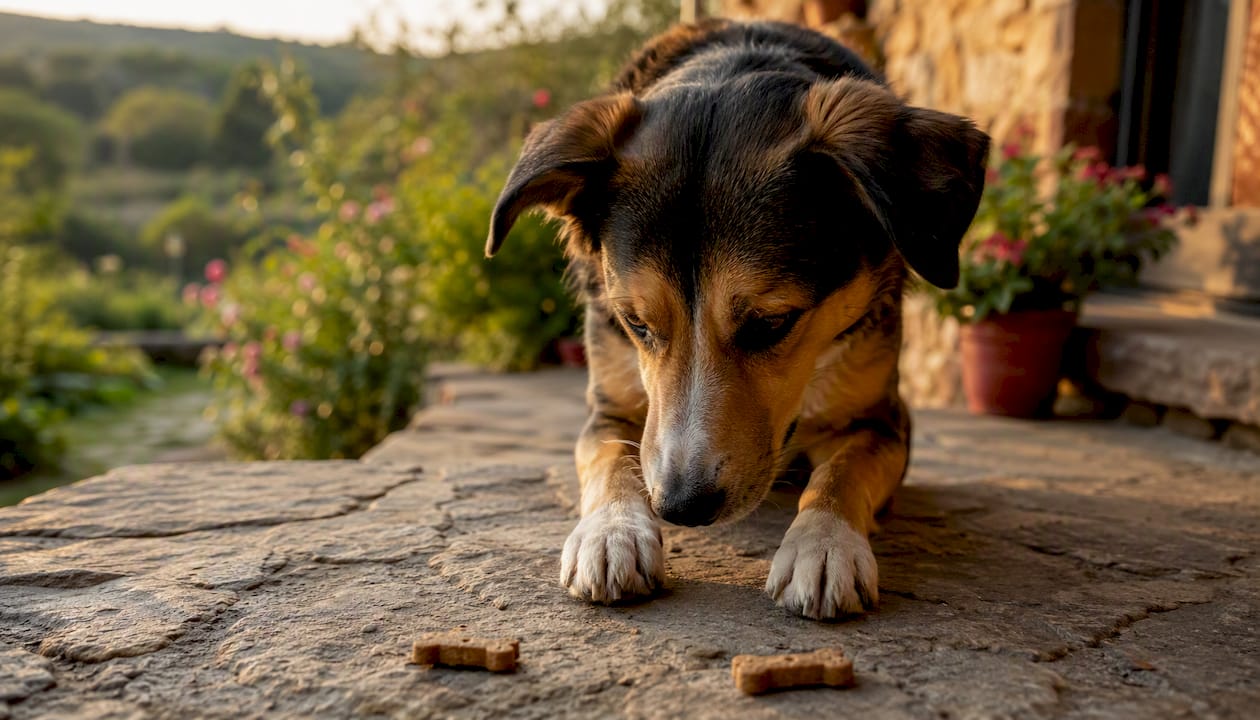
Yes, dogs make decisions, and they do it using brain circuits that work in a similar way to the ones behind human choices, even though a dog’s brain is far simpler. This isn’t guesswork or wishful thinking from dog lovers. A 2026 EEG study picked up frontal midline theta activity, a brainwave pattern in the 4 to 8 Hz range, in dogs asked to wait for a better reward instead of grabbing the one in front of them. That’s the same signature researchers see in humans exercising self-control.
For you, as an owner, three things drive most of what your dog chooses in any given moment:
Brain control — specific regions handle valuation, fear and impulse regulation, and we can now measure some of this activity directly.
Sensory input — scent, sight and sound compete for your dog’s attention, and whichever sense dominates shapes what gets noticed at all.
Social influence — you, the familiar human, carry outsized weight in your dog’s choices, sometimes more than the object of choice itself.
Understanding how these three forces interact is what separates “my dog is being stubborn” from “my dog is running a completely predictable decision process I can work with.” That’s the difference this article aims to give you.
Key Takeaways
Dogs make measurable, neurally grounded decisions shaped by brain control, dominant senses, and social trust in familiar humans, not pure instinct or randomness.
Point | Details |
Neural control is real | EEG studies show frontal midline theta rising during delayed-gratification tasks, a marker shared with human self-control. |
Scent usually leads | Olfaction dominates most foraging and food-related choices, often overriding recall cues in scent-heavy environments. |
Owners shift attention more than action | Familiar humans strongly influence what a dog looks at, but reachable, attractive objects often win the actual choice. |
Dogs satisfice, not optimise | Expect “good enough” choices under time pressure or competition, not exhaustive comparison of every option. |
Build control gradually | Progressive, short delays with clear release cues build impulse control more reliably than testing it cold. |
Table of Contents
How dogs make decisions explained through brain activity
The clearest evidence that dogs genuinely deliberate, rather than simply reacting on instinct, comes from imaging and lesion studies of specific brain structures. The orbitofrontal cortex and ventromedial prefrontal areas handle valuation, essentially weighing whether one option is worth more than another. The amygdala governs fear responses and threat assessment, which explains why a nervous dog might refuse a treat it would normally take without hesitation. The striatum sits at the centre of motivation and action selection, translating “I want that” into “I’ll move towards it.” Popular science coverage summarising fMRI and lesion evidence has laid out how dogs’ brains support genuine decision-making rather than pure reflex, giving anatomical weight to what trainers have long suspected from behaviour alone.
The EEG data adds a layer that behaviour alone can’t. A 2026 study on canine cognitive control recorded brain activity while dogs faced delayed-gratification challenges, tasks where taking the immediate reward meant missing out on a better one later. Researchers observed increases in frontal midline theta and a flattening of the broader power spectrum during these tasks, both recognised markers of active cognitive control in human EEG research. A related preprint detailing the same dataset confirms the pattern held across 226 short recordings taken from 14 dogs.
Measure | Detail |
Recordings analysed | 226 short EEG sessions |
Dogs involved | 14 family dogs |
Key signal | Frontal midline theta, 4 to 8 Hz, increased during delayed gratification |
Comparable human marker | Same frequency band linked to inhibitory control |
Neurochemistry plays its part too. Dopamine drives reward anticipation, spiking when your dog expects something good is coming, which is why anticipation itself can be reinforcing during training. Oxytocin increases social salience, making your dog more attentive to and motivated by you specifically. Neither chemical makes a decision on its own, but together they tilt which options feel worth pursuing.
A few practical signs suggest these systems in action:
Hesitation before taking a reward often reflects the orbitofrontal cortex weighing alternatives, not confusion.
A dog that freezes rather than approaches is likely running an amygdala-driven threat check.
Sudden, eager movement towards a stimulus usually reflects striatal activation following a dopamine spike.
Pro Tip: Don’t judge your dog’s overall intelligence from a single delayed-gratification test. A dog who fails to wait for a better treat once might simply be hungrier, more stressed, or less motivated that day, not lacking in self-control as a trait.
How do senses shape what a dog chooses?
Smell usually wins. For most dogs, especially in foraging or food-related contexts, olfaction dominates the decision process before sight or sound get a look-in. This is why a dog mid-recall in a park will sometimes appear to ignore you entirely: a competing scent has already claimed the attentional resources needed to process your cue.
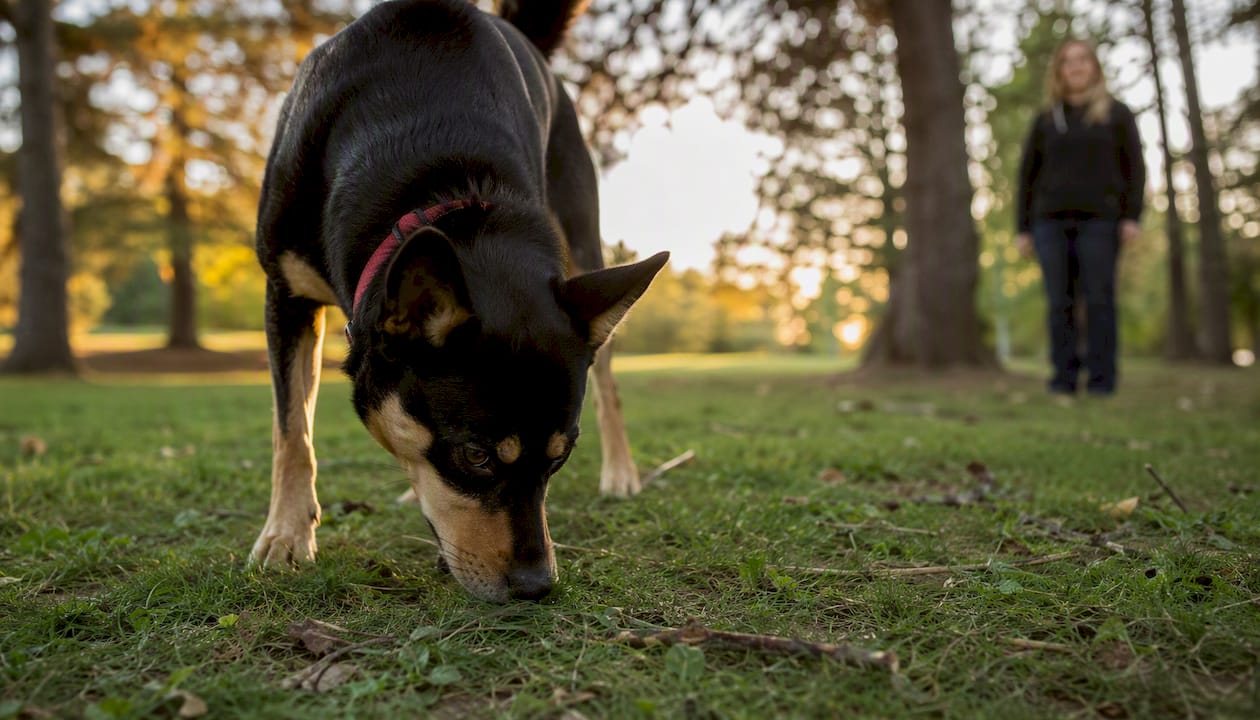
Field research on free-ranging dogs backs this up sharply. A 2025 study on scavenging decisions found that dogs foraging in unpredictable environments rely heavily on scent and adopt what researchers call a “good-enough” strategy, prioritising speed over perfect accuracy. Rather than sniffing out the single best food source available, a hungry, opportunistic dog will settle for something adequate nearby rather than risk losing it while searching for something better. That’s not laziness; it’s an efficient response to a world where hesitation often means someone else eats first.
Pet dogs show more mixed results. Living with reliable food and less competition changes the calculation, so vision and novelty can take over in specific contexts, like when a bright or unusual toy catches attention purely because it’s new. Hearing and tactile cues matter most in social settings: a change in your tone often shifts behaviour faster than the words themselves.
You can usually predict which sense is steering a given choice by watching for a few signs:
Nose down, tail low and moving in a search pattern signals scent is dominant.
Head snap towards movement or colour, with nose largely uninvolved, points to vision leading.
Ears swivelling towards a sound before any other reaction suggests hearing is driving attention.
Dominant sense | Typical context | What it looks like |
Smell | Foraging, food searches, tracking | Sustained sniffing, ignoring visual cues |
Sight | Novel objects, fast movement | Fixation, head turning towards motion |
Hearing | Social interaction, commands | Ear movement, head tilt towards the sound |
Pro Tip: Run a simple home test: place a treat under one of three identical cups while your dog watches, then swap the cups around. If your dog goes straight for the correct cup using its nose rather than tracking your hand, scent is likely the dominant sense guiding its everyday choices.
Why do dogs follow human cues sometimes and not others?
Familiarity carries enormous weight. Classic food-choice experiments comparing owner versus stranger cues found that dogs preferentially trust information from familiar humans, sometimes even when that information turns out to be misleading. Your dog isn’t evaluating you as a neutral information source each time. It’s drawing on an accumulated history of your reliability, and that history usually beats a stranger’s cue even when the stranger happens to be right.
But social influence doesn’t always translate into action. One striking experiment tracked how owner preference affects dogs’ perceptual focus during fetching tasks. Dogs clearly shifted their attention and looking time towards objects their owners had shown a preference for. Yet when it came to actually fetching, that preference barely mattered: across 41 fetching events, dogs retrieved the owner-preferred item very rarely. Owner emotional displays changed what dogs looked at far more reliably than what they did.
Social signals from a familiar owner reliably redirect a dog’s attention. They far less reliably redirect a dog’s actual behaviour once a physically reachable, attractive alternative is on offer.
Several factors moderate how much a human cue actually shapes the outcome. Physical affordance matters enormously: if the preferred object is within easy reach, a dog is far more likely to act on its own preference regardless of what you signalled. Reward strength counts too, since a highly desirable object competes harder against social pressure than a mediocre one. Previous reinforcement history shapes trust in your cues specifically, and individual temperament varies the whole equation from dog to dog.
Three things follow for anyone training or living with a dog:
Treat your emotional signals as attention-grabbers, not guaranteed behaviour-changers, especially when a tempting alternative is physically accessible.
Build cue reliability deliberately over time; a history of accurate signals is what earns the trust dogs show familiar humans in food-choice research.
Remove or reduce competing physical options when you genuinely need a cue to be followed, rather than relying on social pressure alone to override them.
Pro Tip: Use clear, consistent timing when signalling preference, a fixed vocal tone paired with a fixed gesture, delivered before your dog commits to an action rather than during or after. Consistency builds the kind of reliability history that makes your cues genuinely predictive rather than just interesting.
What decision shortcuts do dogs actually use?
Dogs rarely optimise. They satisfice, meaning they choose the first option that clears a “good enough” bar rather than exhaustively comparing every possibility. The scavenging research on free-ranging dogs captured this directly: when resources are unpredictable and competition is real, dogs consistently favour a decent, immediately available option over a theoretically better one that requires more searching or risk.
This produces a clear speed-accuracy trade-off. A dog under time pressure, hungry, anxious, or facing competition from other dogs, will act faster and less selectively. A relaxed dog with no competing pressures can afford to be pickier. Context, not personality alone, drives which mode your dog is in at any given moment.
Side-bias adds another wrinkle that catches many owners off guard. Some dogs show a persistent preference for turning or choosing left or right regardless of what’s actually on offer, and this bias can override even a clear social signal from you. A dog that always veers left on a walk, or consistently chooses the left food bowl in a two-choice test, may simply be running an ingrained lateral preference rather than ignoring you deliberately.
Picture this: a dog faced with two nearly identical toys, one slightly closer, one slightly more novel. Rather than pausing to compare them properly, the dog grabs the nearer one within a second or two. That’s satisficing in action, not indecision and not a training failure. An owner who wants the dog to choose the further, more stimulating toy would do better repositioning it closer than expecting the dog to search harder for it.
A few quick checks help distinguish heuristic-driven behaviour from an actual training gap:
Does the behaviour change when you remove time pressure or competition? If yes, it’s likely a speed-accuracy trade-off, not disobedience.
Does the dog consistently favour one side across unrelated tasks? If yes, test for side-bias before assuming a cue is misunderstood.
Does the “wrong” choice disappear when the preferred option is made physically closer or more accessible? If yes, affordance, not comprehension, was the issue.
Does performance improve with lower arousal or hunger levels? If yes, motivational state was likely overriding the trained response.
Our guide to behaviour analysis in dog training walks through how to separate these factors systematically when a dog’s choices seem inconsistent.
What makes a dog wait instead of grabbing the reward?
Delayed-gratification tasks are the clearest window we have into canine impulse control. In a typical version, a dog is shown a reward it could take immediately, but waiting produces a bigger or better one. Success depends on genuine inhibition of the impulse to grab, not just understanding the rules; a dog can know exactly what’s on offer and still fail to hold back.
This is where the neural evidence connects directly to behaviour. The same frontal midline theta signal linked to cognitive control in dogs rises specifically during these waiting tasks, suggesting the brain is actively working to suppress the impulsive response rather than simply not having one in the first place. Individual differences matter enormously here: age, breed tendencies and general temperament all shift how easily a given dog manages that suppression, so comparing raw performance across very different dogs tells you less than tracking one dog’s progress over time.
A short list of practical moves helps build impulse control gradually rather than testing it cold:
Start with extremely short delays, a second or two, before the reward is released, and build up gradually rather than jumping straight to long waits.
Control the distraction level deliberately; add competing stimuli only once the base skill is solid.
Use a clear release cue every time, so the dog learns exactly when waiting ends rather than guessing.
Reward calm behaviour during the wait itself, not just success at the end of it.
Pro Tip: If your dog fails a delayed-gratification test on a given day, resist the urge to conclude anything permanent about its self-control. Hunger, excitement levels, recent exercise and even the specific reward on offer all shift performance significantly, so context matters as much as the result itself.
A single failed test says almost nothing reliable about a dog’s overall intelligence or trainability. Our piece on shaping behaviour in dogs covers how to build these skills incrementally rather than expecting them fully formed.
How can owners support better decision-making at home?
Turning the science into daily practice comes down to five deliberate steps, applied roughly in order:
Identify your dog’s dominant sense and any side-bias using simple home tests, so you know what’s actually competing for attention before you try to change behaviour.
Reduce competing affordances during training, removing or relocating tempting objects your dog could act on instead of following your cue.
Design clear, consistent social cues, pairing a fixed tone and gesture delivered at the same moment every time, so your signals build the kind of reliability history dogs respond to.
Shape delayed gratification progressively, starting with tiny delays and building up rather than expecting immediate self-control under pressure.
Use variable reinforcement once a behaviour is established, rewarding unpredictably rather than every single time, to build flexibility and maintain motivation long term.
Different scenarios call for different emphasis. Recall in a park thick with competing scents needs affordance management above all; you’re fighting olfactory dominance directly, so a stronger, more valuable reward and shorter initial distances help. Choosing between toys at home is largely about proximity and novelty, so repositioning the desired object closer often beats verbal encouragement. Approaching strangers draws heavily on social referencing and, for nervous dogs, threat assessment via the amygdala, meaning calm, predictable owner behaviour matters more than commands. Food-choice contexts test the tension between short-term reward value and longer-term social trust, which shifts over repeated interactions.
A study on reward preferences in free-ranging dogs found something genuinely useful here: dogs showed a strong initial preference for people offering food, but that preference diminished over repeated interactions as social reward, simple affection and attention, became increasingly competitive with food value. For owners, that’s a practical argument for mixing food and social rewards deliberately rather than leaning on treats alone.
Scenario | Main challenge | What helps |
Park recall | Scent dominance overriding cues | Higher-value reward, shorter distance, less competing scent |
Toy choice at home | Proximity and novelty bias | Reposition the desired toy closer before asking |
Approaching strangers | Threat assessment, social referencing | Calm, predictable owner behaviour over verbal cues |
Food-choice tasks | Short-term reward vs long-term trust | Mix food and social reward across sessions |
Pro Tip: Keep reward timing slightly unpredictable once a behaviour is established. Dogs trained on a fixed, always-the-same reward schedule tend to lose motivation faster than those rewarded on a variable schedule, because the uncertainty itself becomes part of what keeps them engaged.
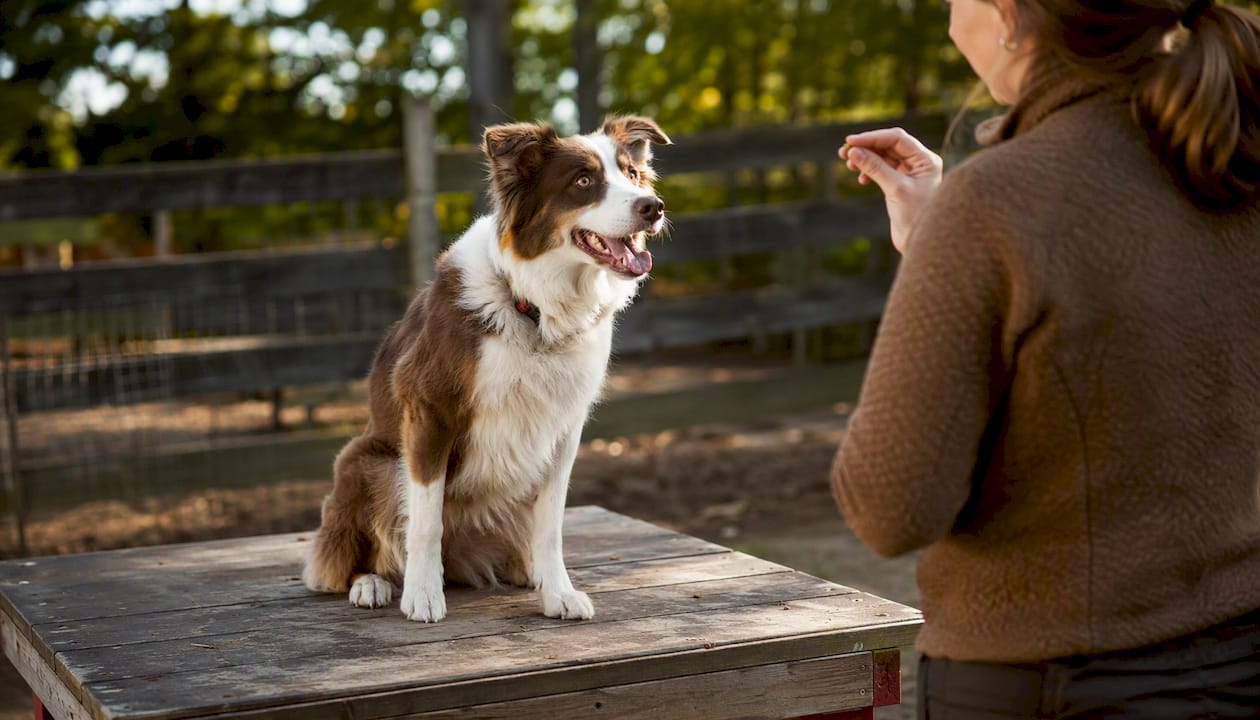
Our practical guide to dog training tools for home use covers the equipment that makes running these drills at home considerably easier, and if a dog’s choices seem driven by fear or aggression rather than simple impulse, that’s a sign to bring in a certified animal behaviourist rather than pushing through with generic training drills.
What has recent research changed about how we understand dog choices?
The biggest shift by 2026 is methodological: researchers can now pair behaviour with direct brain measurement in awake dogs, rather than inferring cognitive control purely from what a dog does. That EEG capability is genuinely new, and it changes what counts as evidence in this field.
The headline finding remains the frontal midline theta signature during delayed-gratification tasks, replicated across both the peer-reviewed Animal Cognition paper and its accompanying preprint dataset. Together they represent one of the first solid pieces of evidence that dogs recruit something functionally similar to human inhibitory control circuits, not just superficially similar behaviour.
Study | Method | Sample | Headline result |
Scalp EEG during delayed-gratification tasks | 226 recordings, 14 dogs | Frontal midline theta (4 to 8 Hz) rose during control tasks | |
Fetching preference study | Owner-preference object fetching trials | 41 fetching events | Preferred object fetched very rarely despite attention shifting |
Field observation of foraging choices | Multiple free-ranging populations | “Good-enough” strategy prioritising speed over selectivity |
Field research from 2024 to 2025 filled in the ecological side of the picture, showing that free-ranging dogs rely on scent-driven, good-enough strategies when foraging under real competitive pressure, a pattern that mirrors what the lab-based satisficing research suggests about pet dogs facing simpler choices.
None of this should be overstated. A single EEG study with 14 dogs, however carefully designed, establishes feasibility and a promising signal, not a settled fact about every dog’s brain. Broader reviews of canine cognition, including a Frontiers in Psychology review of canine social behaviour, stress that decision outcomes reflect an interaction between learned history and current context rather than any single fixed trait. What remains genuinely unknown is how much these EEG markers vary across breeds, ages and temperaments, and whether they predict real-world impulse control outside a laboratory setting.
A trainer’s perspective on the science
Reading through this research, what strikes me most isn’t that dogs make decisions. Anyone who has trained dogs for a living already knew that. It’s how closely the science lines up with the everyday, frustrating moments owners bring to a first consultation: the dog that ignores recall near a rubbish bin, the dog that seems to “know better” and does the opposite anyway, the dog that waits patiently one day and can’t manage two seconds the next.
The practical takeaway I’d want every owner to sit with is this: don’t fight biology, work with it. If scent dominates your dog’s attention in a park, no amount of repeated commands will out-compete a strong smell. Change the setup instead, higher-value rewards, shorter distances, less competing scent, and you’ll get further faster than any amount of frustration will. That’s the humane, science-based approach we build every training programme around.
For owners dealing with fear, anxiety or aggression-driven choices rather than simple impulse control, the stakes are higher and the fixes less straightforward than a home drill can manage alone. That’s where our AVS-approved intensive obedience programme or a dedicated aggressive behaviour consult tends to make the real difference, backed by free lifetime support once training is complete, because these choices rarely resolve with generic advice alone.
Sources
The following sources back the core claims in this article and are worth reading directly if you want the full methodology behind any of the findings above.
If you want to see how this science translates into everyday training decisions, our post on how neuroplasticity applies to dog training and our guide to training methods by dog temperament are good next steps.
Recommended
Comments