How to pack belongings for a dog board and train stay
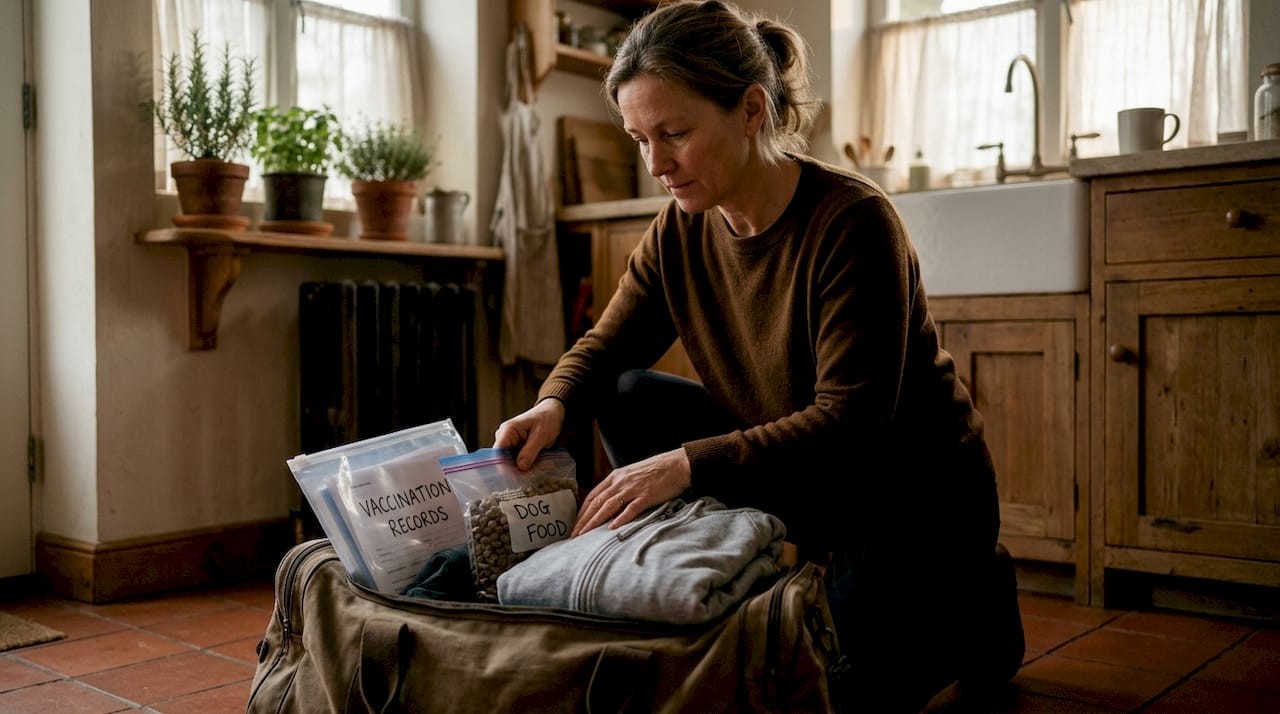
A board and train programme is a residential dog training arrangement where your dog lives with a professional trainer for a set period, receiving daily structured sessions. What you pack for your dog’s board and train stay directly affects their comfort, health, and how quickly they settle into training. Facilities across Singapore and beyond require specific documentation, vaccinations, and care instructions before accepting any dog. Getting these details right from the start means fewer phone calls, a calmer dog, and a smoother experience for everyone involved. Happy-dogtraining recommends treating the packing process as seriously as the training itself.
What essential belongings should you pack for a dog board and train stay?
The non-negotiables fall into three categories: food, documentation, and medical supplies. Missing any one of these can delay your dog’s admission or disrupt their care.
Food and feeding supplies
Pack enough of your dog’s regular food for the entire stay plus an extra 1–2 days beyond the scheduled duration. A sudden switch to a facility’s house food causes digestive upset, which adds unnecessary stress during an already unfamiliar experience. Bring food in a clearly labelled, airtight container with your dog’s name written in permanent marker. Include a written feeding schedule showing exact portion sizes and meal times.

Documentation checklist
Every boarding facility requires a core set of paperwork. Gather these before drop-off day:
Vaccination certificates confirming that the primary series, including rabies, distemper, and Bordetella, was completed at least 14 days before arrival
Emergency contact details for yourself and a backup person
Signed veterinary authorisation permitting staff to seek emergency treatment on your behalf
Feeding schedule with portion sizes and meal times written clearly
Collar with ID tag and a standard lead (not retractable)
Pro Tip: Photograph every document on your phone before drop-off. If a paper copy goes missing, you can produce a digital version instantly.
Medications and health supplies
Medications must travel in their original prescription packaging with written dosage and timing instructions attached. Decanting tablets into a zip-lock bag is not acceptable at most facilities and creates genuine safety risks if staff cannot confirm the drug name or dose. Attach a typed instruction card directly to the medication bag. Include any topical treatments, flea prevention products, or supplements your dog takes regularly.
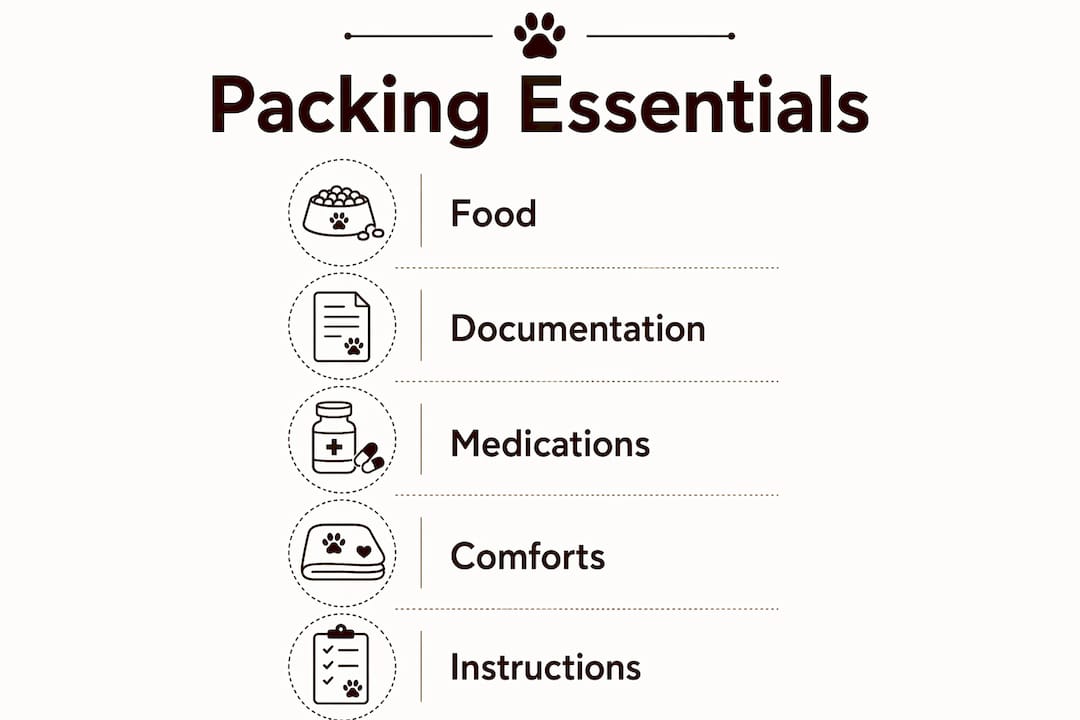
Item | What to include | Why it matters |
Food | Regular brand, portioned for stay plus 1–2 days extra | Prevents digestive upset from diet changes |
Vaccination records | Original certificates, vaccinations completed 14 days prior | Required for admission and insurance compliance |
Medications | Original packaging with typed dosage instructions | Prevents dosing errors and safety risks |
Emergency authorisation | Signed vet consent form | Allows staff to act if you are unreachable |
ID and lead | Collar with tag, standard flat lead | Legal requirement and training necessity |
How do comfort items reduce your dog’s stress during their stay?
Familiar scents are the most effective tool for easing a dog’s anxiety in a new environment. An old T-shirt carrying your scent often does more to calm a dog than any toy, because it provides a continuous olfactory connection to home. Place the T-shirt unwashed inside a zip-lock bag until drop-off, then give it to staff to place in your dog’s sleeping area.
Beyond scent items, a small selection of familiar comfort items helps your dog feel settled. Keep the list short and practical:
One or two favourite toys your dog already knows well
A familiar blanket or piece of bedding from home
Avoid expensive or high-value items such as stuffed Kongs or prized chews
Highly stimulating or expensive toys can trigger resource guarding in an unfamiliar group setting, which works against the calm, confident behaviour the training programme aims to build. A simple rubber toy or a worn soft toy is far more appropriate.
Label every comfort item individually using a permanent marker or an iron-on label. Boarding environments handle many dogs and many belongings simultaneously. Without clear labelling, your dog’s blanket ends up in another kennel by Wednesday.
Pro Tip: Wear the T-shirt you plan to pack for at least a day before drop-off. The stronger the scent, the more reassuring it is for your dog.
Understanding pre-departure anxiety in dogs helps you choose comfort items that genuinely address your dog’s emotional state rather than items that simply feel reassuring to you as the owner.
What are the best practices for communicating feeding and care instructions?
Verbal instructions get forgotten. This is not a criticism of boarding staff. It is simply the reality of a busy environment where multiple dogs arrive and depart each day. Written care cards prevent miscommunication and give staff a reliable reference throughout your dog’s stay.
Create a single A5 care card and laminate it if possible. Structure it as follows:
Dog’s name and breed at the top in large, clear text
Feeding times and portion sizes listed for each meal, including any toppers or supplements
Medication schedule with drug name, dose, and exact timing (for example, “one 5mg tablet with morning meal”)
Behavioural notes covering known triggers, fear responses, or commands your dog already knows
Emergency contacts with your mobile number and your vet’s number listed separately
Signed emergency veterinary authorisation is the single most critical document in this list. It allows staff to seek treatment immediately if your dog is injured or unwell and you cannot be reached. Most owners overlook this until they are asked for it at the door.
Pro Tip: Give the care card to the facility manager directly at drop-off, not just to the first staff member you see. Confirm they have read it before you leave.
Clear, written instructions also support the training process itself. When staff understand your dog’s existing commands and known triggers, they can reinforce the trainer’s work consistently throughout the day.
How should you prepare your dog before drop-off, and what should you leave at home?
Scheduling one or two trial daycare or overnight boarding sessions before a longer board and train programme significantly reduces separation anxiety. A dog that has already experienced a short stay in a boarding environment arrives at the full programme with far less stress. This is one of the most underused preparation steps available to owners.
On the packing side, certain items actively interfere with the training process and should stay at home:
Harnesses and retractable leads. Avoid packing these unless the trainer requests them, as professional trainers use specific equipment during sessions that owner-provided gear can disrupt.
Multiple toys or a large toy collection. Too many items create confusion and can increase anxiety rather than reduce it.
High-value chews or food rewards. These belong to the trainer’s toolkit, not your packing bag.
Unnecessary clothing or accessories. Dog coats and bandanas add to the laundry pile without benefiting your dog.
Building your dog’s independence before the stay also pays dividends. A dog comfortable spending time alone at home adjusts more readily to a new environment. The dog independence training guide from Happy-dogtraining walks you through practical steps to build that confidence in the weeks before drop-off.
On drop-off day itself, keep your goodbye brief and calm. Dogs read your emotional state accurately. A long, emotional farewell raises your dog’s anxiety rather than reassuring them.
Key takeaways
Packing for a board and train stay requires the right food, clear documentation, familiar scent items, and written care instructions to give your dog the best possible start.
Point | Details |
Pack food with extra days | Bring your dog’s regular food plus 1–2 days extra to prevent digestive upset. |
Vaccination timing matters | Primary vaccinations must be completed at least 14 days before arrival. |
Written instructions over verbal | A laminated care card prevents miscommunication in busy boarding environments. |
Scent items beat expensive toys | An unwashed T-shirt with your scent reduces anxiety more effectively than high-value toys. |
Trial stays reduce stress | One or two short boarding sessions before the full programme ease your dog’s transition. |
What I have learned from watching owners pack for board and train
The owners who prepare best are not the ones who pack the most. They are the ones who pack with intention. I have seen dogs arrive with an entire suitcase of toys and treats, and I have seen the same dogs spend their first day guarding that bag in the corner of the kennel. Anxiety does not disappear because you sent along a favourite chew. It eases when the environment feels predictable and safe.
The single most common oversight I observe is the missing emergency authorisation form. Owners assume their phone number is enough. It is not. If you are on a flight or in a meeting and your dog needs urgent veterinary care, a phone number without a signed consent form leaves staff unable to act. That gap in preparation is entirely avoidable.
Written instructions matter more than most owners expect. I have watched a verbal feeding instruction get passed from one staff member to another across a shift change, and by the third telling, the portion size had doubled. A laminated card on the kennel door does not change. It says the same thing at 7AM and at 7PM.
My honest advice is this: spend thirty minutes the night before drop-off writing out your care card, labelling every item, and photographing your documents. That thirty minutes is worth more to your dog’s wellbeing than any toy you could pack.
— Mark
How Happy-dogtraining supports your board and train preparation
Choosing the right programme makes the preparation process far clearer. Happy-dogtraining has over 20 years of experience helping Singapore dog owners prepare for and benefit from residential training programmes, using humane, science-based methods tailored to each dog’s needs.
Whether your dog needs obedience work, help with fearfulness, or support managing reactive behaviour, Happy-dogtraining’s AVS-accredited trainer builds a programme around your dog’s specific profile. Owners also receive free lifetime support after training, so the progress your dog makes during their stay continues long after they come home. Visit Happy-dogtraining to book a personalised consultation and get expert guidance on exactly what to pack and how to prepare.
FAQ
What food should I pack for my dog’s board and train stay?
Pack your dog’s regular food for the full duration of the stay plus an extra 1–2 days. Switching to a new food during boarding causes digestive upset and adds unnecessary stress.
Are vaccination records required for dog boarding?
Vaccination records are required at virtually all boarding facilities. Primary vaccinations, including rabies, distemper, and Bordetella, must be completed at least 14 days before your dog’s arrival date.
Can I pack my dog’s harness for a board and train programme?
Avoid packing harnesses or retractable leads unless the trainer specifically requests them. Professional trainers use their own equipment during sessions, and owner-provided gear can interfere with the training process.
What comfort items help a dog settle into boarding?
An unwashed T-shirt carrying your scent is the most effective comfort item for reducing anxiety. Limit toys to one or two familiar favourites and avoid expensive or high-value items that may trigger resource guarding.
Why do I need a signed emergency veterinary authorisation form?
A signed emergency authorisation form allows boarding staff to seek veterinary treatment on your behalf if you are unreachable. Without it, staff cannot legally authorise emergency care, regardless of how urgent the situation is.
Recommended
Comments