Trainer bonding in boarding: what dog owners should know
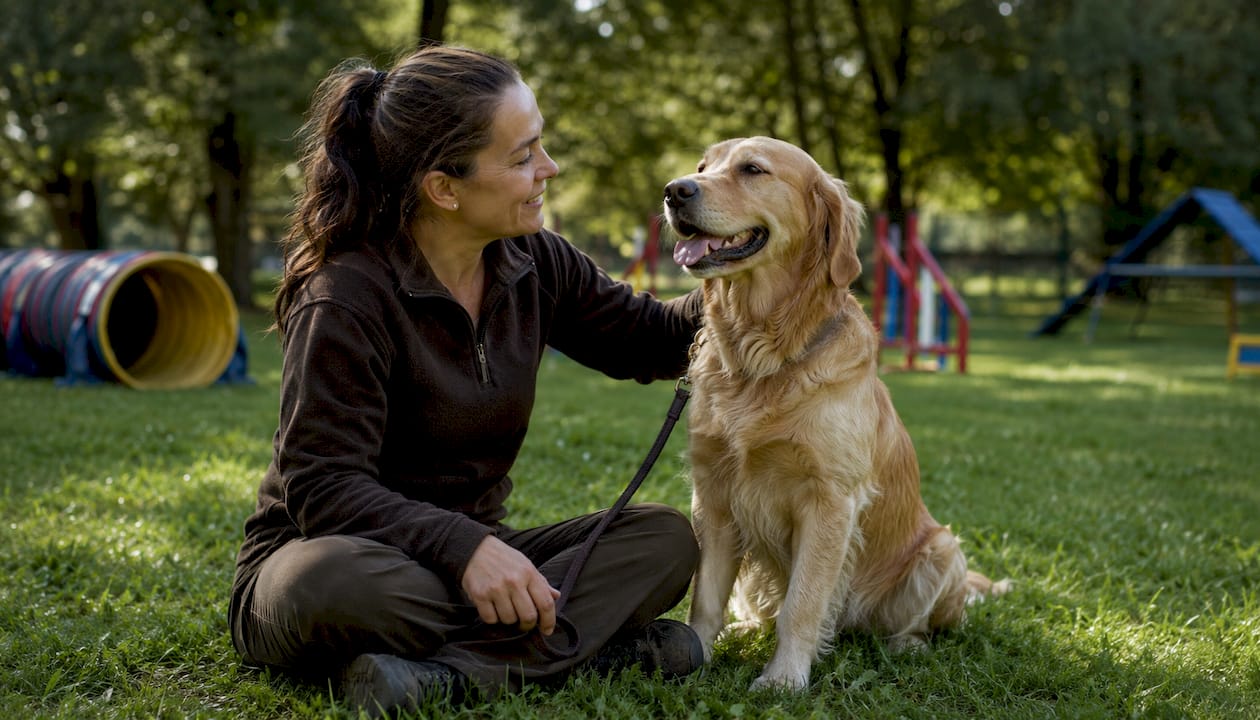
The trainer–dog bond is the single most important factor in how well a dog learns, settles, and transfers new skills during a board-and-train programme. When a dog trusts its trainer, stress drops, attention improves, and learning happens faster. Without that bond, even the most structured programme struggles to deliver lasting results.
TL;DR:
A positive trainer relationship reduces stress behaviours in the first 48–72 hours of boarding, creating the calm state dogs need to learn.
Reward-based training builds trust quickly and is the method recommended by major animal welfare organisations.
A clear handover plan, with owner coaching, is what turns in-kennel progress into lasting behaviour change at home.
The rest of this guide covers what to look for in a trainer, how to assess a facility, and the questions worth asking before you book.
Table of Contents
What a healthy trainer–dog bond looks like, and what to watch for
How trainer bonding affects behaviour change and transfer back home
What to expect: timelines, programme design, and questions to ask
Handover and aftercare: protecting progress after the programme
Research snapshot: evidence linking trainer bonding, welfare, and learning
A trainer’s perspective on bonding, boundaries, and owner partnership
Happy-dogtraining: personalised board-and-train with lifetime support
Why the trainer–dog bond matters in boarding
The role of trainer bonding in boarding goes well beyond friendliness. Dogs are social animals whose capacity to learn is directly tied to how safe they feel. When a dog arrives in an unfamiliar environment, its nervous system is on alert. A calm, consistent trainer acts as a secure base, the same way a trusted owner does at home, and that security is what allows a dog to shift from survival mode into learning mode.
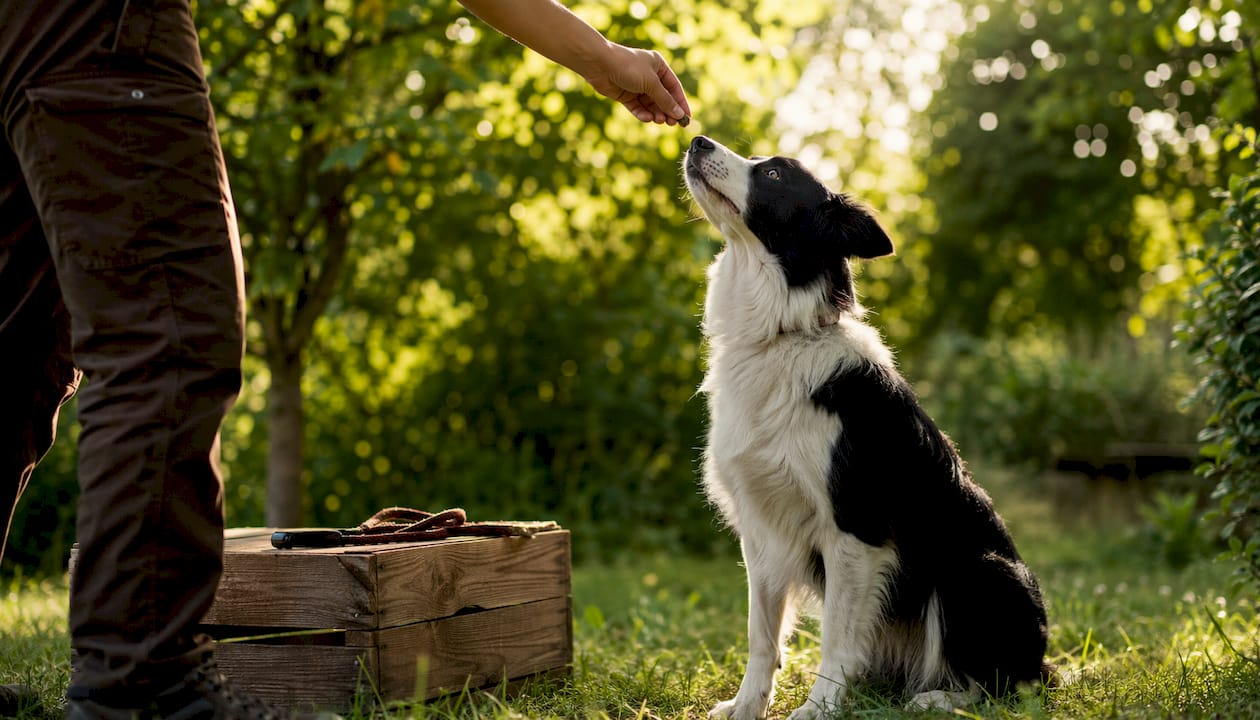
Board-and-train programmes that use relationship-based care show fewer stress-related behaviours and faster adjustment to the new environment. Dogs that feel safe with their handler eat normally, sleep well, and engage with training exercises rather than shutting down or becoming reactive.
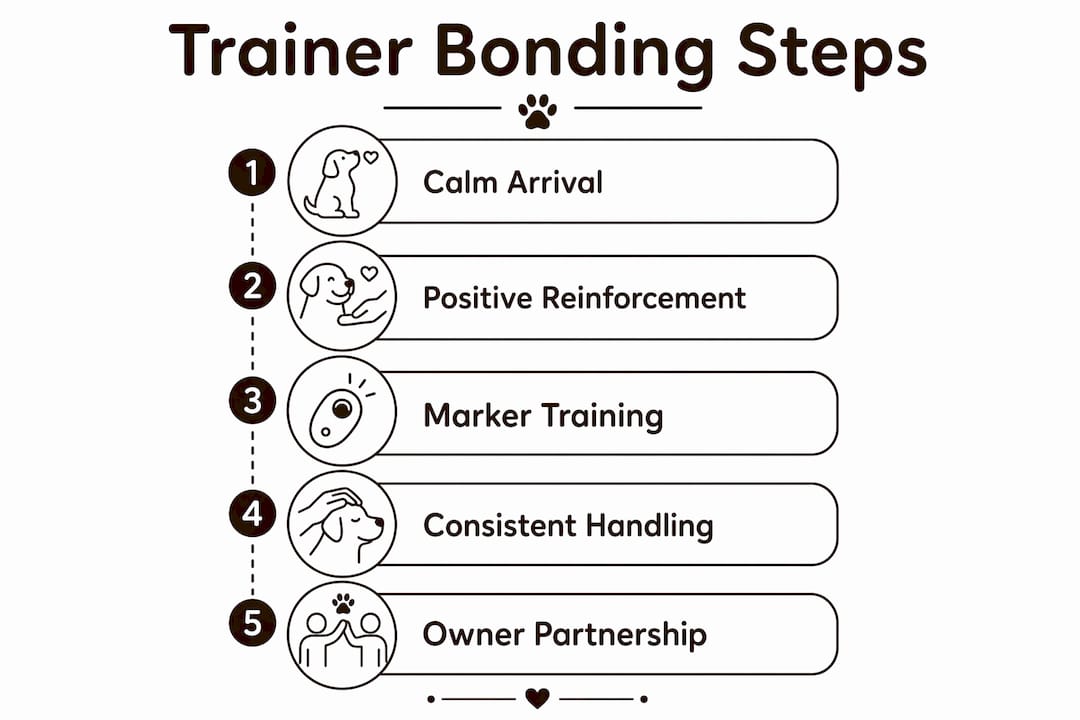
Positive reinforcement sits at the heart of this process. Reward-based training builds trust and reduces fear in ways that punitive methods simply cannot. When a dog learns that the trainer predicts good things, it seeks out that person rather than avoiding them. That seeking behaviour is the clearest sign that a bond is forming. The training environment itself plays a supporting role too: enrichment, calm handling, and a predictable daily structure all reduce background anxiety and free up mental bandwidth for learning.
Pro Tip: Ask any prospective trainer how they handle a dog’s first 24 hours. A good answer will mention calm introductions, low-demand activities, and time for the dog to explore before any formal training begins.
How trainers build a positive bond during board-and-train
Good trainers do not rely on personality alone. They use specific, repeatable practices that create trust deliberately and consistently. Understanding these methods helps you assess whether a facility is doing things right.
Day-to-day practices that build the bond:
Consistent handling: The same person works with the dog each day, using the same cues and the same tone. Multiple trainers working one dog without a shared protocol slows learning and raises stress.
Predictable routines: Feeding, exercise, training, and rest happen at the same times each day. Routine reduces anxiety by making the environment legible to the dog.
One-on-one attention: Short, frequent sessions are more effective than long, infrequent ones. They keep the dog engaged without tipping into fatigue.
Play and enrichment: Unstructured play with the trainer builds positive associations that carry over into formal training. A dog that enjoys being with its handler works harder and recovers faster from mistakes.
Gradual desensitisation: For anxious or fearful dogs, the trainer introduces new stimuli slowly, always pairing them with rewards, so the dog’s confidence grows rather than erodes.
The training technique that ties all of this together is marker training, sometimes called clicker training or reward-based training. A clear, consistent marker (a click or a short verbal cue) tells the dog exactly which behaviour earned the reward. That clarity reduces confusion, which in turn reduces frustration and stress. Over days, the dog begins to associate the trainer with the pleasure of getting things right.
Pro Tip: When you visit a facility, watch whether the trainer waits for the dog to offer a behaviour before rewarding, rather than luring constantly. Waiting builds confidence; constant luring can create dependency.
What a healthy trainer–dog bond looks like, and what to watch for
Knowing the signs of a genuine bond helps you evaluate progress during video updates or visits. It also helps you spot problems early.
Signs of a healthy bond:
Relaxed body language around the trainer: loose muscles, soft eyes, a wagging tail that moves freely rather than stiffly.
Willingness to follow simple cues without hesitation or repeated prompting.
The dog moves toward the trainer voluntarily, especially after a brief separation.
Calm, settled behaviour between sessions rather than pacing, whining, or hiding.
Red flags to take seriously:
Persistent avoidance of the trainer or flinching when approached.
Freezing, cowering, or tucking the tail during handling.
Exaggerated clinginess or inability to settle, which can signal chronic stress rather than affection.
Inconsistent responses to the same cue, suggesting the dog is confused or anxious rather than learning.
At handover, a dog that avoids the owner entirely may have experienced something distressing, though brief excitement toward the trainer is normal and healthy.
One concern owners often raise is whether their dog’s enthusiasm for the trainer means it has forgotten them. Evidence from behaviour science is reassuring: a positive response to a trainer is a sign of social trust and learning readiness, not disloyalty. Well-established bonds with owners persist through boarding. A clear training system actually reduces confusion and strengthens owner–dog interactions rather than replacing them.
How trainer bonding affects behaviour change and transfer back home
A confident, calm dog learns faster. That is not a platitude; it reflects how the nervous system works. Chronic stress impairs memory consolidation and reduces a dog’s ability to generalise skills from one context to another. A dog that trusts its trainer is in the right physiological state to form new habits and carry them across different environments.
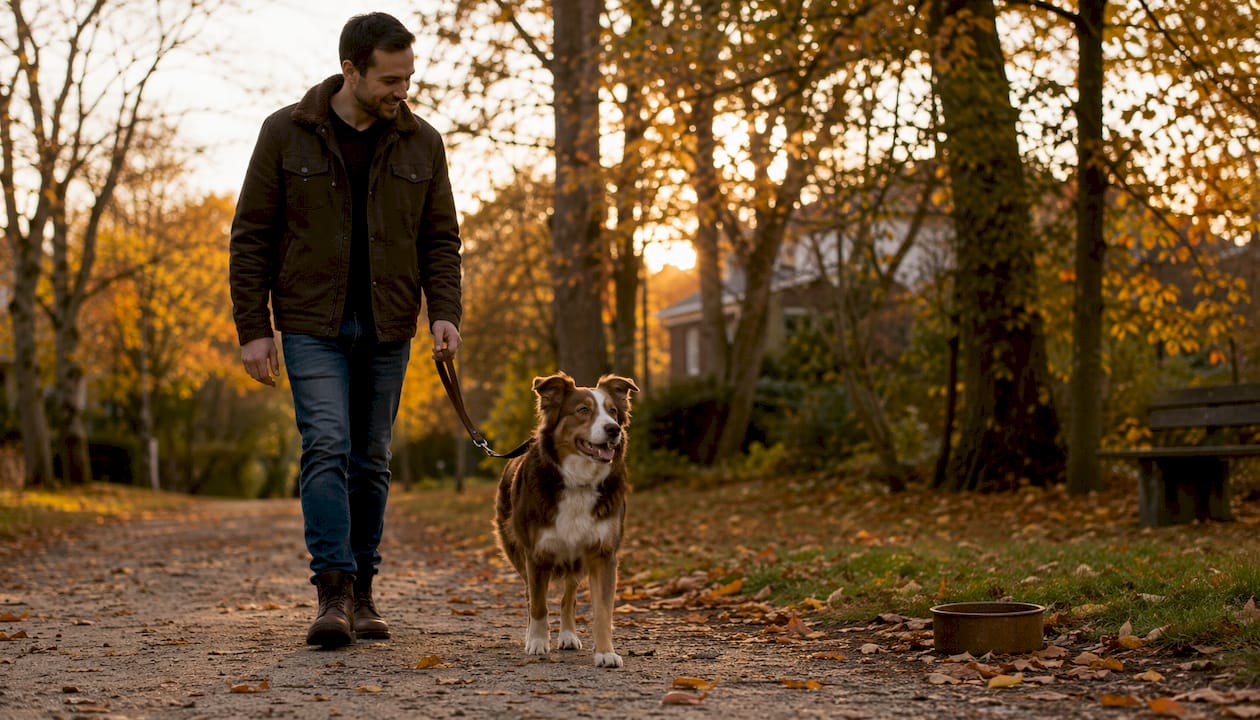
The trainer’s bond aids the initial learning, but the owner’s involvement secures the transfer. Structured handover and owner coaching are what determine whether a dog’s new behaviours survive the return home. Without that coaching, even excellent in-kennel progress can fade within weeks as the dog adjusts to a different set of cues and expectations.
Consider a typical trajectory: a dog arrives reactive on the lead and anxious around strangers. In the first week, the trainer focuses on building trust and reducing baseline anxiety. By week two, the dog is responding reliably to basic cues in a calm state. By the handover session, it can hold a sit-stay while a stranger approaches. That progress is real, but it depends on the owner practising the same cues, in the same way, in the weeks that follow. The success factors in board-and-train programmes consistently point to this owner follow-through as the variable that separates lasting change from temporary improvement.
What to expect: timelines, programme design, and questions to ask
Most dogs need a few days to adjust to a boarding environment before meaningful training can begin. A well-designed programme accounts for this settling period rather than rushing into complex exercises from day one.
By the two-week mark, you should expect to see measurable progress on the target behaviours, along with a trainer report or video update. The handover stage, typically at the end of a two-to-four-week programme, should include a demonstration, supervised practice with you present, and a written plan for the weeks ahead.
Programme design matters enormously. A low trainer-to-dog ratio means more individual attention and a faster bond. Daily training schedules that balance structured sessions with rest and play produce better outcomes than programmes that train intensively without recovery time.
Questions worth asking before you book:
What is the trainer-to-dog ratio, and will my dog have a named lead trainer?
Which training methods do you use, and do you use any aversive tools or techniques?
How often will I receive updates, and in what format?
What does the handover session include, and is follow-up support available afterwards?
Can I visit during the programme, and what will I be able to observe?
Checklist for assessing a boarding and training facility
A visit to the facility before booking tells you more than any brochure. Here is what to look for.
What to observe:
The same handler works consistently with each dog, not a rotating roster of staff.
Handling is calm and unhurried; the trainer reads the dog’s body language and adjusts accordingly.
Enrichment is visible: toys, sniff activities, varied environments, and rest areas.
Positive reinforcement is the primary method; rewards are used generously and clearly.
Dogs in the facility appear relaxed between sessions, not anxious or over-stimulated.
Red flags in operations:
High staff turnover or multiple different trainers working one dog without a shared written protocol.
Punitive equipment visible in the training area (prong collars, shock collars, slip leads used as corrections).
Reluctance to let you observe a session or visit during the programme.
Vague answers about methods or an inability to explain the training approach clearly.
Responsible pet ownership guidance consistently highlights observable behaviours and facility practices as the most reliable signals of humane, relationship-focused care. Trust what you see, not just what you are told.
Pro Tip: Ask to see a short training session with a dog already in the programme. A confident, engaged dog working happily with its trainer is the best advertisement a facility can offer.
Trainer qualifications matter too. Look for recognised certifications and memberships, such as those from the CCPDT or equivalent UK bodies like the Association of Pet Dog Trainers (APDT). Accreditation signals a commitment to evidence-based, humane methods and ongoing professional development.
Handover and aftercare: protecting progress after the programme
A good handover is not a five-minute chat at the gate. It is a structured session that sets you up to continue what the trainer started.
Demonstration first. The trainer shows you each behaviour the dog has learned, using the exact cues and rewards the dog knows. Watch carefully; you are learning the system, not just the commands.
Supervised practice. You take over the lead and practise each behaviour with the trainer coaching you in real time. This is where most handovers fall short, so insist on it.
Written plan. You leave with a clear document: the cues used, the reward schedule, the behaviours to practise, and a timeline for the first two to four weeks.
Follow-up schedule. Agree on at least one check-in call or session within the first two weeks. Progress can stall quickly without early support.
Familiar items. Sending your dog with a familiar blanket or toy is not just comfort; familiar items reduce separation-related stress and help the dog associate positive experiences with the boarding environment. Bring those items home too, as they carry the scent of the training context and can help with the transition.
For the first two to four weeks at home, keep sessions short (five to ten minutes), use the same cues and rewards the trainer used, and practise in low-distraction environments before gradually increasing difficulty. Guidance on preparing your dog for board-and-train and what to pack can help you set the right conditions from the start.
Pro Tip: If your dog seems confused or regresses in the first week home, do not panic. Reduce the difficulty of the exercises, return to basics, and contact the trainer. Early regression is common and usually resolves quickly with consistent handling.
Research snapshot: evidence linking trainer bonding, welfare, and learning
The case for relationship-based training is well supported. Here is a concise summary of the key evidence and what it means for you as an owner.
Trainer–client collaboration, shared goals, and regular feedback translate into better long-term outcomes. Research on trainer–trainee relationships consistently identifies emotional connection and mutual care as significant contributors to goal attainment, with participants describing commitment and warmth as the qualities that made the difference.
Source | Main finding | Practical implication |
AKC board-and-train guidance | Relationship-based care reduces stress behaviours and speeds adjustment | Choose a facility that prioritises consistent, individualised attention |
AKC handover guidance | Structured handover and owner coaching are critical to training transfer | Insist on a full handover session with supervised practice |
Behaviour science (bonding) | A dog’s positive response to a trainer signals social trust, not disloyalty | Trainer excitement at handover is healthy; watch for avoidance instead |
Responsible pet ownership guidance | Observable practices (calm handling, enrichment, no punitive tools) are reliable welfare signals | Use a visit checklist before booking |
NPTI trainer–client research | Emotional connection and mutual care are significant contributors to goal attainment | Prioritise trainers who communicate warmly and consistently with you |
Major animal welfare and training organisations, including the CCPDT and the RSPCA in the UK, recommend positive reinforcement as the primary method for building trust and reducing fear in dogs. Programmes that align with these standards are more likely to produce calm, confident dogs and lasting behaviour change.
Key takeaways
The trainer–dog bond is not a soft extra; it is the mechanism through which boarding programmes produce lasting, transferable behaviour change.
Point | Details |
Bond enables learning | A dog that trusts its trainer is calm enough to learn, generalise skills, and transfer them home. |
Positive reinforcement builds trust | Reward-based methods are endorsed by major welfare bodies and produce faster, more durable results than aversive approaches. |
Handover is critical | Structured handover with supervised owner practice determines whether in-kennel progress lasts beyond the first week home. |
Visit before you book | Observe consistent handling, enrichment, and calm dog behaviour; red flags include punitive equipment and high handler turnover. |
Happy-dogtraining approach | Happy-dogtraining uses humane, science-based methods with personalised attention and free lifetime support to protect progress long after the programme ends. |
A trainer’s perspective on bonding, boundaries, and owner partnership
The most common misconception I encounter is that a board-and-train programme replaces the owner. It does not. A trainer’s role is to teach the dog a new language, one that the owner then learns to speak fluently at handover. The bond a trainer builds with a dog during boarding is a tool, not a destination. It creates the safety and trust that make learning possible, but the goal has always been to hand that confidence back to you.
What this means practically is that the best programmes treat the handover session as seriously as the first day of training. If a trainer is reluctant to show you exactly what they did and how they did it, that is worth questioning. You should leave the handover session feeling capable, not dependent.
If you are preparing for a board-and-train stay or assessing a facility, bring your questions. Ask about methods, ratios, and follow-up. Ask to see a session. A trainer who welcomes those questions is one who has nothing to hide and everything to share.
Useful sources and further reading for owners
Source | What it covers | Why it is useful |
AKC: board-and-train programmes | Overview of board-and-train formats, methods, and what to expect | Balanced, evidence-informed consumer guide from a major kennel club |
Certification standards for professional dog trainers | Use to verify a trainer’s credentials and commitment to humane methods | |
AKC Humane Fund (akchumanefund.org) | Welfare-focused training resources and humane education | Background on welfare standards relevant to boarding and training |
SmallDogGuides: will my dog remember me? | Addresses owner anxiety about bonding after boarding | Practical reassurance grounded in behaviour science |
MyPetsSafetyNet: responsible pet ownership | Welfare checklists and facility assessment guidance | Useful for owners auditing a facility before booking |
NPTI Florida: trainer–client relationships | Research on how trainer–client rapport affects outcomes | Supports the case for choosing trainers who communicate and collaborate well |
Humane, evidence-based techniques explained for owners | Practical overview of the methods used in quality programmes |
Happy-dogtraining: personalised board-and-train with lifetime support
If you have read this far, you know what to look for in a programme: consistent handling, positive reinforcement, a low trainer-to-dog ratio, and a handover session that genuinely prepares you to carry on the work at home.
Happy-dogtraining offers exactly that, backed by over 20 years of experience and science-based methods tailored to each dog’s individual needs. Whether your dog is working through fearfulness, aggression, separation anxiety, or simply needs a solid obedience foundation, every programme includes personalised attention and free lifetime support after training. That ongoing support is what makes the difference between a dog that performs well for a week and one that thrives for years.
The 4-week AVS-approved intensive programme is designed for owners who want structured, measurable progress with a clear handover plan built in. To find out whether it is the right fit for your dog, get in touch and ask for a consultation.
Recommended
Comments